

Programme highlights
Get qualified to work as a professional engineering technician – an area critical to the economy in New Zealand and around the world.
As part of your studies, you’ll work on real-world projects. Some of these projects could include a wastewater treatment plant in Samoa and a road widening project in Auckland. And, just like some of our graduates, this real-world experience could get your foot in the door to companies such as Downer and Kiwirail.
This qualification meets New Zealand and international benchmarks for engineering technicians. Graduates can work at a technician level as outlined by the Dublin Accord (International Engineering Alliance, 2002).
Entry requirements
Applicants must meet the following entry requirements:
Academic
NCEA Level 2
- Including a minimum of 10 literacy credits at Level 1 or above (for those who achieved NCEA Level 2 before 2013);
And
- A minimum total of 48 credits at level 2 in four subjects including at least 12 credits in mathematics (preferably achievement standards in algebra, calculus or trigonometry);
Or
- Equivalent qualifications (e.g. International Baccalaureate or Cambridge);
Or
- Equivalent credits from appropriate trades training and/or demonstrated skills and experience.
English language entry requirements
In addition to meeting the minimum entry criteria, those applicants for whom English is a second language (including International students) must meet the IELTS overall language requirement: Overall Band Score (Academic) of 6.0 IELTS, with no individual score less than 5.5, or equivalent.
Other entry requirements
Applicants must be physically capable of completing the practical aspects of the programme, by being able to work effectively, efficiently and safely.
Although not part of the entry requirements, applicants will attend an interview as part of the process of assisting them to select the right specialisation.
Successful applicants will be accepted in order of application. The above attributes will be assessed through an interview process to which applicants may bring family and/or whānau support.
Applicants who do not meet the entry requirements will be counselled to an appropriate Foundation programme.
Give yourself credit with Recognition of Prior Learning (RPL)
Did you know you can use the knowledge and experience you already have to your advantage?
Your previous work experience and on-the-job skills, volunteering, professional development, and other providers’ qualifications can be recognised as prior learning, matched against credits in our courses, and put towards your qualification – potentially saving you money and possibly helping you to complete your qualification faster Learn more.
Programme structure
You will need to complete five compulsory courses as well as 11 courses related to this strand (240 credits):
Compulsory courses:
Level 4
Level 6
Courses related to this strand:
Level 5
Elective courses:
You must choose four of the following:
Level 6
Do you want to study a single course, without enrolling into the full programme?
Courses within some of our programmes may be offered as an individual Certificate of Proficiency (COP). Programme entry requirements and course fees apply. For more information, please speak to our friendly Ask Me! team.
Further training or study
Successful completion of your first semester in the New Zealand Diploma of Engineering (Level 6) with a required grade point average of B can provide direct entry to Bachelor of Engineering Technology (Civil, Electrical, Mechanical) (Level 7).
Career opportunities
Civil Engineering Technicians work with building and construction companies, municipal and environmental authorities, mining companies, harbour boards, or civil engineering consultancies. These types of positions can involve work such as the design and construction of roads, bridges, tunnels, sewerage and water supply systems, hydro-electric power projects, river and harbour works, soil conservation and structural drawing.
This programme will prepare you for a range of jobs in engineering including:
- Geotechnical laboratory technician
- Draftsperson
- Surveyor
- Site engineer
- Civil engineering technician.
See why more people choose Civil engineering at MIT

“MIT does a brilliant job in connecting us with industry.”
“I’m from Kenya and prior to migrating to New Zealand I worked for over 10 years as a security expert and diplomat in Kenya and the EU. When I moved to New Zealand I wanted a different career so I chose a diploma in civil engineering so I could revisit and build on the knowledge from my first degree in surveying.
My choice to study with MIT was a very practical one. I have 2 young kids and my wife works full-time so I had to juggle study and family. I wanted something convenient to me, a place I could commute to easily. I live in east Auckland, so MIT was very convenient. I also didn’t want to go to a university, I wanted a diploma that gave me hands-on experience, not just theory. Something I could touch and apply. Choosing MIT was a pretty easy choice for me.
MIT is very diverse – you see people there from everywhere in the world. It’s a big advantage as it brings in a wealth of knowledge and experience. They made me very feel welcome, like I was part of MIT regardless of where I was from, it gave me a sense of belonging.
As an immigrant, a spouse, a parent, and a mature student, MIT provided a very conducive space for me to retrain and achieve my career and family goals. The lecturers were very considerate, respectful and engaging. Being a mature student, you often do not have the luxury of time, you’re very driven, you know what you’re looking for and you grab it. I give credit to MIT’s lecturers who gave us extra special attention and support to succeed.
While studying I was also employed as a lab technician at MIT. This gave me extra practical experience and skills to develop further in ways I can’t measure. The kiwi professional life is so different from Kenya, so these experiences helped ease me into New Zealand culture and prepared me for a much larger and faster professional environments. I’m very grateful for that opportunity.
I made the most of my time at MIT, I created and developed relationships with my lecturers, and other personnel, and they helped propel me into the work environment. Some of them were my referees and spoke very highly of me when I applied for jobs.
While I was a student MIT and the School of Engineering brought in a Career Fair with numerous employers in civil engineering. MIT does a brilliant job in connecting us with industry and I managed to secure employment with one of these companies (Watercare) before I graduated.
To mature students – if you are thinking of continuing your education, you should highly consider MIT. It’s such a wonderful space for people like us. I’m now working as a development engineer at Watercare doing very practical things, I’ve been put to very good use.
There’s high demand in this industry, you have to have practical experience, not just the theory. I can tell you for sure, you get that at MIT, you get your hands dirty, and industry looks for people who can roll up their sleeves and get hands-on. The market is looking for grads right now, they can’t get enough of them.”
Nick Oduol Odhiambo
MIT graduate
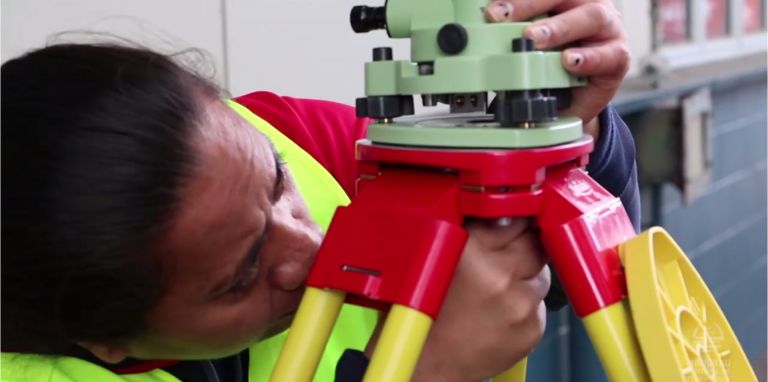
MIT is the quality choice. Study civil engineering and graduate work-ready.
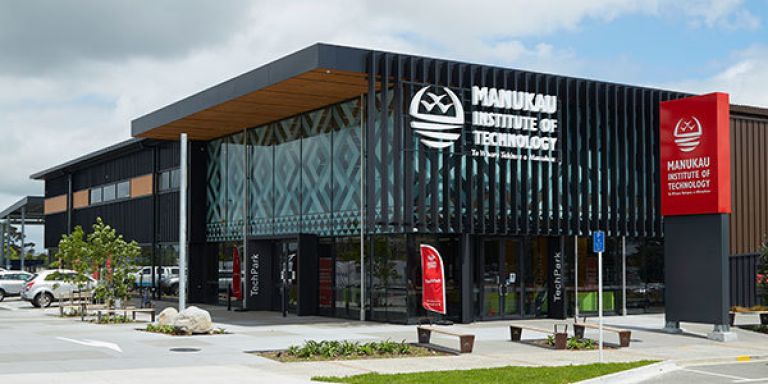
Study at MIT’s award-winning TechPark campus.
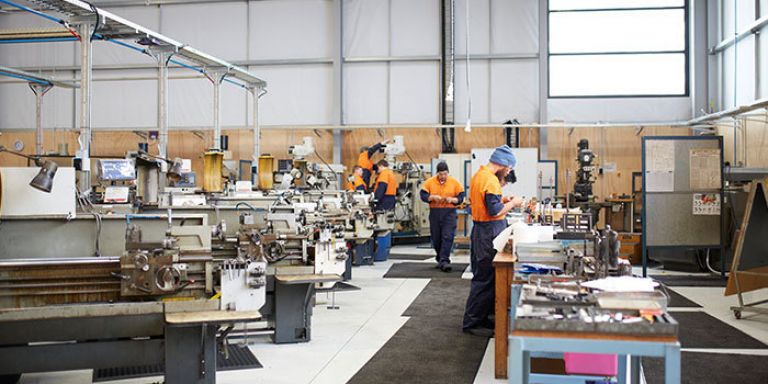
MIT TechPark is an award-winning centre of excellence for engineering and trades.
Having won a Learning Environments Australasia Award which recognises planning, design and construction of educational facilities throughout the region, our state-of-the-art campus is the home of our engineering and trades school. Coupling stunning architectural learning spaces with a myriad of high-tech facilities for our students, it’s easy to see why it’s been given such high praises.
Our TechPark building is situated on the corner of Lambie Drive and Manukau Station Road. It is across the road from the existing MIT Manukau campus, currently home to the schools of nursing, health and counselling, business, and digital technologies.
MIT is the quality choice. Study engineering and graduate work-ready.

“The choice to study engineering definitely secures your future.”
“Looking back on my experience at MIT, I really enjoyed the learning style. I did the lectures online and only had to come into class for one week a semester to do the practical parts. Overall, the atmosphere and the way that classes were taught was really enjoyable, and not too restrictive either. It just feels comfortable.
The choice to study engineering at MIT definitely secures your future. It narrows down on the things employers are looking for, like answers to practical questions that you might face on the job. Those are the things that show you are competent to employers.
My five-year plan is to become a senior engineer. It is a lifelong learning process, even now that I have the job, there is still a lot to learn. It is a continuous process. You have to keep going to gain more knowledge.
Having a qualification is really important if you want to land that dream job.”
Oscar Lee
MIT graduate
See why more people choose Civil engineering at MIT
“MIT does a brilliant job in connecting us with industry.”
“I’m from Kenya and prior to migrating to New Zealand I worked for over 10 years as a security expert and diplomat in Kenya and the EU. When I moved to New Zealand I wanted a different career so I chose a diploma in civil engineering so I could revisit and build on the knowledge from my first degree in surveying.
My choice to study with MIT was a very practical one. I have 2 young kids and my wife works full-time so I had to juggle study and family. I wanted something convenient to me, a place I could commute to easily. I live in east Auckland, so MIT was very convenient. I also didn’t want to go to a university, I wanted a diploma that gave me hands-on experience, not just theory. Something I could touch and apply. Choosing MIT was a pretty easy choice for me.
MIT is very diverse – you see people there from everywhere in the world. It’s a big advantage as it brings in a wealth of knowledge and experience. They made me very feel welcome, like I was part of MIT regardless of where I was from, it gave me a sense of belonging.
As an immigrant, a spouse, a parent, and a mature student, MIT provided a very conducive space for me to retrain and achieve my career and family goals. The lecturers were very considerate, respectful and engaging. Being a mature student, you often do not have the luxury of time, you’re very driven, you know what you’re looking for and you grab it. I give credit to MIT’s lecturers who gave us extra special attention and support to succeed.
While studying I was also employed as a lab technician at MIT. This gave me extra practical experience and skills to develop further in ways I can’t measure. The kiwi professional life is so different from Kenya, so these experiences helped ease me into New Zealand culture and prepared me for a much larger and faster professional environments. I’m very grateful for that opportunity.
I made the most of my time at MIT, I created and developed relationships with my lecturers, and other personnel, and they helped propel me into the work environment. Some of them were my referees and spoke very highly of me when I applied for jobs.
While I was a student MIT and the School of Engineering brought in a Career Fair with numerous employers in civil engineering. MIT does a brilliant job in connecting us with industry and I managed to secure employment with one of these companies (Watercare) before I graduated.
To mature students – if you are thinking of continuing your education, you should highly consider MIT. It’s such a wonderful space for people like us. I’m now working as a development engineer at Watercare doing very practical things, I’ve been put to very good use.
There’s high demand in this industry, you have to have practical experience, not just the theory. I can tell you for sure, you get that at MIT, you get your hands dirty, and industry looks for people who can roll up their sleeves and get hands-on. The market is looking for grads right now, they can’t get enough of them.”
Nick Oduol Odhiambo
MIT graduate
MIT is the quality choice. Study civil engineering and graduate work-ready.
Study at MIT’s award-winning TechPark campus.
MIT TechPark is an award-winning centre of excellence for engineering and trades.
Having won a Learning Environments Australasia Award which recognises planning, design and construction of educational facilities throughout the region, our state-of-the-art campus is the home of our engineering and trades school. Coupling stunning architectural learning spaces with a myriad of high-tech facilities for our students, it’s easy to see why it’s been given such high praises.
Our TechPark building is situated on the corner of Lambie Drive and Manukau Station Road. It is across the road from the existing MIT Manukau campus, currently home to the schools of nursing, health and counselling, business, and digital technologies.
MIT is the quality choice. Study engineering and graduate work-ready.
“The choice to study engineering definitely secures your future.”
“Looking back on my experience at MIT, I really enjoyed the learning style. I did the lectures online and only had to come into class for one week a semester to do the practical parts. Overall, the atmosphere and the way that classes were taught was really enjoyable, and not too restrictive either. It just feels comfortable.
The choice to study engineering at MIT definitely secures your future. It narrows down on the things employers are looking for, like answers to practical questions that you might face on the job. Those are the things that show you are competent to employers.
My five-year plan is to become a senior engineer. It is a lifelong learning process, even now that I have the job, there is still a lot to learn. It is a continuous process. You have to keep going to gain more knowledge.
Having a qualification is really important if you want to land that dream job.”
Oscar Lee
MIT graduate