

#The July 2026 intake is only open to applicants pathwaying from the New Zealand Diploma in Early Childhood and Care (Field-based) (Level 5).
If you are a new applicant, we recommend applying for the February intake or to consider the New Zealand Diploma in Early Childhood Education and Care (Field-based) (Level 5) instead. If you successfully complete this diploma, you will be eligible under specified criteria to pathway into the second year of the bachelor’s degree.
Programme highlights
Get prepared for a rewarding career in early childhood education.
Study with MIT to learn the hands-on skills you need to teach in a range of early childhood settings.
You will also develop skills in implementing a range of cultural teaching practices, including Māori and Pasifika worldviews.
This qualification involves plenty of real-world work experience. Along with 21 weeks of full-time placement, you will spend a minimum of 12 hours a week working in an early childhood centre.
Successful completion of this programme will lead to recognised qualified teacher status, and graduates are able to apply for provisional practicing certification with the Teaching Council of Aotearoa New Zealand.
How to qualify
If you don’t yet meet the entry requirements for this degree programme, find out how you can qualify by completing our New Zealand Diploma in Early Childhood Education and Care (Field-based) (Level 5).
TeachNZ scholarship opportunity
TeachNZ scholarships will support you on your journey towards being a great teacher or kaiako.
They can cover the cost of your course fees and pay you an allowance throughout the duration of your study.
If you are planning on enrolling, or are already enrolled on our Bachelor of Education (Early Childhood Teaching) (Level 7), you are eligible to apply for one of TeachNZ’s five scholarships.
Entry requirements
Academic Requirements
In order to be admitted to the Bachelor of Education (ECT) programme, applicants must:
- Be seventeen years of age or older at the start of the programme, and
- Satisfy English Language Competency requirements as determined by the Teaching Council of Aotearoa New Zealand policy OR
- Satisfy NZQA English Language Requirements (for international students, further see below), and
- Meet the requirements as per the Children’s Act 2014 prior to gaining entry into the programme; and
- Complete an interview with a selection panel of at least two registered teachers, and
- Satisfy the minimum diagnostic literacy and numeracy entry assessments marks
- An academic panel made up of members of the Schools Programme Committee including the Head of School will approve programme acceptance upon review of all evidence provided.
For individuals under 20 years of age, in addition to the above criteria:
- Hold UE or a recognised equivalent such as International Baccalaureate or Cambridge International, or
- Able to demonstrate to the satisfaction of the provider that they have the skills and ability to study at tertiary level.
Criteria to determine under 20 year old ability to study at tertiary level as exceptional individual cases:
NB: all other entry criteria must be met
- Satisfactory marks in the literacy and numeracy diagnostic test set at UE level, and
- Three of more years of secondary schooling in New Zealand, or
- 10 UE literacy credits (5 reading, 5 writing), or
- Completion of an Academic Study Skills programme of study at a tertiary level provider, and
- An academic panel made up of members of the Schools Programme Committee including the Head of School will approve programme acceptance upon review of all evidence provided by the individual applicant on case by case basis
Note: There will be no exceptions for cohort entry
Additionally, should a student not be achieving the academic or professional experience expectations there will be multiple avenues of support and guidance:
- Monitoring of their progression and early detection of issues through formative assessment and class discussions of practice, both in academic study skills and practice in order to meet the standards (in supported environment).
- Appropriate support mechanisms such as pastoral care that includes academic support, support of teaching practice, emotional and physical wellbeing enacted with peer mentoring, lecturer support, an individual learning plans (as required), learning advisors, counsellors and/or subject librarians.
- Regular professional dialogue and feedback from school-based learning associate teachers, mentor teachers (in partner schools) and any issues raised are escalated to the Practicum Lead.
- Second visits by an alternative senior lecturer in school-based and practicum assessments of practice where the first lecturer/or mentor/associate teacher identifies that a student is not meeting the requirements.
- Exit pathways for student teachers will be considered when they are not achieving the academic or professional experience learning outcomes; and are unlikely to meet the standards by the end of the programme. For example, connecting students with the career and employment solutions team to practice interviewing techniques, CV writing and job to skill matching.
Other requirements
Persons wishing to undertake the programme must complete the prescribed application form and submit it to the School of Education. The application form includes a declaration of physical and mental health, a declaration of all criminal and pending criminal convictions and consent for a police check. Applicants may be required to provide a health declaration that they are emotionally, mentally and physically capable of undertaking the demands of the teaching programme as required in the Teaching Council of Aotearoa New Zealand Code of Professional Responsibility and Standards for the Teaching Profession. Reports may be requested with the consent of the Applicant.
The application form must be submitted with the following:
- Evidence of educational qualifications
- Evidence of Language Proficiency (as per Teaching Council of Aotearoa New Zealand Policy) as required
As well as;
Children’s Act (2014) safety check requirements:
- Two forms of identification – one form must include a photo (if the name differs from the name of the document students must produce supporting document that shows evidence of name change).
- Two satisfactory written referee reports, from independent referees, who will provide confidential information on the applicant. Referees will be asked to affirm that the applicant is of good character, is likely to be ‘fit to be a teacher’ and can communicate well with adults and children. Referees may not be relatives of the applicant and must have known the applicant for at least two years. Referees must send the completed form directly to the enrolment team on behalf of the School of Education.
- A completed New Zealand Police Vetting Service Request and Consent Form and satisfactory result
- Attend an interview with two School of Education staff
Interview Requirements:
All applicants who meet the entry requirements and have provided all necessary documentation will be interviewed in groups of two to three by two interviewers. The interviewers will be teaching staff on the programme or qualified certificated teachers who work closely with the School. Whānau interviews are offered upon request. Visual technologies will be used where distance is an issue.
The interviewers will consider whether applicants demonstrate potential to develop the qualities and dispositions to meet the Code of Professional Responsibility and Standards for the Teaching Profession on completion of the programme, the ability to relate to and communicate with others, and their ability to be successful on the programme.
During the interview the applicant will be assessed against the following aspects to determine their admission to the programme:
- Motivation to work in with young children
- Personal awareness of own competencies when working with others
- Potential to uphold the public and professional reputation of teachers
- Promote and nurture the safety of learners within his or her care.
- Show understanding of current issues or challenges in the sector
- Understand the characteristics required for effective teaching in a multicultural setting
- Knowledge of appropriate skills in dealing with conflict
- Ability to listen and comprehend and respond to the questions asked
- Articulate some knowledge of education in Aotearoa and commitment to te Tiriti o Waitangi
After the interview, the applicants will complete the Personal and Professional Safety Form, and answer questions regarding guidance of children’s behaviour as required under the Children’s Act (2014) and undertake the numeracy and literacy diagnostic test.
Language Competency Requirements
Prior to entry, applicants must demonstrate language competency by providing one of the Teaching Council’s approved evidence of language competency, as follows:
- New Zealand University Entrance literacy credits at either NCEA level 2 or 3;
- New Zealand University Entrance;
- New Zealand tertiary entrance qualification gained on completing senior secondary school prior to the introduction of the current University Entrance;
- International Baccalaureate full diploma in English medium (24 points minimum).
- Cambridge International Examinations minimum of 120 points on the UCAS Tariff plus meeting the CIE literacy requirements;
- All primary schooling and at least three years secondary schooling completed in the English language while living in New Zealand, Australia, Canada, the Republic of Ireland, the United Kingdom, the United States of America, or South Africa. For South Africa, applicants also need to provide a South African Matriculation Certificate Minimum Higher-Grade D pass or Standard Level 5 in English or a South African Senior Certificate Minimum Higher-Grade D pass or Standard Level 5 pass in English;
- Six years of education comprising secondary schooling to at least year 12 and at least two years of successful tertiary education, taught in English as the primary language of instruction and through face-to-face learning and assessment such as tutorials, presentations, seminars, and supervisory meetings, and was gained while living in New Zealand, Australia, Canada, the Republic of Ireland, the United Kingdom, the United States of America, or South Africa. For South Africa, applicants also need to provide a South African Matriculation Certificate Minimum Higher-Grade D pass or Standard Level 5 in English or a South African Senior Certificate Minimum Higher-Grade D pass or Standard Level 5 pass in English;
- Awarded a single qualification at NZQF level 7 or above which took two or more years of full-time study to complete and was taught in English as the primary language of instruction and through face-to-face learning and assessment such as tutorials, presentations, seminars, and supervisory meetings, and was gained while living in New Zealand, Australia, Canada, the Republic of Ireland, the United Kingdom, the United States of America, or South Africa. For South Africa, applicants also need to provide a South African Matriculation Certificate Minimum Higher-Grade D pass or Standard Level 5 in English or a South African Senior Certificate Minimum Higher-Grade D pass or Standard Level 5 pass in English;
- Awarded Cambridge Certificate in Teaching English to Speakers of Other Languages (CELTA);
- Awarded Trinity College London Certificate in Teaching English to Speakers of Other Languages (CertTESOL);
- Achieved an outcome in one of the approved tests which is equivalent to or better than those specified (see table below) within the past two years:
| Test | Listening | Reading | Writing | Speaking | Overall Mark (in one test) |
| Cambridge English exams
C2 Proficiency (CPE) or C1 Advanced (CAE) or B2 First (FCE) |
Minimum of 185 | Minimum of 185 | Minimum of 185 | Minimum of 185 | Minimum of 185 |
| IELTS Academic | 7.0 | 7.0 | 7.0 | 7.0 | 7.0 |
| International Second Language Proficiency Ratings (ISLPR) |
4 | 4 | 4 | 4 | 4 |
| Pearson Test of English (PTE) Academic |
61 | 62 | 73 | 79 | 69 |
| TOEFL Internet-based test (iBT) | 24 | 24 | 27 | 23 | Minimum of 94 |
| Trinity ISE III (3) | Pass with Merit | Pass with Merit | Pass with Merit | Pass with Merit | Pass with Merit |
| LanguageCert C1 Expert IESOL | High Pass | High Pass | High Pass | High Pass | High Pass |
| LanguageCert C2 Mastery IESOL | Pass | Pass | Pass | Pass | Pass |
NB: Any future changes by the Teaching Council of Aotearoa New Zealand around academic requirements for admission and language proficiency will supersede regulations in the programme document until the appropriate type 2 changes are made.
International students
English Language Entry Requirements For the minimum English language requirements refer to the requirements set out in Rule 18 of the NZQF Programme and Accreditation Rules.
Literacy and numeracy competency:
Prior to entry, applicants must:
- pass (with a minimum of 50%) the Programme Committee approved literacy competency assessment, and
- pass (with a minimum of 50%) the Programme Committee approved numeracy competency assessment.
In accordance with the Teaching Council’s requirements for ITE providers, the literacy and numeracy test measures applicant’s competency in reading, writing and numeracy. The test was developed to meet the equivalent level of the required literacy and numeracy credits for university entrance. The assessment tools were adapted from the Tertiary Education Commission’s learning progressions. The mapping tool provided by the Ministry of Education indicates that literacy ability at NCEA level two and three is equivalent to steps four to five of the learning progression and numeracy ability at NCEA level is equivalent to steps two to three. The final test and marking schemes were assessed by an institute literacy and numeracy expert who confirmed the test was of an appropriate level. The passing test level for the literacy and numeracy test is comparable to New Zealand University Entrance.
The diagnostic test will be undertaken in an environment equivalent to group exam conditions. Therefore, the test is invigilated, timed to a maximum of 2 hours, no tools are permitted (i.e. calculators/phones).
Candidates maybe offered a resit on either test should they reach a mark between 45-49%.
Selection Criteria:
The outcomes of the interview and testing are collated together with the results of the referee reports and provided to a selection panel. The Selection Panel, which comprises of the Curriculum Lead, a senior or principal lecturer within the School of Education, and a member of the external advisory committee who is a registered/certificated teacher, will consider each applicant who has been interviewed and makes the final decision regarding acceptance. The selection panel will make an overall judgement as to whether the applicant meets the entry requirements, has the potential to be successful on the programme and is likely to meet the Professional Responsibilities and Standards for Teaching on completion.
Decisions regarding those applicants who have a returned Police Vet with criminal conviction/s will consider the severity, date of the offence(s), age, and pattern of offending. The Head of School along with the Programme Committee will make decisions based on results, and a possible further interview with the applicant to assess whether the applicant can:
Demonstrate a mature and positive approach to study, commitment and motivation to succeed
AND
Be able to relate to and communicate with young children, their parents and family/whānau
AND
Have no criminal convictions which would preclude them from working with children in a position of trust and no medical, physical, or psychological condition which could preclude working with children.
AND
Displaying respect for persons, for cultural and social values of New Zealand, for the law and for the views of others
AND
Be mentally and physically fit enough to carry out the teaching role safely and satisfactorily
AND
Applicants must be able to attend teaching practicum at specified times and places
All applicants will be notified in writing of the outcome of their application.
Successful applicants will be reminded that while they have been accepted into the programme based on the best judgment of the selection panel, it is the Teaching Council of Aotearoa New Zealand that will assess suitability for teacher certification upon successful completion of the programme.
Successful applicants will be required to inform the School of Education Programme Committee of all criminal and pending criminal convictions they receive at any point after acceptance onto the programme. Good Character and Fit to be a Teacher declaration will be completed annually to ensure students are given every opportunity to disclose any potential issues.
Unsuccessful applicants will be informed of the reason their application is unsuccessful and provided with information on alternative learning pathways and possible options to enhance future applications.
Give yourself credit with Recognition of Prior Learning (RPL)
Did you know you can use the knowledge and experience you already have to your advantage?
Your previous work experience and on-the-job skills, volunteering, professional development, and other providers’ qualifications can be recognised as prior learning, matched against credits in our courses, and put towards your qualification – potentially saving you money and possibly helping you to complete your qualification faster Learn more.
Programme structure
You will need to complete the below 12 courses (360 credits):
Level 5
Level 6
Level 7
Do you want to study a single course, without enrolling into the full programme?
Courses within some of our programmes may be offered as an individual Certificate of Proficiency (COP). Programme entry requirements and course fees apply. For more information, please speak to our friendly Ask Me! team.
Further training or study
- Graduate Certificate in Activity Based Learning (Level 7)
- Graduate Certificate in Applied eLearning (Level 7)
Career opportunities
Early childhood teaching, management of early childhood centres or home-based care co-ordinator.
Visit Tahatu Career Navigator for further study information.
See why more people choose Early childhood at MIT

“It’s been a really rewarding, positive experience.”
“I have studied at a number of well-regarded tertiary institutions in New Zealand and have postgraduate qualifications including a master’s degree from those institutes.
However, the Graduate Certificate in Applied eLearning from MIT has been, by far, one of the most interesting, practical and well-run courses I have encountered.
An excellent lecturer, with lots of support, and timely responses. I have found studying at MIT to have been a really rewarding, positive experience.”
Adam Chao
English language teacher

In the news: MIT helps to meet demand for early childhood educators.
Manukau Institute of Technology is committed to providing opportunities to a greater number in the community through blended learning programmes that allow students to balance work and study.
A story in the New Zealand Herald highlighted a shortage of qualified early childhood educators, noting that the early childhood council found 30 percent of childcare centres have unfilled vacancies for qualified teachers this month.
“Demand in Auckland is extremely high,” says Kylie Smith, Head of Education at Manukau Institute of Technology (MIT). “Students in our diploma and degree programmes are typically employed before they have completed their studies.”
MIT’s school of education is in close contact with early childhood centres who want students to complete their practical training with them. Many of these placements become full-time jobs.

“I feel like I can make the world and society better.”

“I want to become a qualified teacher, to have more knowledge to support children in early childhood, That’s the purpose I wanted to pursue. Early childhood education is regarded as a key factor in a child’s growth development and shaping their futures. I chose this course because I feel like I can make the world and society better for future generations.
The support from the teachers and my centre teachers to actively help me with this course, and help with assignments, has been the best part of my student journey at MIT. I feel like I have a lot of support, and without them, I couldn’t reach where I am right now.
I’m originally from China, a lot of students studying are from different cultures and backgrounds. MIT accepts everyone and they give everyone equal education, and I think that’s unique. There are not too many male students in the class, I feel really proud of myself to be one of them.”
Lu Lu
MIT student
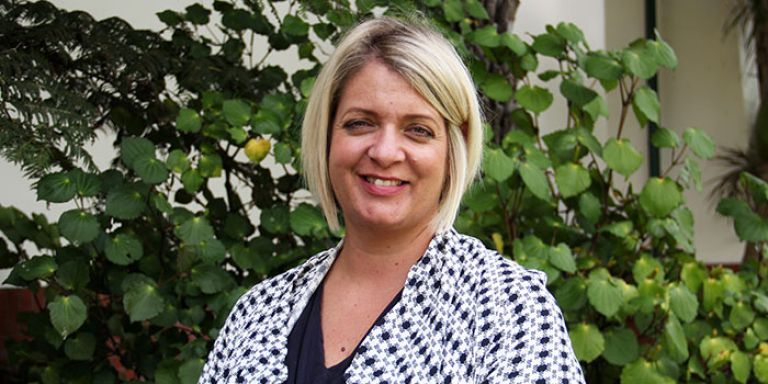
“Our students get snapped up and employed well before they finish.”
“We have early childhood programmes from level four to level seven, including a 6-month certificate, a one-year diploma, and a three-year bachelor of education. All are field-based, which means students are learning in centres as well as in our classrooms, – this is almost like doing a practical job interview. Centres can’t wait to employ our students, so they often get snapped up and employed well before they finish.
What’s beneficial about the suite of programmes we have in early childhood is, students who potentially haven’t enjoyed school, or maybe didn’t attain the required NCEA literacy credits or UE, there are still other pathways for them into the programmes. There are lots of alternate ways that we can assist students to help them pursue ECE.
So, if you’re thinking of studying early childhood education, if you’re passionate about working with children, and if you’re passionate about pursuing a career that leads to practical job skills, then MIT is the place for you. We have classes, you’re not sitting in a lecture theatre with 100 other people. We want to personalise your learning journey. Part of that is getting to know you well, but also having the opportunity for you to know us too.
What I love about the school is a lot of our teachers are graduates of our program. I’m a graduate of the early childhood program. I came back here because I love this place. You really develop a sense of belonging here that this is your place. Many of the team have studied here, they’re always researching, finding the best ways of teaching, engaging the community, making sure they are staying current and active as well as teaching subjects they are passionate about. I think that’s a big drawcard for any student who would want to come to MIT because we want to be able to provide them with not only the best experience but the best teaching.”
Kylie Smith
Head of school – education
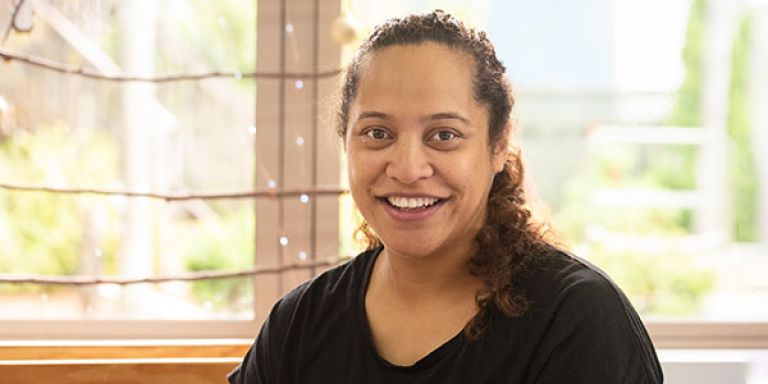
“You will never be supported as much as this place.”

“I have a passion for working with children. I have worked with children for a while and I thought getting qualified would give me more knowledge and techniques to do better in my job. I also have children and this journey has really helped me to become a better person as well.
I thought MIT would be the best choice for me because I was close to home and it turns out it was the best choice that I made. The support is amazing. The lecturers are very approachable, the environment, the people that you work with, it’s got a very family approach. I love it. The lecturers are always there when you need them. They’re always there to guide you, nurture you, and send you in the right direction.
What I enjoyed the most here is getting to work together with my group, my peers, we get a lot of interaction. We help each other a lot. I didn’t have that support before and I’m really glad that I have chosen MIT.
MIT is very hands-on, so when you finish here there’s not much change or difference when you go into the workplace. You just fit in because you’ve already gained the knowledge and what is happening in the field because of what you’ve already done in the classroom. I just blend in with all the other qualified teachers, because that’s what MIT has equipped me with. You will never be supported as much as this place.
This qualification will take me anywhere. My dream job is to become a tertiary lecturer. I know this qualification will take me there because of what I have learnt from the lecturers. They give me so much support, they give so much energy, and the knowledge is just impeccable. I know it will take me a long way, I have no doubt.”
Alisi Latu
MIT student
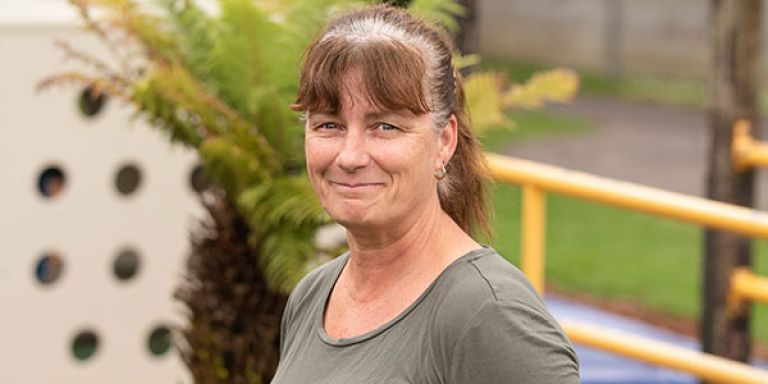
“Everyone has been really supportive.”
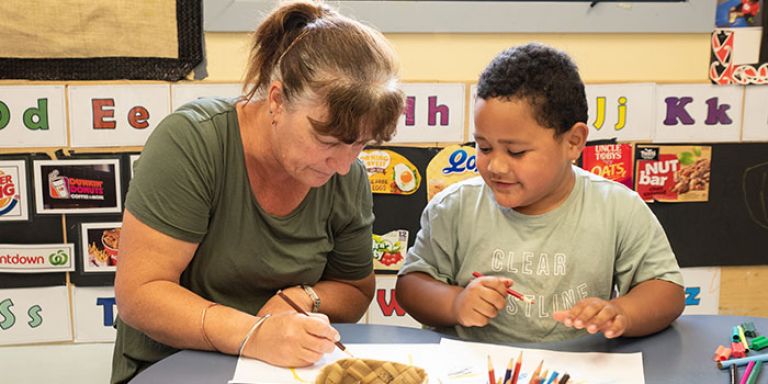
“I’m a stay-at-home mom of six children. I spent a lot of time in the education system with my own children and had the opportunity to come and do relieving at the centre where I work now. After working there for 18 months the other teachers there recommended that I become qualified, partly because it was better for my practice to have that knowledge because I could then cover qualified staff members as well.
Being at MIT doing this degree has really helped me. It’s given me the confidence to pursue my practice and share my knowledge with others.
My biggest challenge that I had to overcome was probably time management. I still have children at home, our own business, and I still work. Fitting in study was quite challenging for me in the beginning, but the support from the lecturers and my classmates have made it a lot easier.
The thing that I’ve enjoyed the most about my journey with MIT is the relationships. I’m one of the oldest in my class, but that hasn’t made any difference, everyone has been really supportive and encouraging, including the lecturers.
The flexible study options offered at MIT have been really invaluable. Being able to attend class but also do them online if need be, and being able to be in contact with the lecturers all the time.
I think the best thing about a career in early childhood is the children. I absolutely love working with them, they teach me something new every day. It’s pretty hard to have a bad day when you’re working with kids because they always make you laugh.”
Cindy Biddle
MIT student

“My favorite thing about MIT would be the hands-on placements we did.”
“My experience at MIT has been really cool. The lecturers were helpful and supportive. My favourite thing about MIT would be the hands-on placements we did. I got to go into different centres and get proper work experience.
My advice to anyone looking to study would be just hang in there. It’s worth it in the end, and you deserve it.”
Jasmine Bellamy
MIT graduate

“I love MIT because they have given me my second chance.”
“Before I started studying I was working for Air New Zealand at the International Airport as a Load Foreman.
My wife chose MIT and encouraged me to apply after I missed out on being accepted by Auckland University. I love MIT because they have given me my second chance to help my family and give back to my community here in South Auckland.
MIT is unique and different because it is based in South Auckland. I love the free car park for students!
MIT will help in any way to get you where you want to go, it is very welcoming, and the staff are very friendly. It is a very hands-on experience which I love because we get to put theory into practice, from day one.
I want to help children have a better future in education.
Come and help, come and stay, come and belong!”
Hans Aiono
MIT student
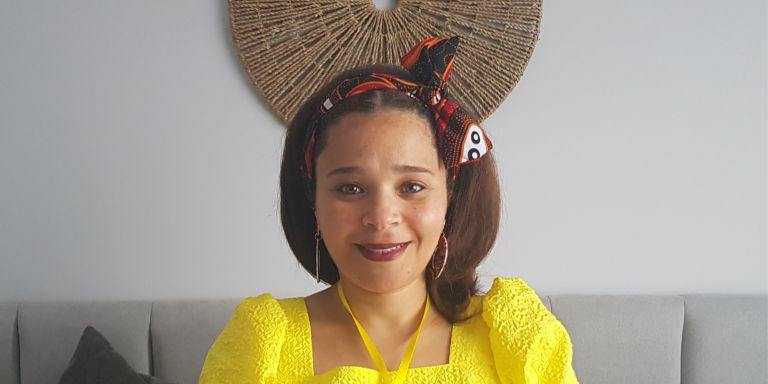
“The lecturers are amazing.”
“I was on maternity leave after working at the same company for 11.5 years. I had always wanted to be a ‘great teacher’ and as a migrant in this country, I wanted to learn more about this amazing Kiwi culture to embed it into my whānau and my life.
My friends encouraged me to study at MIT. The lecturers here are amazing. I have never met lecturers that are so enthusiastic. I love the ako in our classrooms and the diversity of our lecturers who bring fun, wisdom and knowledge to our classroom. The best part is the way they encourage student relationships with each other. I value my classmates and we are an amazing team together.
It is an eye-opening experience working alongside an Associate Teacher. Assisting and engaging with the Tamariki is the highlight of my week. If you want adventure in a classroom, excitement from engaging with the Tamariki, and linking your theory to your school-based learning, nothing beats that. I am already building lasting relationships with my principal, the teachers and the students.
I encourage you to come along and be a part of this great course.
Go for gold, it is the best place.
MIT will change your life.”
La-Rochelle Bernstein
MIT student

“Be brave, be bold, our tamariki need you more then you realise.”
“Being a teacher is something that I have always been inspired to be. It gives me an opportunity to give back and create a safe and nurturing space for all students – something I had missing in my early stages of growing up.
I chose the Primary Pasifika course because as a pākehā I have noticed there is not enough cultural awareness within schools, we need more of it. This course provides an opportunity for us to deepen and enrich our understanding and create a safe space for students to bring who they are into the classroom, and not leave their culture at home.
MIT provided the exact course I was looking for – ticked all the boxes and exceeded well above my expectations. This course provides a hands-on approach to learning. I know I will be a great teacher because of it.
What I also love is the community they have built and the ongoing support and encouragement they give to help us achieve, not because they have to, but because they want to. They support us every step of the way and treat us not just as a student but as part of their whānau. I can’t think of any other place that would provide this much support.
We need more Primary Pasifika teachers; it does not matter where you come from if you have the opportunity to change a life and make a difference in this world for our tamariki, take it.
Be brave, be bold, our tamariki need you more then you realise.”
Lexi Williams
MIT student
See why more people choose Early childhood at MIT
“It’s been a really rewarding, positive experience.”
“I have studied at a number of well-regarded tertiary institutions in New Zealand and have postgraduate qualifications including a master’s degree from those institutes.
However, the Graduate Certificate in Applied eLearning from MIT has been, by far, one of the most interesting, practical and well-run courses I have encountered.
An excellent lecturer, with lots of support, and timely responses. I have found studying at MIT to have been a really rewarding, positive experience.”
Adam Chao
English language teacher
In the news: MIT helps to meet demand for early childhood educators.
Manukau Institute of Technology is committed to providing opportunities to a greater number in the community through blended learning programmes that allow students to balance work and study.
A story in the New Zealand Herald highlighted a shortage of qualified early childhood educators, noting that the early childhood council found 30 percent of childcare centres have unfilled vacancies for qualified teachers this month.
“Demand in Auckland is extremely high,” says Kylie Smith, Head of Education at Manukau Institute of Technology (MIT). “Students in our diploma and degree programmes are typically employed before they have completed their studies.”
MIT’s school of education is in close contact with early childhood centres who want students to complete their practical training with them. Many of these placements become full-time jobs.
“I feel like I can make the world and society better.”
“I want to become a qualified teacher, to have more knowledge to support children in early childhood, That’s the purpose I wanted to pursue. Early childhood education is regarded as a key factor in a child’s growth development and shaping their futures. I chose this course because I feel like I can make the world and society better for future generations.
The support from the teachers and my centre teachers to actively help me with this course, and help with assignments, has been the best part of my student journey at MIT. I feel like I have a lot of support, and without them, I couldn’t reach where I am right now.
I’m originally from China, a lot of students studying are from different cultures and backgrounds. MIT accepts everyone and they give everyone equal education, and I think that’s unique. There are not too many male students in the class, I feel really proud of myself to be one of them.”
Lu Lu
MIT student
“Our students get snapped up and employed well before they finish.”
“We have early childhood programmes from level four to level seven, including a 6-month certificate, a one-year diploma, and a three-year bachelor of education. All are field-based, which means students are learning in centres as well as in our classrooms, – this is almost like doing a practical job interview. Centres can’t wait to employ our students, so they often get snapped up and employed well before they finish.
What’s beneficial about the suite of programmes we have in early childhood is, students who potentially haven’t enjoyed school, or maybe didn’t attain the required NCEA literacy credits or UE, there are still other pathways for them into the programmes. There are lots of alternate ways that we can assist students to help them pursue ECE.
So, if you’re thinking of studying early childhood education, if you’re passionate about working with children, and if you’re passionate about pursuing a career that leads to practical job skills, then MIT is the place for you. We have classes, you’re not sitting in a lecture theatre with 100 other people. We want to personalise your learning journey. Part of that is getting to know you well, but also having the opportunity for you to know us too.
What I love about the school is a lot of our teachers are graduates of our program. I’m a graduate of the early childhood program. I came back here because I love this place. You really develop a sense of belonging here that this is your place. Many of the team have studied here, they’re always researching, finding the best ways of teaching, engaging the community, making sure they are staying current and active as well as teaching subjects they are passionate about. I think that’s a big drawcard for any student who would want to come to MIT because we want to be able to provide them with not only the best experience but the best teaching.”
Kylie Smith
Head of school – education
“You will never be supported as much as this place.”
“I have a passion for working with children. I have worked with children for a while and I thought getting qualified would give me more knowledge and techniques to do better in my job. I also have children and this journey has really helped me to become a better person as well.
I thought MIT would be the best choice for me because I was close to home and it turns out it was the best choice that I made. The support is amazing. The lecturers are very approachable, the environment, the people that you work with, it’s got a very family approach. I love it. The lecturers are always there when you need them. They’re always there to guide you, nurture you, and send you in the right direction.
What I enjoyed the most here is getting to work together with my group, my peers, we get a lot of interaction. We help each other a lot. I didn’t have that support before and I’m really glad that I have chosen MIT.
MIT is very hands-on, so when you finish here there’s not much change or difference when you go into the workplace. You just fit in because you’ve already gained the knowledge and what is happening in the field because of what you’ve already done in the classroom. I just blend in with all the other qualified teachers, because that’s what MIT has equipped me with. You will never be supported as much as this place.
This qualification will take me anywhere. My dream job is to become a tertiary lecturer. I know this qualification will take me there because of what I have learnt from the lecturers. They give me so much support, they give so much energy, and the knowledge is just impeccable. I know it will take me a long way, I have no doubt.”
Alisi Latu
MIT student
“Everyone has been really supportive.”
“I’m a stay-at-home mom of six children. I spent a lot of time in the education system with my own children and had the opportunity to come and do relieving at the centre where I work now. After working there for 18 months the other teachers there recommended that I become qualified, partly because it was better for my practice to have that knowledge because I could then cover qualified staff members as well.
Being at MIT doing this degree has really helped me. It’s given me the confidence to pursue my practice and share my knowledge with others.
My biggest challenge that I had to overcome was probably time management. I still have children at home, our own business, and I still work. Fitting in study was quite challenging for me in the beginning, but the support from the lecturers and my classmates have made it a lot easier.
The thing that I’ve enjoyed the most about my journey with MIT is the relationships. I’m one of the oldest in my class, but that hasn’t made any difference, everyone has been really supportive and encouraging, including the lecturers.
The flexible study options offered at MIT have been really invaluable. Being able to attend class but also do them online if need be, and being able to be in contact with the lecturers all the time.
I think the best thing about a career in early childhood is the children. I absolutely love working with them, they teach me something new every day. It’s pretty hard to have a bad day when you’re working with kids because they always make you laugh.”
Cindy Biddle
MIT student
“My favorite thing about MIT would be the hands-on placements we did.”
“My experience at MIT has been really cool. The lecturers were helpful and supportive. My favourite thing about MIT would be the hands-on placements we did. I got to go into different centres and get proper work experience.
My advice to anyone looking to study would be just hang in there. It’s worth it in the end, and you deserve it.”
Jasmine Bellamy
MIT graduate
“I love MIT because they have given me my second chance.”
“Before I started studying I was working for Air New Zealand at the International Airport as a Load Foreman.
My wife chose MIT and encouraged me to apply after I missed out on being accepted by Auckland University. I love MIT because they have given me my second chance to help my family and give back to my community here in South Auckland.
MIT is unique and different because it is based in South Auckland. I love the free car park for students!
MIT will help in any way to get you where you want to go, it is very welcoming, and the staff are very friendly. It is a very hands-on experience which I love because we get to put theory into practice, from day one.
I want to help children have a better future in education.
Come and help, come and stay, come and belong!”
Hans Aiono
MIT student
“The lecturers are amazing.”
“I was on maternity leave after working at the same company for 11.5 years. I had always wanted to be a ‘great teacher’ and as a migrant in this country, I wanted to learn more about this amazing Kiwi culture to embed it into my whānau and my life.
My friends encouraged me to study at MIT. The lecturers here are amazing. I have never met lecturers that are so enthusiastic. I love the ako in our classrooms and the diversity of our lecturers who bring fun, wisdom and knowledge to our classroom. The best part is the way they encourage student relationships with each other. I value my classmates and we are an amazing team together.
It is an eye-opening experience working alongside an Associate Teacher. Assisting and engaging with the Tamariki is the highlight of my week. If you want adventure in a classroom, excitement from engaging with the Tamariki, and linking your theory to your school-based learning, nothing beats that. I am already building lasting relationships with my principal, the teachers and the students.
I encourage you to come along and be a part of this great course.
Go for gold, it is the best place.
MIT will change your life.”
La-Rochelle Bernstein
MIT student
“Be brave, be bold, our tamariki need you more then you realise.”
“Being a teacher is something that I have always been inspired to be. It gives me an opportunity to give back and create a safe and nurturing space for all students – something I had missing in my early stages of growing up.
I chose the Primary Pasifika course because as a pākehā I have noticed there is not enough cultural awareness within schools, we need more of it. This course provides an opportunity for us to deepen and enrich our understanding and create a safe space for students to bring who they are into the classroom, and not leave their culture at home.
MIT provided the exact course I was looking for – ticked all the boxes and exceeded well above my expectations. This course provides a hands-on approach to learning. I know I will be a great teacher because of it.
What I also love is the community they have built and the ongoing support and encouragement they give to help us achieve, not because they have to, but because they want to. They support us every step of the way and treat us not just as a student but as part of their whānau. I can’t think of any other place that would provide this much support.
We need more Primary Pasifika teachers; it does not matter where you come from if you have the opportunity to change a life and make a difference in this world for our tamariki, take it.
Be brave, be bold, our tamariki need you more then you realise.”
Lexi Williams
MIT student