

In Brief:
- Graduate Raynil Ram has completed his electrical engineering degree after progressing from an internship to a full-time role with WM New Zealand.
- The internship was supported through the High-Power Electric Motors for Large-Scale Transport research programme, which connects emerging technology with engineering education and industry experience.
- Raynil’s success demonstrates how practical learning and industry partnerships can connect ākonga ‘learners’ with emerging career opportunities while helping develop skills needed by industry.
An internship that gave TechPark electrical engineering student Raynil Ram his first opportunity with WM New Zealand has developed into a full-time career working on the company’s electric vehicle fleet.
Three years after joining WM, Raynil has completed his Bachelor of Engineering Technology (Electrical), with his lecturers and representatives from MIT and Unitec recently coming together for a lunch to celebrate this success.
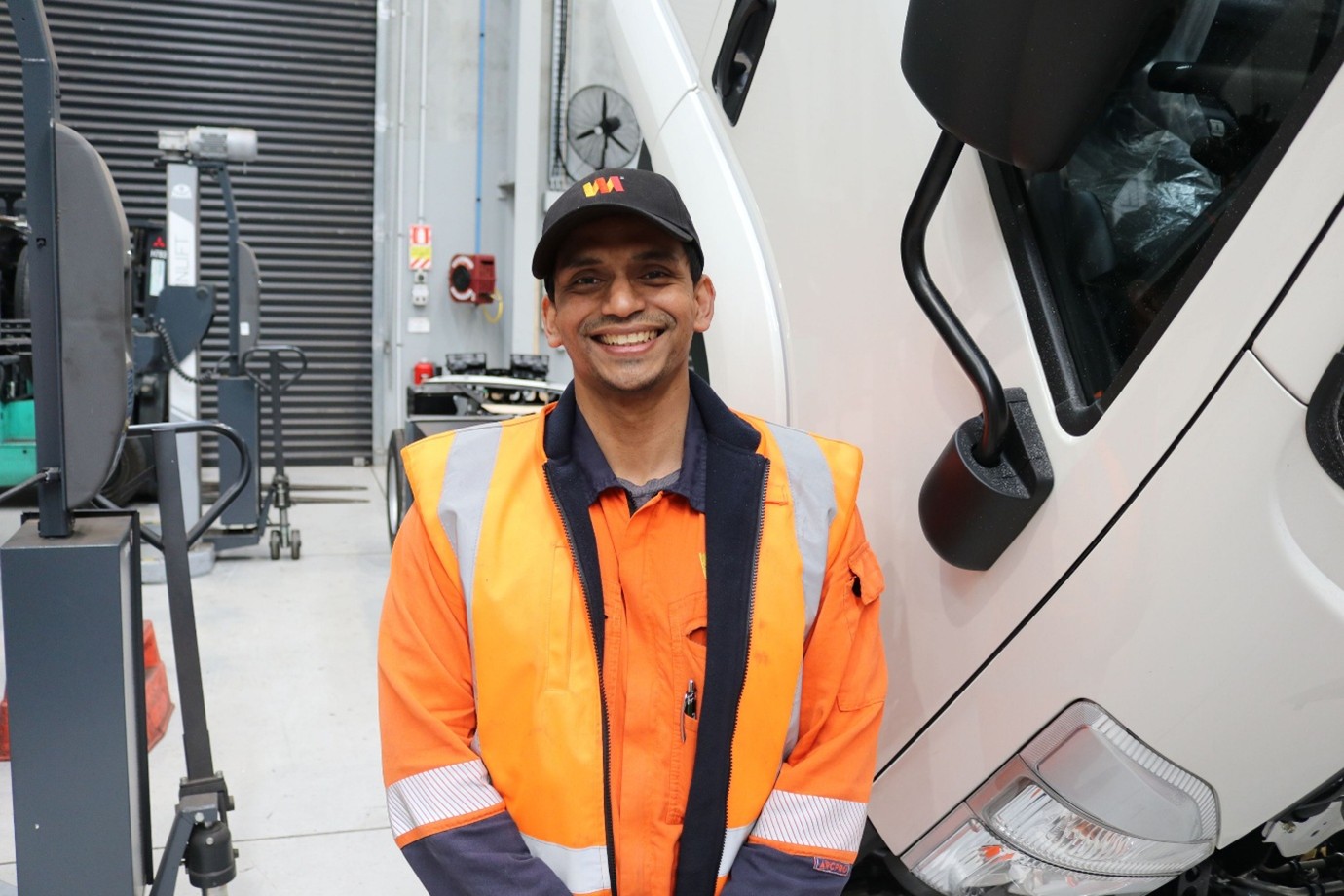
Now an Electric Vehicle Technician, Raynil helps maintain WM’s existing electric fleet and supports new vehicle builds, diagnosing faults and helping develop design changes to prevent problems from recurring.
It’s a career path that began after Raynil returned to study following several years working as a telecommunications technician.
“I’ve always had a high level of interest in electrical things, and I like to build things as well,” he says.
“I was halfway between electrical or mechanical [engineering], and then I was like, well, mechanical is cool, but electrical is that invisible force in the background.
The opportunity with WM came while Raynil was still early in his studies, when he spotted an announcement on the MIT website about a tour of the company’s electric vehicle workshop.
“I was still very fresh in the course, and I was like, wow, this will be cool — electric vehicles. Let’s go have a look at it.”
Raynil went along simply wanting to learn more about the work happening at WM.
The visit organised by the Industry Partnerships team, saw students touring the workshop and completing a technical challenge. Raynil’s performance caught the attention of the WM team, and after returning to Tech Park, he received a call from Principal Lecturer Nick Kusari asking him to submit his CV for an internship.
The internship was supported through a wider Ministry of Business, Innovation and Employment (MBIE)-funded programme. It developed into a part-time position with WM and later full-time employment.
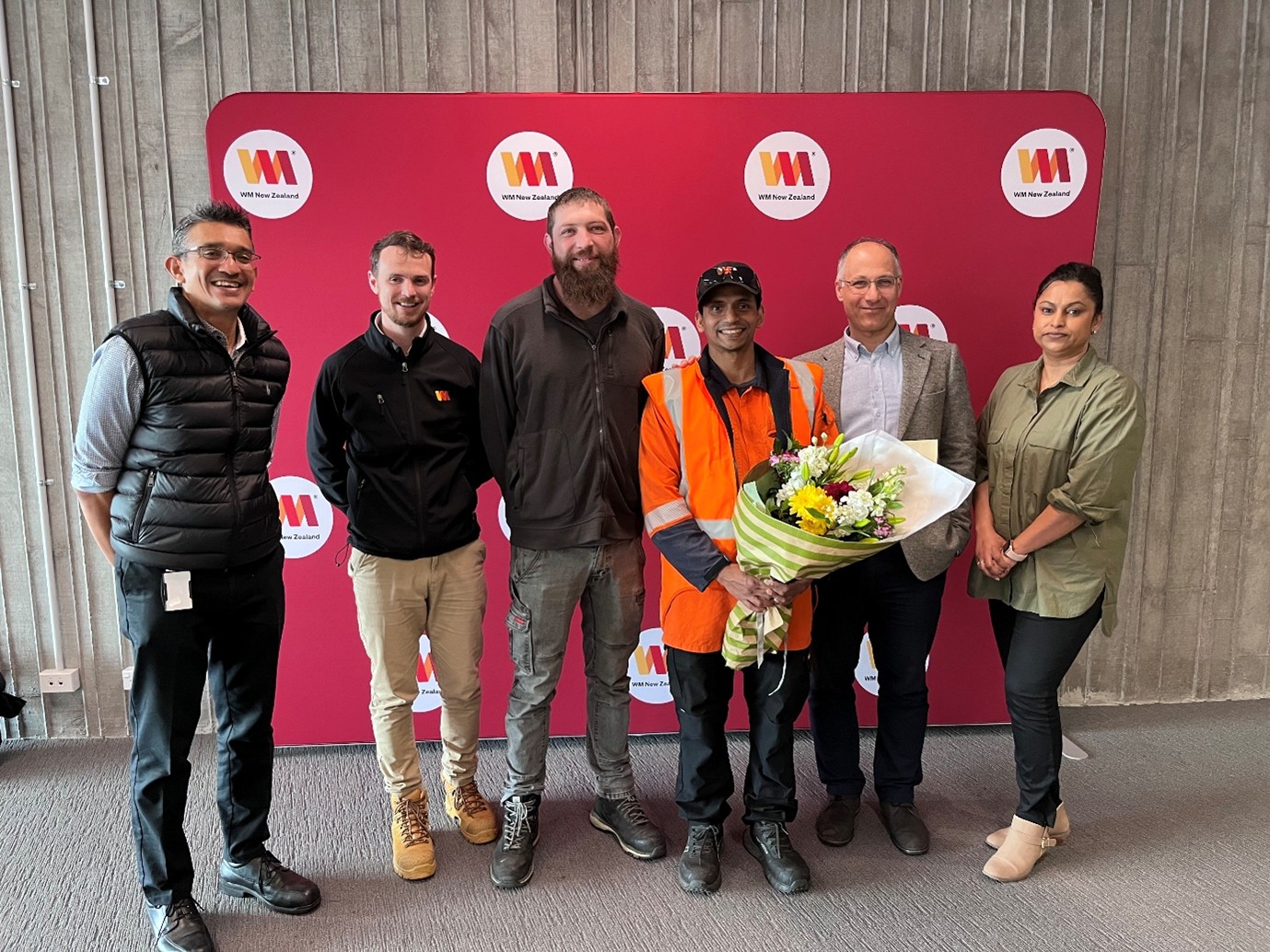
(L – R) Jitesh Singh, Head of Fleet, Ashley Davenport, Senior Project Engineer – Electric Vehicles, Adriaan Botha, Project Engineer – Electrical/Mechatronics, Raynil (Ray) Ram, Electric Vehicle Technician, Nick Kusari, Principal Lecturer, MIT and Maureen Prasad, Recruitment Consultant, Industry Partnerships
Making an impression from day one
Adriaan Botha, Project Engineer at WM who has managed Raynil for around two years, says his potential became apparent almost immediately.
“His very first day with us we were working through a very technical issue.
“He spent two days with me figuring it out, and I was actually impressed after the very first two days working with him, and I went to my manager and said, ‘This is a needle in a haystack. I want to make sure we take care of it.'”
Adriaan says Raynil’s different approach to solving problems has been an asset to the team.
“We could see his capabilities right away and just the way he thought through the problems we had, he had a different perspective than we did, especially myself.
“He thinks in a very different way than I do. And so it’s been very interesting and very, very good to work with him.”
For Jitesh Singh, Head of Fleet at WM, Raynil’s progression demonstrates the value of bringing emerging engineers into industry.
“Ray is a self-learner. He’s obviously very interested in the technology, and he has grown himself with the help of the rest of the team as well.
“He’s blended in really well with the team, and that’s really important when you’re in this kind of work, because there’s a lot of people here with a lot of experience in electrification of electric fleets.”
Balancing work and study
Raynil completed his bachelor’s degree while continuing to work, balancing his learning requirements with his responsibilities at WM.
He says support from his lecturers and flexibility from both Tech Park and WM helped him manage the two.
“MIT was amazing. Awesome lecturers. They do engage you a lot. So if you have questions, they’re always willing to help you, which is what I’ve always liked.”
“MIT has been very helpful. They have been accommodating and then Waste Management have been doing the same, which made my life a lot easier.”
Maureen Prasad, Recruitment Consultant in the Industry Partnerships team, says seeing an opportunity progress from industry engagement to a successful career outcome demonstrates the value of connecting education with the needs of industry.
“Raynil’s success shows what can happen when strong industry partnerships are combined with the practical, hands-on learning our ākonga receive at MIT and Unitec,” Maureen says.
“It demonstrates that our programmes are relevant to industry and gives our current students an example of where their studies can take them, including into emerging areas of work they may not previously have considered.
“Successes like this also help employers see MIT and Unitec as a partner of choice and create opportunities to continue building relationships that can benefit our students and industry.”
The experience has already left a positive impression with WM.
“It’s been extremely successful, so much so that I’ve actually already spoken to the team about potentially approaching us with other students for not only the electrification, but also for our mechanical workshop, for our operations team, our logistics teams,” Jitesh says.
$15m MBIE fund to electrify large-scale transport vehicles
Raynil’s internship was one of eight paid work placements provided through the wider MBIE-funded programme, which has also funded twelve scholarships for engineering students.
The opportunity is part of High-Power Electric Motors for Large-Scale Transport programme, a $15 million research fund developed under the Strategic Science Investment Fund –
Advanced Energy Technologies. The programme was established in response to the challenge of reducing emissions from large-scale transport, including planes, boats and trucks. Transport accounts for around 25 percent of global greenhouse gas emissions, with large-scale transport responsible for about half of those emissions.
Tech Park Principal Lecturer Nick Kusari says one of the goals with the programme is to take the research to the “grass roots”, connecting emerging technology with the next generation of engineers through specialised learning, scholarships and industry internships.
Raynil’s journey from student to Electric Vehicle Technician puts that objective into practice, connecting engineering education with the skills needed to support the transition to new transport technologies.