


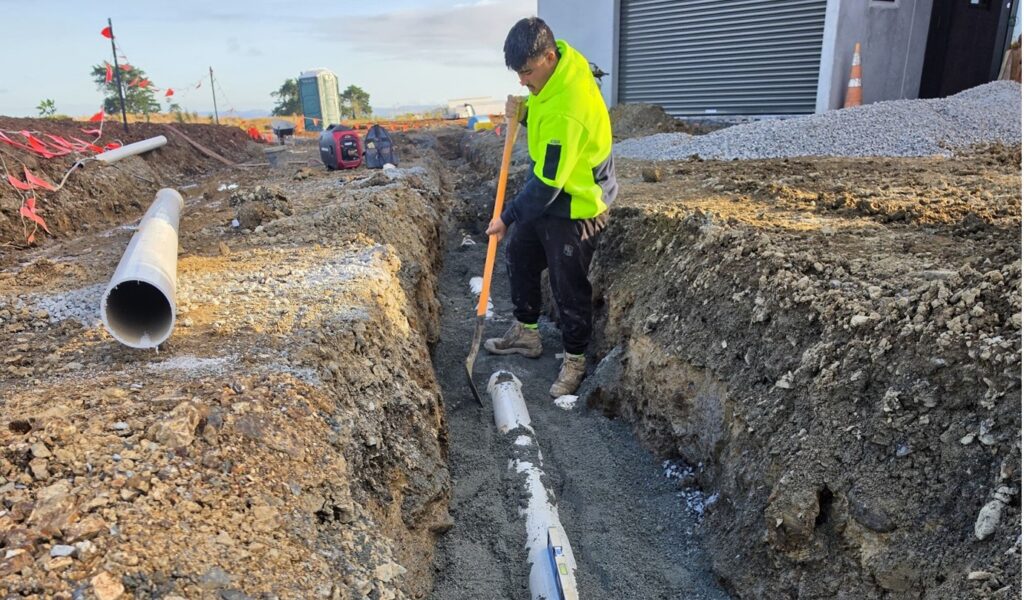
 TechPark student Khalil Ahmadi on site, for Euroclass
In brief
- Apprentice numbers across plumbing, gasfitting and drainlaying have fallen 15 percent since 2022, highlighting the need to strengthen pathways into the workforce.
- MIT and Unitec’s Industry Partnerships team connected Euroclass with pre-trade learners, leading to TechPark ākonga Khalil Ahmadi securing a role with the Auckland construction company.
- This industry partnership led pathway success comes at a time when the sector is focused on rebuilding its workforce.
As New Zealand’s plumbing, gasfitting and drainlaying sector works to address a shortage of skilled workers, getting more people into training is only part of the challenge.
Creating a pathway from training into the workforce matters too.
At MIT and Unitec, the Industry Partnerships team works alongside academic teams and employers to help make that connection, linking businesses looking for future talent with learners preparing to enter industry.
For Tech Park ākonga ‘student’ Khalil Ahmadi, one of those connections led from pre-trade study into a role with Auckland construction company Euroclass, where seven months on he is building his skills and taking on increasing responsibility on site.
Scott Fitzpatrick, Civil & Development Manager at Euroclass, says finding people to grow the company’s drainage team had become increasingly challenging.
The family-owned business has operated for around 30 years, with much of its work centred in Auckland. Its in-house teams work across civil construction, land development, drainage and building, supported by the company’s own design and consenting capability.
Scott says Euroclass had traditionally recruited through industry networks and existing relationships, but the available pool of drainlayers had become more difficult to draw from.
“A lot of the drainlayers are leaving probably for the bright lights of Australia.
“Also, drainage as a trade doesn’t get the same or command the same respect out of school leavers as some of the other traders, and so there’s a lesser number of people coming through,” he says.
Looking for another way to find people the business could develop, Euroclass approached MIT and Unitec in late 2025 and connected with the Industry Partnerships team to interview students who would fit their requirement.
Khalil Ahmadi was one of them.
For Scott, the experience also highlighted a bigger opportunity to create stronger links between learners preparing for the trades and businesses looking for people.
“As soon as I met Maureen (Prasad, MIT and Unitec Recruitment Consultant) and we had a discussion, within half an hour, I’m going to myself, why is this not being tapped into more?” he says.
Mr Fitzpatrick says tertiary training brings together young people who have already made a decision to explore a trade and are beginning to develop the foundational skills for it, but they also need opportunities to build connections with employers.
“There’s probably more work to be done on the more traditional construction trades and giving these kids a pathway to the workforce. They probably don’t have a real clear pathway to get industry connections.
“I think there’s some work that can be done in that space,” he says.
Connecting the classroom with the workplace
Maureen Prasad, with the Industry Partnerships Team at MIT and Unitec says helping create those pathways is an important part of the team’s role.
“Employers are telling us what skills and people they need, while our classrooms are full of learners who are working towards careers in those industries. Our role is to help connect the two.
“It’s about understanding what an employer is looking for, working closely with our lecturers who know their learners, and creating opportunities for those learners to engage directly with industry.
“For a learner, that connection can be the first step into a career. For an employer, it provides an opportunity to meet emerging talent and develop someone to meet the future needs of their business.”
For Euroclass, recruiting from a pre-trade programme also fits with the way it wants to develop its workforce.
Scott says the company deliberately looks for people at the beginning of their careers who have the attitude and potential to learn, then invests time in developing their technical and interpersonal skills within the business.
Qualifications remain an important part of that pathway.
“I think it’s really important that if you’re going to be doing a trade, get the ticket associated to it, get the qualification because the qualification is ultimately what will support you when you’re older in life,” Scott says.

From pre-trade learner to the construction site
For Khalil Ahmadi, the opportunity has provided the link between what he learned at MIT and Unitec and how those skills are used on a working construction site.
Khalil came to New Zealand from Afghanistan in 2023 and completed Years 12 and 13 at James Cook High School before enrolling for the New Zealand Certificate in Plumbing, Gasfitting and Drainlaying (Level 3) at MIT and Unitec.
During his training, he developed practical skills including working with pipe connections and benching — forming the channel at the base of a manhole to direct wastewater through it.
The training environment was different from a live construction site, but Khalil says it gave him the foundation to understand the work he encountered on the job.
Seven months into his role with Euroclass, his learning has expanded considerably.
He has worked on benching, pipe installation, reading plans, setting levels and using pipe and rotary lasers, alongside learning the systems and standards expected on a commercial site.
For Scott, Khalil’s development is reflected in the level of responsibility the company is now prepared to give him.
He says Khalil arrived with little industry experience but has progressed to driving a company vehicle and handling equipment as his responsibilities have grown.
“The level of trust and ability to learn on the job, is there,” Scott says.
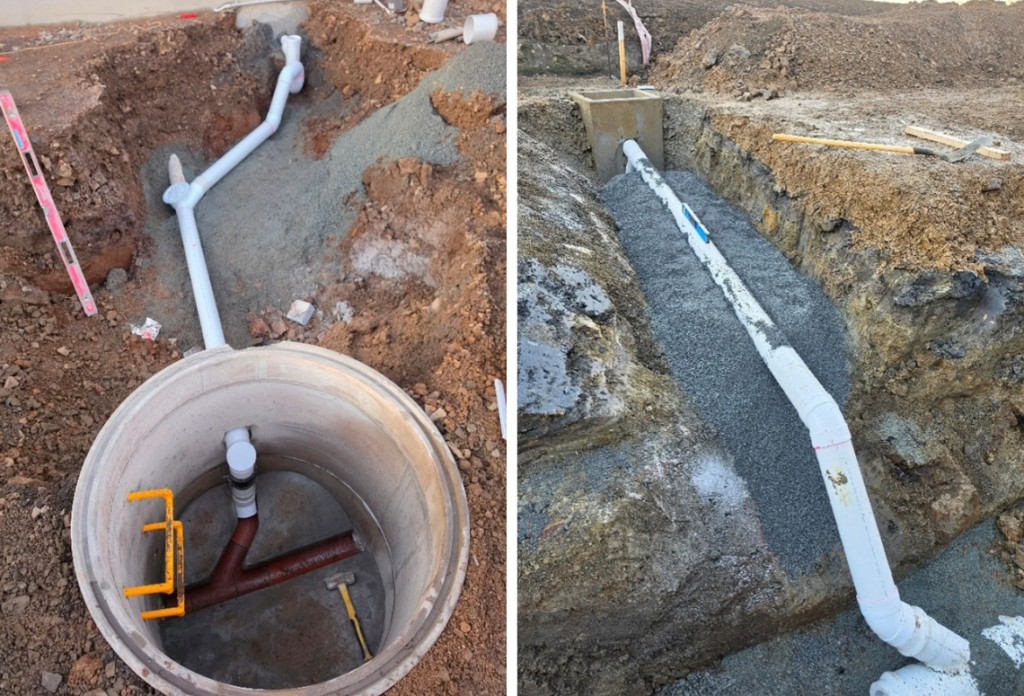 TechPark student Khalil Ahmadi early onsite workmanship for Euroclass
Reduction in the number of apprentices across the sector
This industry partnership led pathway success comes at a time when the sector is focused on rebuilding its workforce.
In 2025, Waihanga Ara Rau, the former-Workforce Development Council, estimated apprentice numbers across plumbing, gasfitting and drainlaying had fallen 15 percent since 2022. Master Plumbers’ 2026 advocacy plan also identifies a “considerable skills shortage” and says increased apprenticeship numbers are needed to help address it.
Oncoming demand for skills is anticipated in the longer-term with MBIE forecasting total construction activity to increase from $55.7 billion in 2025 to $65.4 billion by 2030, creating a need for skilled plumbers, gasfitters and drainlayers.