

In brief:
- NZMS celebrated its centenary on World Maritime Day 2026 at an event hosted with Maritime New Zealand.
- Established as the JW Keane Nautical School in 1926, the school has evolved alongside the country’s maritime sector over the past century.
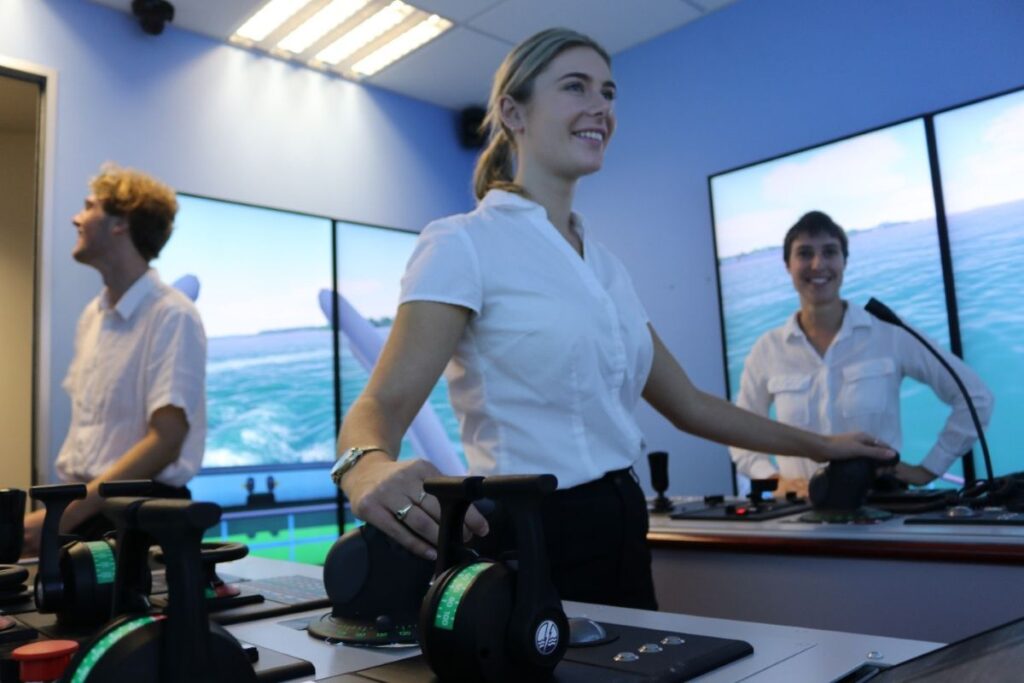
- Today, the school combines maritime education with advanced simulation and practical training to prepare students and industry professionals for careers at sea.
- As it enters its next century, the school is highlighting the importance of industry collaboration and access to sea time to develop the future maritime workforce.
For 100 years, generations of maritime professionals have begun or advanced their careers through New Zealand Maritime School.
From a nautical school established in 1926 to today’s specialist maritime training facilities overlooking Waitematā Harbour in Auckland’s CBD, the school has evolved alongside the industry it serves, through changes in ships, technology, qualifications and the skills required at sea.
This history was celebrated on World Maritime Day 2026, when NZMS, owned and operated by MIT and Unitec, marked its centenary at an event hosted in collaboration with Maritime New Zealand.
The event brought together representatives from across the maritime sector to recognise the school’s contribution, as well as consider what will be needed to develop New Zealand’s maritime workforce for the decades ahead.
Held under the theme of From Policy to Practice: Powering Maritime Excellence, the programme included addresses from Captain Kees Buckens, NZMS’s Industry Engagement and Simulation Centre Manager and Kevin Short CNZM, AO, Chair, Maritime New Zealand alongside video messages from Hon Penny Simmonds, Minister for Tertiary Education and Hon James Meager, Associate Minister of Transport.
Speaking by video, Minister Simmonds acknowledged the generations of educators, employers, industry leaders, regulators and learners who have contributed to maritime education and training.
“For 100 years maritime education and training has helped prepare generations of New Zealanders for careers at sea and across the wider maritime sector,” Mr Simmonds says.
“As our country has grown and evolved the New Zealand Maritime School has played an important role in developing the people that the sector needs with training, career pathways and professional development.”
Kevin Short CNZM, AO, Board Chair, Maritime New Zealand says the centenary demonstrated the enduring value of investing in people and skills, while putting a spotlight on challenges facing the sector, including changing technology, workforce shortages and evolving global standards. Addressing these challenges requires industry, education providers, professional bodies, unions, government agencies and regulators to work together.
The discussion continued through a sector workshop, with those present considering the capabilities the maritime workforce will need over the next twenty years and what industry, government, education providers and professional bodies can collectively do to develop them.
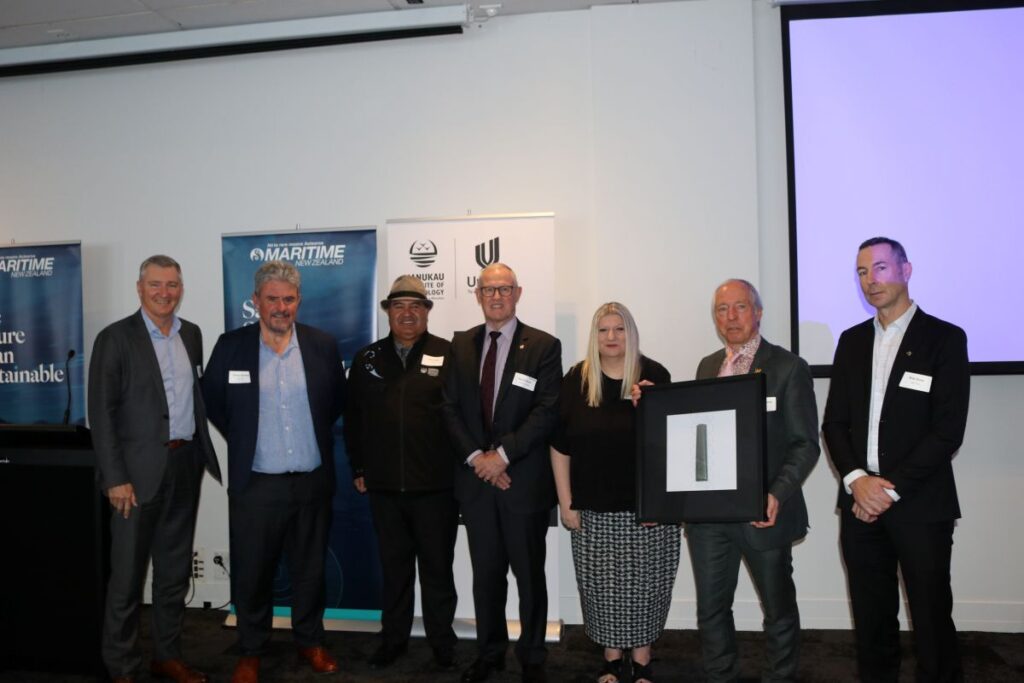 (L – R) MIT and Unitec Programme Director – Tāmaki Dr Simon Bilton, Council Deputy Chair Simon Harding, Matua Vince Hapi, Maritime New Zealand Chair Kevin Short CNZM, AO, Director & Chief Executive Maritime NZ Kirstie Hewlett, New Zealand Maritime School (NZMS) Industry Engagement & Simulation Centre Manager Captain Kees Buckens and Head of School, Rob Shaw
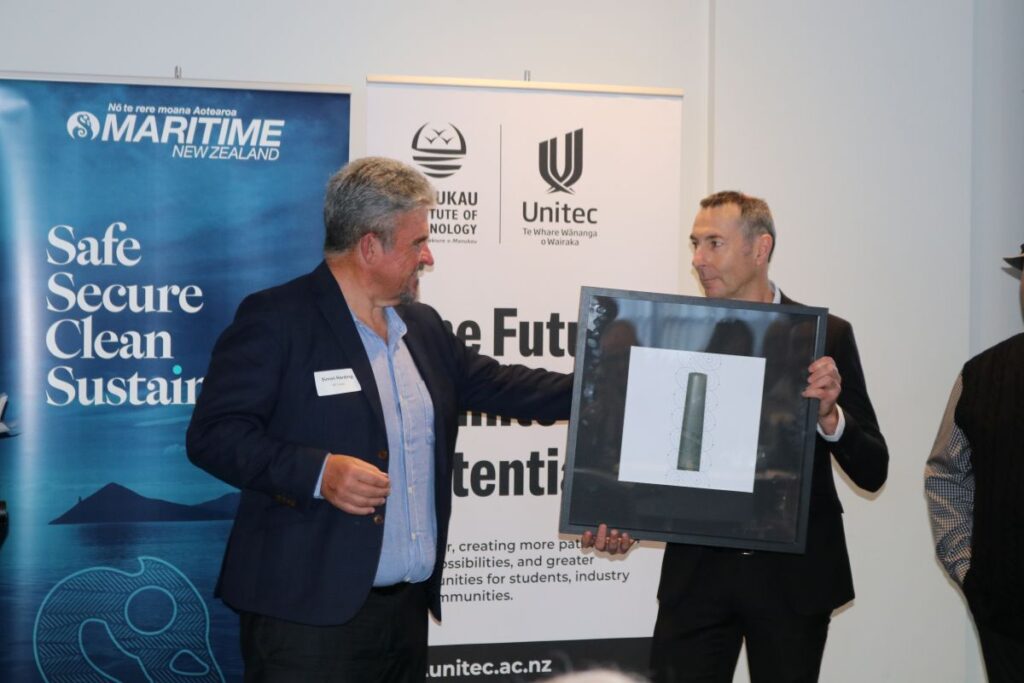 MIT and Unitec Council Deputy Chair Simon Harding presenting a taonga to Rob Shaw, Head of NZMS
As part of the centenary celebration, MIT and Unitec Council Deputy Chair Simon Harding presented a commemorative taonga to Head of School Rob Shaw and Captain Kees Buckens, designed by Hohepa Renata, Taurahere Marae Lecturer at Te Noho Kotahitanga Marae. Owairaka | Mt Albert.
A school shaped by New Zealand’s maritime history
The New Zealand Maritime School’s beginnings can be traced to 1926, when the JW Keane Nautical School was officially registered in Auckland, operating near Queen Street.
In 1944, the JW Keane School was taken over by the New Zealand Marine Department after both JW Keane and his business partner enlisted for war service.
At the time, the Union Steam Ship Company (USSCo)—then New Zealand’s largest shipping company—was pivotal to maritime career development. From 1952 to 1986, the company ran an extensive maritime apprenticeship programme, enrolling approximately 10 cadets annually.
The Shipping Corporation of NZ (SCONZ), the Government-owned ship operator, also contributed to maritime training with a Deck Cadet programme from circa 1980. There were up to six cadets each year training on coastal vessels, and container ships trading internationally and to Australia.
The school experienced several relocations: from the historic waterfront Ferry Building to the “Pagoda” building opposite in 1980, where it joined the traffic and marine departments, as well as the shipping office or “Corner” recruiting seamen to join ships. The school moved briefly to the Jean Batten Building on Shortland Street.
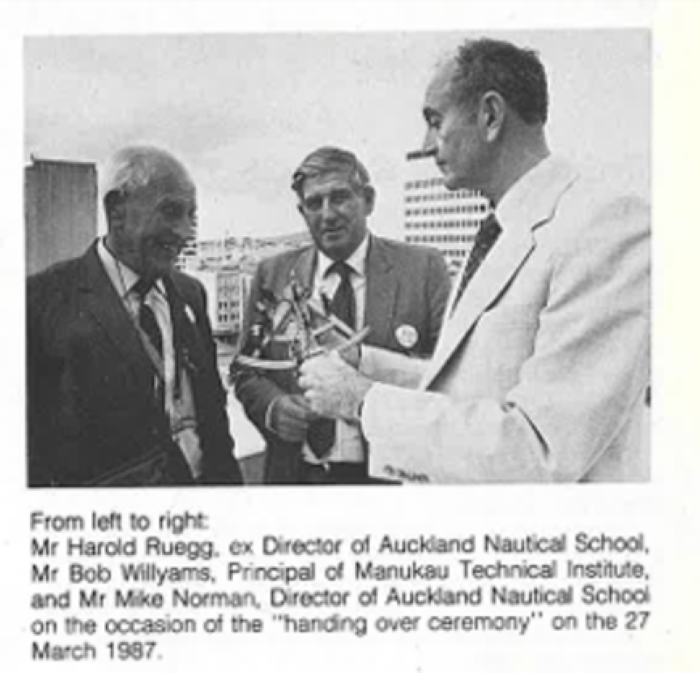
The official handover of the school from the Ministry of Transport to the then-Manukau Polytechnic
In 1992, when operations were passed to the then-Manukau Polytechnic, the school was moved to a purpose-built Maritime Building on Ōtara Campus which is now the ND building. A ship’s mast is still in position on the roof of the building as a reminder of this history. The Deck students were joined there with the Marine Engineering section creating the New Zealand Maritime School.
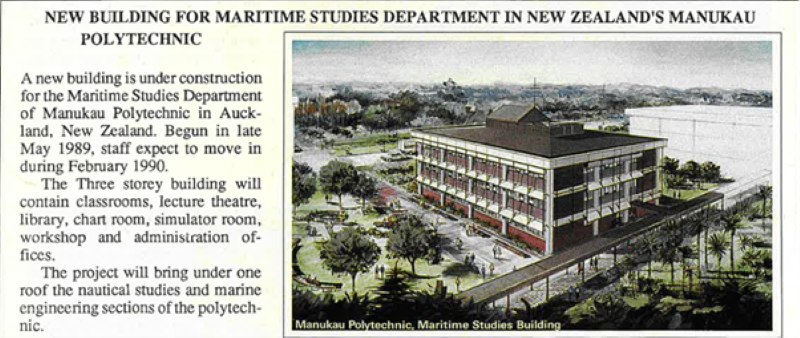
An artist’s impression before ND building was constructed
A ship’s anchor marked the entrance for many years even after the school moved to Q-Block at Ōtara South Campus, and later in 1999, when the location transitioned to the current premises on the Auckland waterfront at Quay Street.
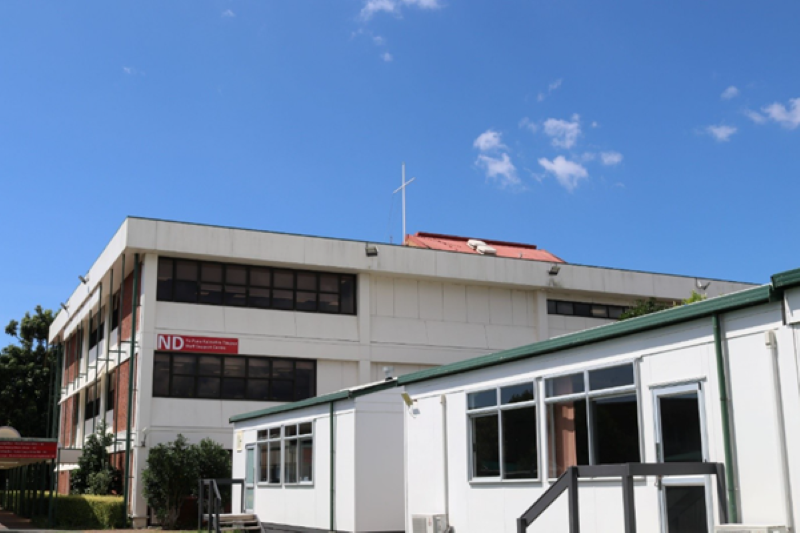
The mast is still at the top of the ND building at Ōtara Campus
Today, the New Zealand Maritime School occupies three floors of a building overlooking Waitematā Harbour and is providing seafarers from New Zealand and around the world, training in all aspects of working in the maritime industry.
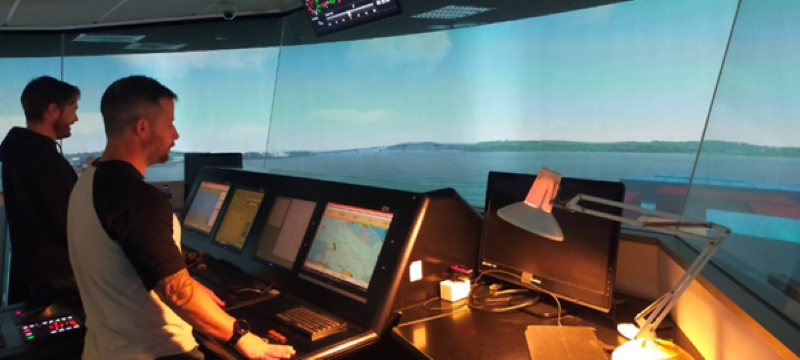
The Simulation Centre replicates various aspects of navigating and piloting large vessels in real environments like the Waitemata Harbour
The school has close relationships with major industry organisations including Ports of Auckland, Maritime NZ, KiwiRail and Toitū Te Whenua – Land Information New Zealand.
The City Campus has the largest maritime simulator in the Southern Hemisphere with seven bridge simulators that replicate a vessel’s principal control centre.
From the classroom to the bridge
While there have been many changes, Captain Buckens says that the school’s fundamental purpose has remained consistent: preparing people for careers at sea and, over time, leadership across the maritime sector.
Pointing to the career progression of former students as one way of understanding the school’s long-term impact.
Over approximately the past 25 years, the school’s experience has been that around four or five students from a typical intake of 20 to 25 eventually progress to become maritime pilots.
“They didn’t become pilots because they started as pilots. They started as students. They learned the fundamentals. They went to sea. They became watchkeepers. They gained experience and progressed through their certificates. They became senior officers and some ultimately became pilots,” Capt. Buckens says.
That progression can take decades.
“The masters, chief engineers, harbour masters and pilots of 2040 are not created in 2040. They are being developed right now.”
Technology has transformed how the school can prepare them.
Around twenty years ago, the school purchased its first bridge simulator. Today, its Simulation Centre includes seven full-mission bridges, including tug and dynamic positioning simulators, as well as a full-mission engineering simulator that can be connected with the bridges to create integrated scenarios.
The school also operates one of only four twin-fall lifeboat simulators globally, allowing learners to practice critical competencies within a controlled environment.
Guests at the centenary event were able to tour the school after the formal programme and see its bridge, dynamic positioning, tug and lifeboat simulation facilities in operation.
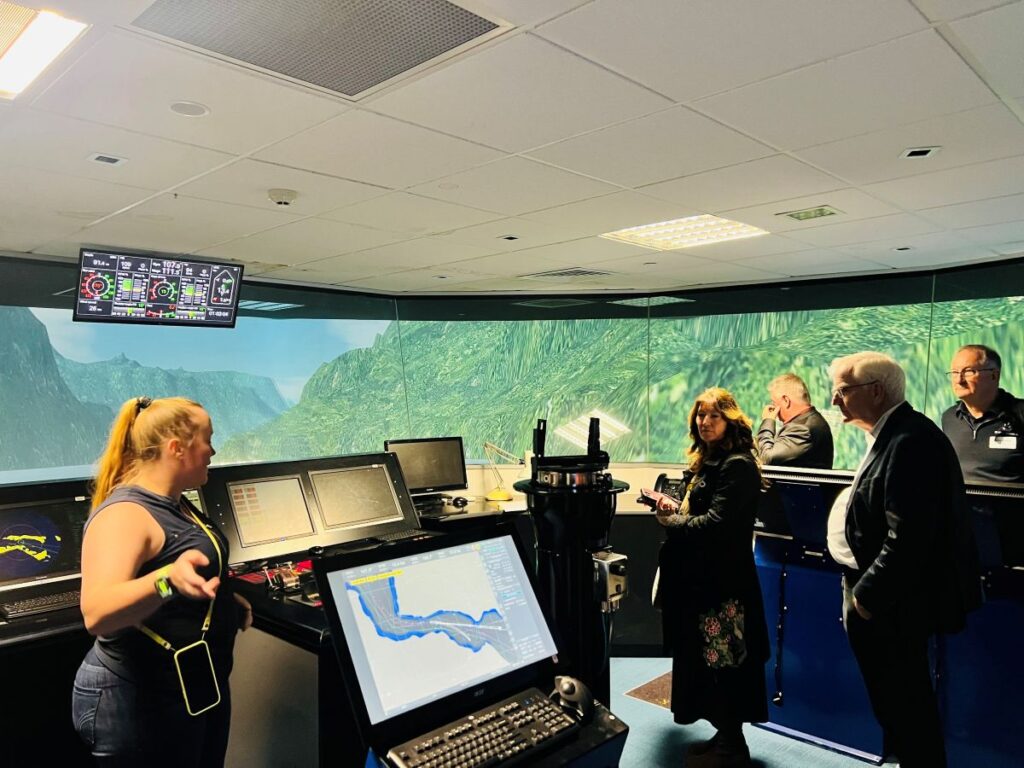 Maritime New Zealand board members and industry stakeholders were given a tour of the CBD Campus
Its latest investment extends practical training beyond simulation. Mahuika, the school’s new fire training facility at the Mt Albert campus, has been developed to provide realistic training for firefighting aboard ships and within structures.
Industry perspective on a changing school
The changes at the school have also been seen first-hand by people now working across the maritime industry.
Nigel Smith, Shipping New Zealand representative, returned to the school for the centenary celebrations around twenty years after studying a logistics degree at the City Campus.
Now working with Shipping New Zealand, which represents ship owners and operators, as well as maritime services company Wilhelmsen, Smith says the event was an opportunity to see how the school continues to work with the sector.
“It was good to see the work the Maritime School is doing and how it interacts with industry and how industry can help,” he said.
Returning to the school also gave him an opportunity to see how its training technology had developed since he was a student, particularly its expanded simulation facilities.
“The simulators are very advanced. It looks pretty impressive,” Smith says.
Looking to the next 100 years
For Captain Buckens, however, increasingly sophisticated training technology also highlights something that cannot be recreated on land.
“We can replicate the operations. We can test the decisions. We can build the skills. But there is one thing simulation cannot provide. We cannot replicate the sea.”
That is where the school sees one of the significant challenges of its next century.
Education can provide the foundation and simulation can develop capability, but seafarers also need sea service to build the experience, judgement and qualifications required to progress into senior maritime roles.
“Sea time is therefore not simply a student placement issue. It is a national maritime capability issue,” Capt. Buckens says.
Calling for a wider conversation between education, industry, Maritime New Zealand and government about the maritime workforce New Zealand will need over the next 10 to 20 years and how the pathway from education into sea service can remain open.
That focus complemented the wider World Maritime Day discussion led by Maritime New Zealand, where sector representatives considered workforce shortages, emerging technology, changing career expectations and the balance between simulation and practical experience.
As Capt. Buckens told those gathered for the centenary, the maritime industry of 1926 could not have imagined the industry of today, just as it is impossible to know exactly what maritime work will look like a century from now.
What the school can prepare for is in developing the people who will navigate that change.
“The maritime capability of tomorrow begins with the students we educate today.”
As it enters its second century, the school continues to provide education, simulation and practical training for New Zealand’s maritime workforce through programmes in marine engineering, domestic maritime, nautical foreign-going and super yacht crewing.