


In Brief:
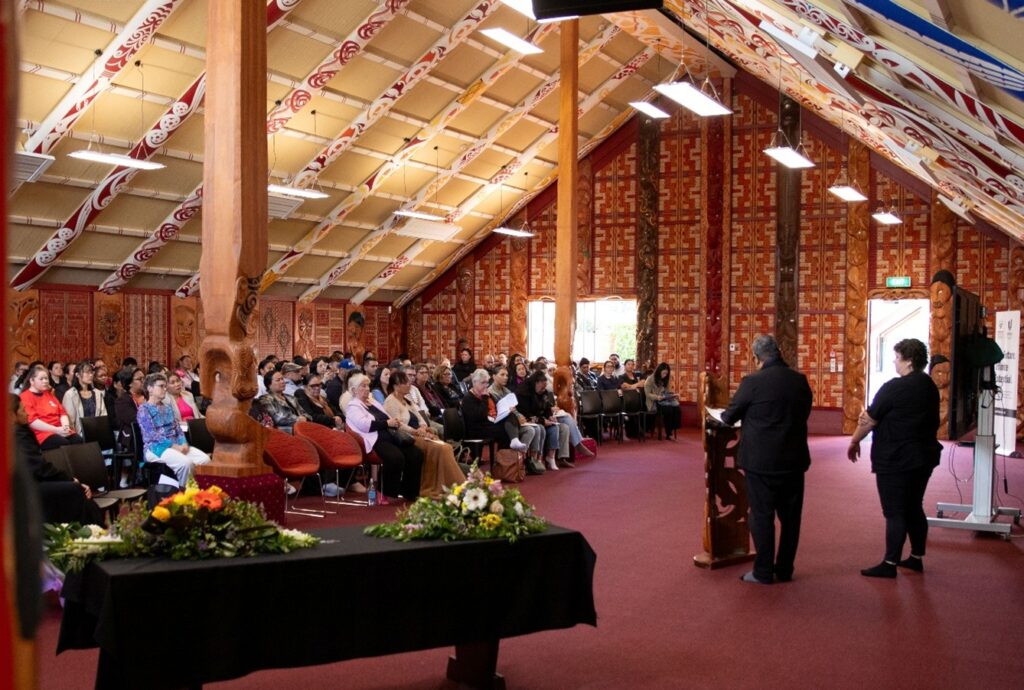
- School of Social Work – Ōtara highlighted the breadth of its applied research at the inaugural Research and Impact Showcase, held on Ngā Kete Wānanga Marae, Friday 16 October.
- Research presentations covered family harm, Pacific caregiving, neurodiversity, child protection and healthcare, highlighting connections between lived experiences, community needs and professional practice.
- Community organisations and industry partners recognised the relevance of the research to their work, with some exploring ways to apply findings in their services.
Hosted by the School of Social Work Ōtara and Tūāpapa Rangahau, the event provided an opportunity to share research informed by lived experiences and community needs with organisations working directly in these areas.
Under the theme Behind Every Story is a Connection, the showcase highlighted how research can begin with a question arising from practice, an experience that deserves to be heard, a community need or a challenge requiring change.
Opening the showcase, MIT and Unitec Chief Executive Professor Christina Hong said, “Today’s theme really resonates with what we are all here to achieve.
“Because it is the lived experience of our communities that speaks through your research and allows us to propose solutions and improvements to the services and support available out there.”
Prof Hong highlighted how applied research contributes to student learning, strengthens teaching practice and supports the work of community partners.
“For our organisation, applied research has an even broader significance – focusing learners on data informed problem-solving at an early stage in their practice, exposing them to the real-world questions that the sector they are preparing to enter is grappling with today, ensuring their lecturers are not only active and connected to the latest practice but advancing it and adding valuable insights to the work our partner agencies do.”
The Chief Executive also acknowledged the contribution of partner agencies, many of which also provide students with work placements to gain practical experience.
“It is through these connections, together we enhance the value of what we all offer.”
Dr Rosanne Ellis, Director of Research and Enterprise, says the showcase provided an opportunity to share research findings, reflect on existing challenges and consider future collaboration.
“This is an opportunity not only for us to come together to share our collective and co-created research impact case studies, but to also reflect together on what is working well, the challenges that remain, and how we can continue to strengthen support for rangatahi, tamariki, whanau and communities across Aotearoa.”
“At MIT and Unite,c we are proud to support applied research that helps address real-world challenges and strengthens the connections between evidence, policy, and practice.”
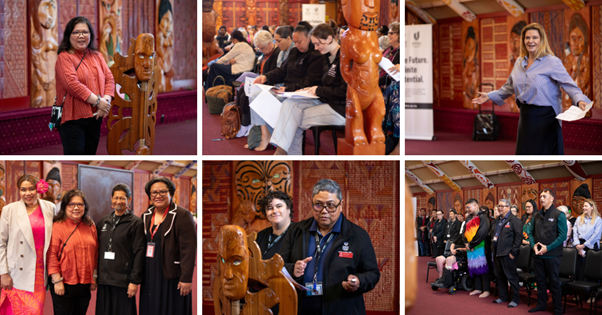
The research shared throughout the day reflected the showcase theme, with projects examining questions arising from professional practice, lived experiences and the needs of individuals, families and communities.
The opening presentation by social work senior lecturers Rebecca Crosby and Dennis Sanga, Becoming Social Work Educators in South Auckland: Exploring Diverse Experiences Using Collaborative Autoethnography, explored their journeys from social work practice into education and academia.
Their work examined how professional experience, identity and lived experience have shaped them as educators and researchers, providing a starting point for the stories that followed.
The programme then branched into two streams, demonstrating the range of research interests and expertise within the school.
The first stream, Stories of Identity, Culture & Inclusion, focused on the experiences of individuals and communities whose voices can be overlooked within systems.
Senior lecturer Whaea Moerangi Potiki presented research exploring the impact of family harm perpetrated by tāne (men) on wāhine (women) Māori, including the need for culturally meaningful approaches to understanding family harm, healing and whānau wellbeing.
Senior lecturers Tino Taliaoa and Courtney Paovale examined Pacific caregiving, exploring cultural responsibilities, family relationships and the experiences of those caring for older family members.
Principal Lecturer Mel Wong and Dennis Sanga explored the transition from study to professional practice for neurodivergent social work graduates, including how workplaces can better recognise and support their needs.
The second stream, Stories of Systems, Health & Social Work Practice, explored how social work intersects with wider systems and the implications for practitioners, families and communities.
Social work lecturer Jenna Wyllie’s research examined how the demands of child protection social work can extend beyond practitioners themselves, affecting their partners, children and family life.
Rita Stageman explored the relationship between women’s healthcare, abortion restrictions and entries into foster care, considering how healthcare policy and social conditions can influence outcomes for women and children.
Senior lecturer Amanda Meinhardt presented research on improving cognitive health outcomes in Counties Manukau, examining the intersection of health, community wellbeing and social work practice.
The showcase also provided a platform for emerging researchers, with students presenting research posters during lunch. These highlighted their research interests, ideas and emerging findings, giving them an opportunity to discuss their work with practitioners and community partners.
The relevance of the research to professional practice was reflected in feedback from representatives of community organisations attending the showcase.
The hui provided an opportunity for researchers, students and community partners to explore how the School’s applied research connects with the challenges and experiences encountered in social work practice.