



Programme highlights
Get qualified to work as an engineering technologist – an area critical to the economy in New Zealand and overseas.
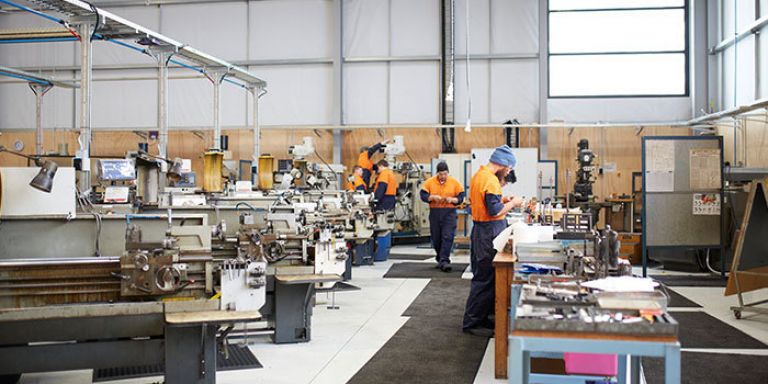
You’ll get hands-on skills in designing and manufacturing tools, engines, and machines.
You’ll also learn specialist skills in:
- Fluid mechanics
- Strength of materials
- Thermodynamics
- Heat transfer.
When you graduate, you’ll have the skills to get a well-paid job as an engineering technologist or technician.
Entry requirements
Applicants must meet the following entry requirements:
Academic
University Entrance – NCEA Level 3 including:
- Three subjects at Level 3 including:
- Physics with a minimum of 14 credits;
- Calculus with a minimum of 14 credits; and
- One other subject from the list of approved subjects*.
- Literacy – 10 credits at Level 2 or above, made up of five credits in reading, five credits in writing;
- Numeracy – 10 credits at Level 1 or above (specified achievement standards, or unit standards 26623, 26626, 26627);
Or
- Equivalent academic qualifications (equivalent academic qualifications may include University B Bursary with 45% or more in both Physics and Calculus or algebra);
Or
- Equivalent Cambridge score;
Or
- Equivalent International Baccalaureate.
*NZQA approved subjects: see http://www.nzqa.govt.nz/qualifications-standards/awards/university-entrance
English language entry requirements
Applicants must have sufficient competence in the English language to undertake this programme, which is taught and assessed in English.
Any applicant whose first language is not English may be required to provide evidence of their English language competency.
International students: English language entry requirements
EAL students must meet the minimum academic entry requirements and have achieved an overall band score (Academic) of 6.0 IELTS, (writing and speaking score no less than 6.0 and reading and listening bands no less than 5.5) or equivalent.
Other entry requirements
Applicants must be physically capable of completing the practical aspects of the programme, by being able to work effectively, efficiently and safely.
Applicants who meet the greatest number of criteria will be the preferred applicants. Should the number of applicants who meet the selection process requirements exceed the available places; the professional judgement of staff will be used to determine those given immediate entry and those placed on a waiting list.
Don’t meet the entry criteria? Click here
Special & discretionary admission
Any ākonga who is 20 years of age or older and has not reached the general admission requirements for their intended programme is eligible for Special Admission. MIT works with the ākonga to ensure they are prepared for their intended programme. Any ākonga who is not yet 20 years of age and has not reached the general admission requirements for their intended programme may be eligible for Discretionary Admission. In assessing whether to grant Discretionary Admission, the delegated authority focuses on the applicant’s level of preparedness for their intended programme.
Give yourself credit with Recognition of Prior Learning (RPL)
Did you know you can use the knowledge and experience you already have to your advantage?
Your previous work experience and on-the-job skills, volunteering, professional development, and other providers’ qualifications can be recognised as prior learning, matched against credits in our courses, and put towards your qualification – potentially saving you money and possibly helping you to complete your qualification faster Learn more.
Programme structure
You will need to complete the below 23 courses (360 credits):
Level 5
Level 6
Level 7
Accreditation by Engineering New Zealand (EngNZ) confirms that the Bachelor of Engineering Technology meets national and international benchmarked standards for first degrees for professional engineers in South Africa, USA, Canada, the United Kingdom, Ireland, Hong Kong, Australia, and New Zealand. EngNZ accreditation also provides recognition for professional membership and registration/licensing purposes in those countries.
Do you want to study a single course, without enrolling into the full programme?
Courses within some of our programmes may be offered as an individual Certificate of Proficiency (COP). Programme entry requirements and course fees apply. For more information, please speak to our friendly Ask Me! team.
Further training or study
Upon completion of this programme, students can continue towards:
Career opportunities
You may find employment as an engineering technologist or technician.
Visit Tahatu Career Navigator for further study information.
See why more people choose Mechanical engineering at MIT
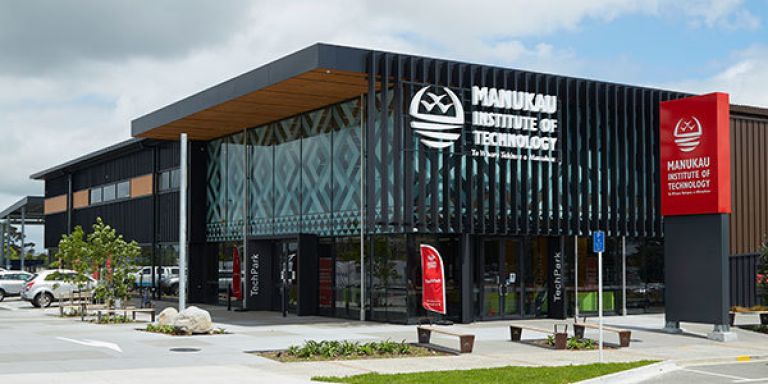
Study at MIT’s award-winning TechPark campus.
MIT TechPark is an award-winning centre of excellence for engineering and trades.
Having won a Learning Environments Australasia Award which recognises planning, design and construction of educational facilities throughout the region, our state-of-the-art campus is the home of our engineering and trades school. Coupling stunning architectural learning spaces with a myriad of high-tech facilities for our students, it’s easy to see why it’s been given such high praises.
Our TechPark building is situated on the corner of Lambie Drive and Manukau Station Road. It is across the road from the existing MIT Manukau campus, currently home to the schools of nursing, health and counselling, business, and digital technologies.
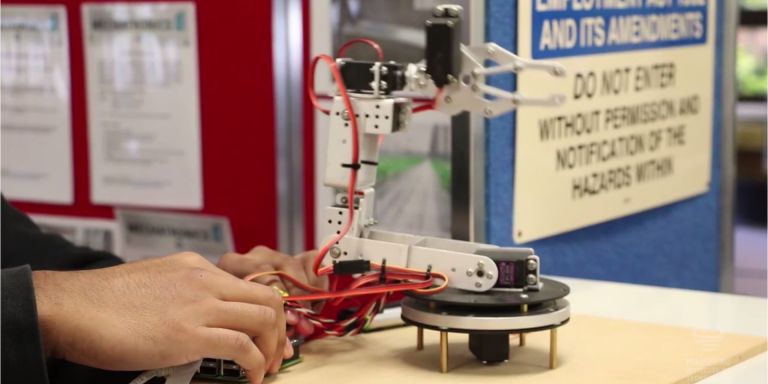
MIT is the quality choice. Study engineering and graduate work-ready.

“The choice to study engineering definitely secures your future.”
“Looking back on my experience at MIT, I really enjoyed the learning style. I did the lectures online and only had to come into class for one week a semester to do the practical parts. Overall, the atmosphere and the way that classes were taught was really enjoyable, and not too restrictive either. It just feels comfortable.
The choice to study engineering at MIT definitely secures your future. It narrows down on the things employers are looking for, like answers to practical questions that you might face on the job. Those are the things that show you are competent to employers.
My five-year plan is to become a senior engineer. It is a lifelong learning process, even now that I have the job, there is still a lot to learn. It is a continuous process. You have to keep going to gain more knowledge.
Having a qualification is really important if you want to land that dream job.”
Oscar Lee
MIT graduate

“The lecturers at MIT are always ready to help me.”

“My passion is to invent something that will be useful to people. I like problem-solving. I like the logic and skills that are taught – so I chose to study mechanical engineering at MIT.
The lecturers at MIT were very helpful, whenever I have an issue I could approach them, and they were always ready to help me.
The things that I learnt in class will help me in the future. Being a mechanical engineer, I need to learn the practice and theory. I would encourage anyone to consider studying at MIT.”
Ashutosh Jaisankar
MIT graduate
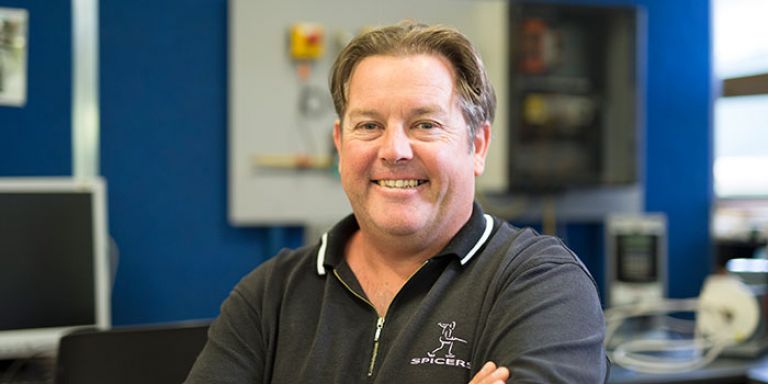
“You can be anything once you have an engineering diploma.”
“I’ve been working as a fitter and turner for my entire life and now that I’m getting a bit older I want to get off the tools, so I chose to study engineering. What I liked about studying here is the interaction you can have with the tutors. They are approachable and they really know their stuff.
Engineering is a great field to be in, it just bleeds off into so many different areas. You can be anything once you have an engineering diploma. It doesn’t pigeonhole you into one specific task.
With a diploma in mechanical engineering, I intend to work at a manufacturing plant in the engineering office. I could even go a bit further and work into being an engineering manager.”
Peter Gould
MIT graduate

“A great environment for innovation and personal growth.”
“I have always been fascinated by how things work and how to make them better, and one day want to work in the aerospace industry. The idea of working on vehicle or machine projects really excites me. It feels like a great way to combine creativity with problem-solving.
MIT has a solid reputation for practical learning and hands-on experience. Plus, the facilities are great, and I felt like it was the right fit for me to dive into my mechanical engineering studies.
Everyone is so passionate about what they do here, and it’s inspiring to be around people who are just as excited to learn. It’s a great environment for innovation and personal growth.
The hands-on experience you gain at MIT is invaluable, especially in understanding how things work, which is crucial in this field. Plus, the supportive environment allows you to collaborate with peers and faculty on innovative projects. It’s a fantastic stepping stone towards a career in industries such as aerospace.
When I finish my studies, I am interested in designing and developing aircraft or spacecraft and contributing to advancements in technology and sustainability in aviation.”
Alana Al Jebin
Mechanical Engineering
See why more people choose Mechanical engineering at MIT
Study at MIT’s award-winning TechPark campus.
MIT TechPark is an award-winning centre of excellence for engineering and trades.
Having won a Learning Environments Australasia Award which recognises planning, design and construction of educational facilities throughout the region, our state-of-the-art campus is the home of our engineering and trades school. Coupling stunning architectural learning spaces with a myriad of high-tech facilities for our students, it’s easy to see why it’s been given such high praises.
Our TechPark building is situated on the corner of Lambie Drive and Manukau Station Road. It is across the road from the existing MIT Manukau campus, currently home to the schools of nursing, health and counselling, business, and digital technologies.
MIT is the quality choice. Study engineering and graduate work-ready.
“The choice to study engineering definitely secures your future.”
“Looking back on my experience at MIT, I really enjoyed the learning style. I did the lectures online and only had to come into class for one week a semester to do the practical parts. Overall, the atmosphere and the way that classes were taught was really enjoyable, and not too restrictive either. It just feels comfortable.
The choice to study engineering at MIT definitely secures your future. It narrows down on the things employers are looking for, like answers to practical questions that you might face on the job. Those are the things that show you are competent to employers.
My five-year plan is to become a senior engineer. It is a lifelong learning process, even now that I have the job, there is still a lot to learn. It is a continuous process. You have to keep going to gain more knowledge.
Having a qualification is really important if you want to land that dream job.”
Oscar Lee
MIT graduate
“The lecturers at MIT are always ready to help me.”
“My passion is to invent something that will be useful to people. I like problem-solving. I like the logic and skills that are taught – so I chose to study mechanical engineering at MIT.
The lecturers at MIT were very helpful, whenever I have an issue I could approach them, and they were always ready to help me.
The things that I learnt in class will help me in the future. Being a mechanical engineer, I need to learn the practice and theory. I would encourage anyone to consider studying at MIT.”
Ashutosh Jaisankar
MIT graduate
“You can be anything once you have an engineering diploma.”
“I’ve been working as a fitter and turner for my entire life and now that I’m getting a bit older I want to get off the tools, so I chose to study engineering. What I liked about studying here is the interaction you can have with the tutors. They are approachable and they really know their stuff.
Engineering is a great field to be in, it just bleeds off into so many different areas. You can be anything once you have an engineering diploma. It doesn’t pigeonhole you into one specific task.
With a diploma in mechanical engineering, I intend to work at a manufacturing plant in the engineering office. I could even go a bit further and work into being an engineering manager.”
Peter Gould
MIT graduate
“A great environment for innovation and personal growth.”
“I have always been fascinated by how things work and how to make them better, and one day want to work in the aerospace industry. The idea of working on vehicle or machine projects really excites me. It feels like a great way to combine creativity with problem-solving.
MIT has a solid reputation for practical learning and hands-on experience. Plus, the facilities are great, and I felt like it was the right fit for me to dive into my mechanical engineering studies.
Everyone is so passionate about what they do here, and it’s inspiring to be around people who are just as excited to learn. It’s a great environment for innovation and personal growth.
The hands-on experience you gain at MIT is invaluable, especially in understanding how things work, which is crucial in this field. Plus, the supportive environment allows you to collaborate with peers and faculty on innovative projects. It’s a fantastic stepping stone towards a career in industries such as aerospace.
When I finish my studies, I am interested in designing and developing aircraft or spacecraft and contributing to advancements in technology and sustainability in aviation.”
Alana Al Jebin
Mechanical Engineering