


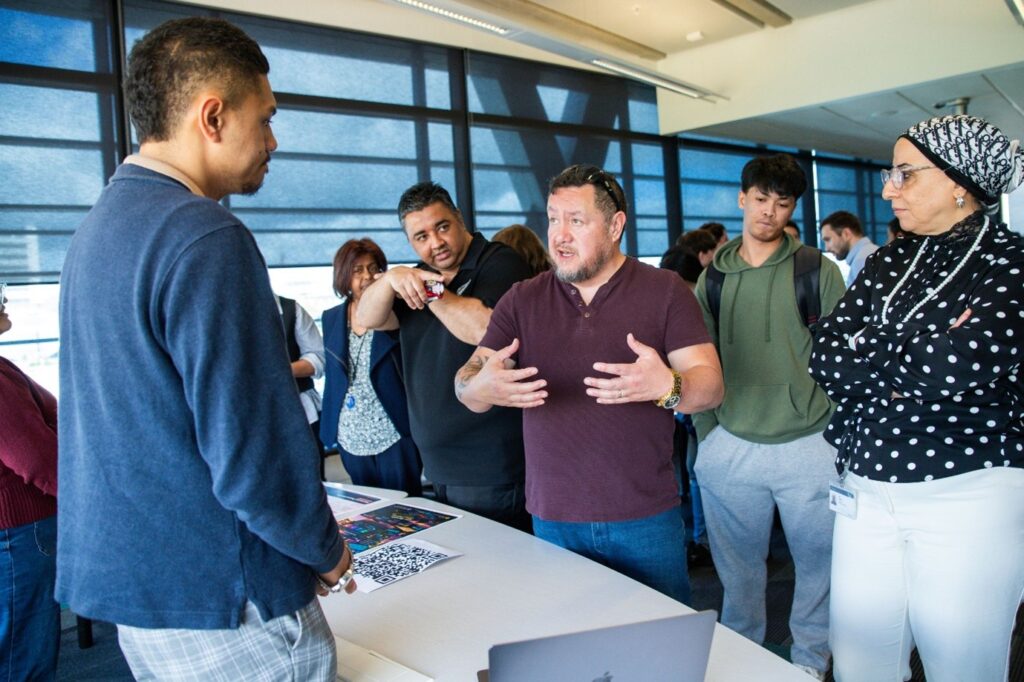
 NanoTech IT founder and industry mentor Joseph Morgan gives feedback on a student project at Tech Expo 2026, Manukau Campus on Tuesday, 3 November
In Brief:
- School of Digital Technologies ākonga ‘learners’ presented their practical projects showcasing innovative digital solutions to real-world industry challenges at Tech Expo 2026, giving potential employers an opportunity to connect with our emerging talent and explore future collaborations.
- Industry leaders emphasised that communication, confidence, teamwork and the ability to explain complex technology in accessible language are just as important as technical expertise in today’s digital workplace.
- Every Bachelor of Digital Technologies capstone project this year was based on a real industry brief, with some projects progressing to internships and further industry partnerships.
Industry representatives attending Tech Expo 2026 were impressed by the technical capability and professionalism of our digital technologies ākonga who presented projects they had worked on this Semester.
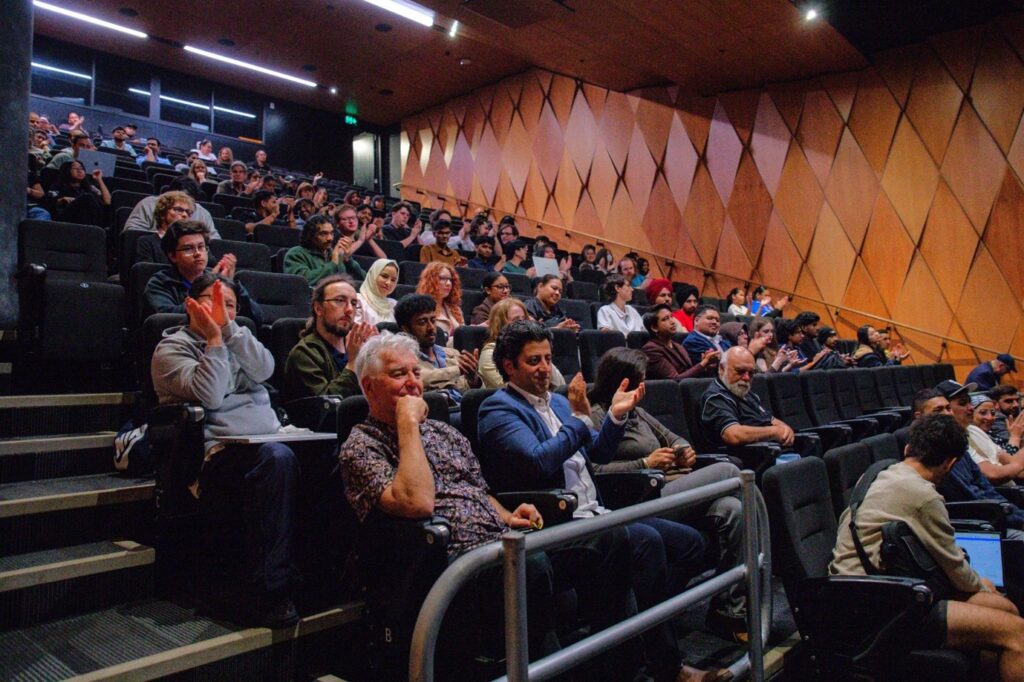
The annual School of Digital Technologies showcase, held at Manukau Campus on Tuesday, 3 November, brought together students, educators and industry partners to view certificate, diploma and bachelor-level projects which spanned artificial intelligence (AI), cybersecurity, networking, software development and emerging technologies.
The emphasis on industry relevance was a defining feature of this year’s event, and based on initial feedback, ākonga demonstrated an ability to turn complex challenges into practical, real-world solutions.
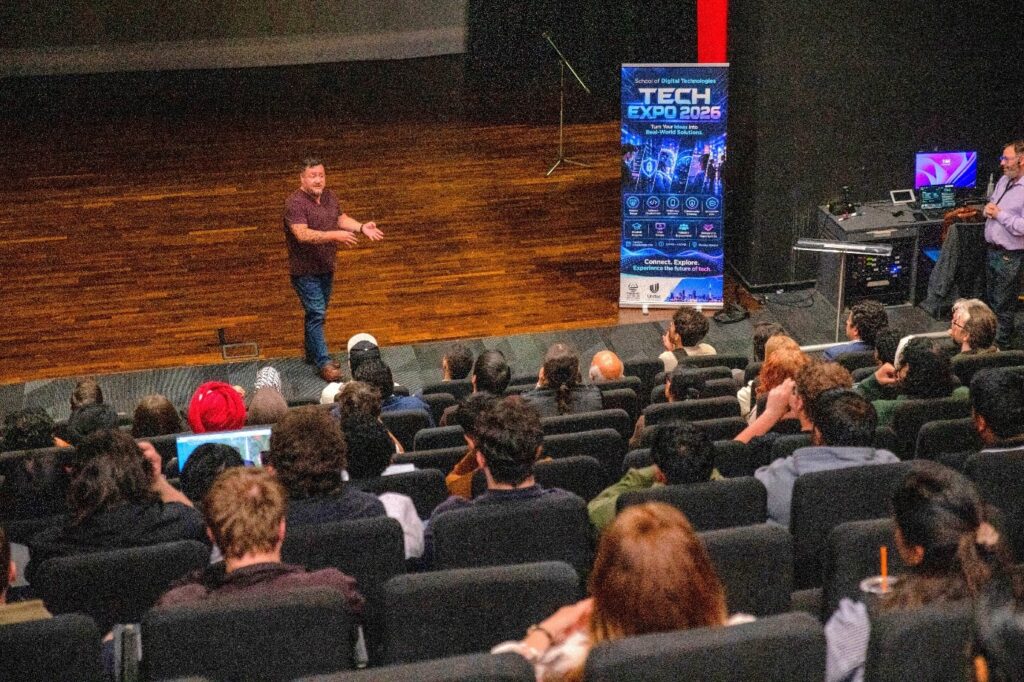 Keynote speaker for Tech Expo 2026: NanoTech IT founder Joseph Morgan
The capstone projects were based on real industry briefs involving more than fifteen companies and industry partners. Students worked closely with them to understand client expectations and develop solutions to practical challenges. Some projects opened pathways to internships.
NanoTech IT founder and CEO Joseph Morgan, a keynote speaker and industry mentor, saw that development in professional capability first-hand through his involvement in industry projects with Bachelor of Digital Technologies ākonga.
Over twelve weeks, Joseph supported four networking groups and one cybersecurity group with network segmentation, network frameworks and cybersecurity risk management recommendations.
“From where they started to where they are today, I’ve seen a complete shift of not only confidence, but, you know, leaders or growing leaders that are going to go out into the industry and make an impact.”
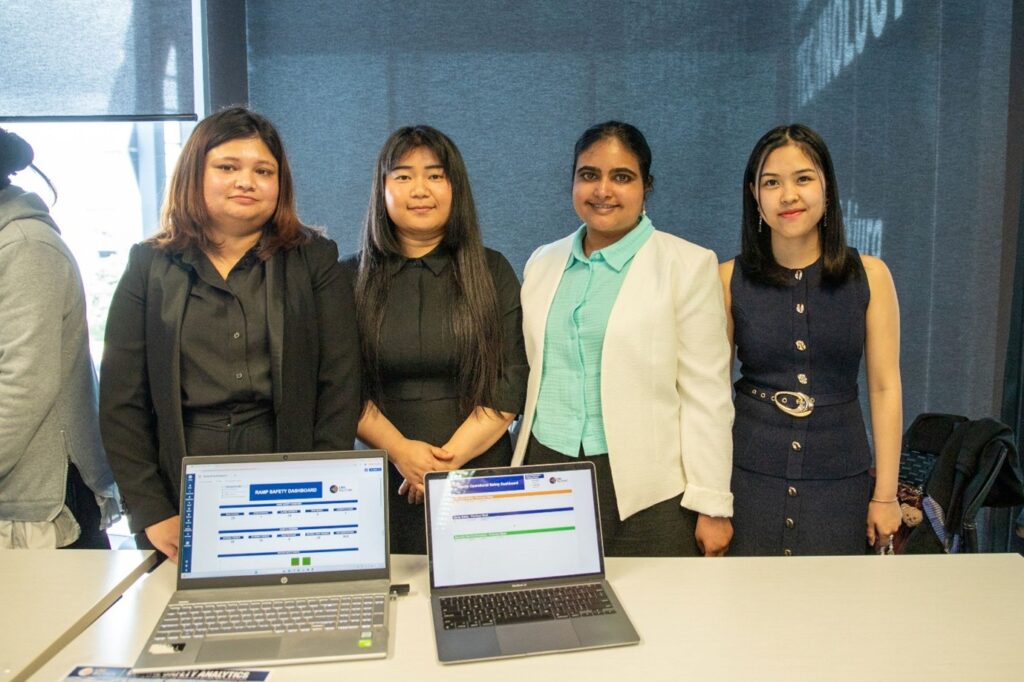 An ākonga team that worked with and earned praise from LSG Sky Chefs
Another standout example involved five students working with LSG Sky Chefs, one of the world’s largest airline catering and hospitality companies. The team developed a dashboard to improve the organisation’s access to health and safety data, receiving excellent feedback from the client.
“They (the company) were super happy with the project. The project was about creating a dashboard for their health and safety data. So that was really pleasing. We went there; they give gifts to our students as a celebration of the outcome,” Head of School, Digital Technologies Dr Alaa Al Janabi says.
The successful collaboration has already led to discussions about at least two further projects for next year.
A strong message from industry was that tomorrow’s tech professionals must not only have the technical expertise, they must also bring communications skills, critical thinking and the ability to understand the people and businesses their solutions serve.
In his keynote address to our students, Joseph Morgan, said students who can combine technical knowledge with strong interpersonal skills would have a significant advantage when entering the workforce.
“Your ability to confidently communicate what you know and being able to unpick knowledge for someone else to understand is important,” Joseph says.
Challenging students to develop the confidence to explain not only what their technology does, but the value it delivers to clients and organisations.
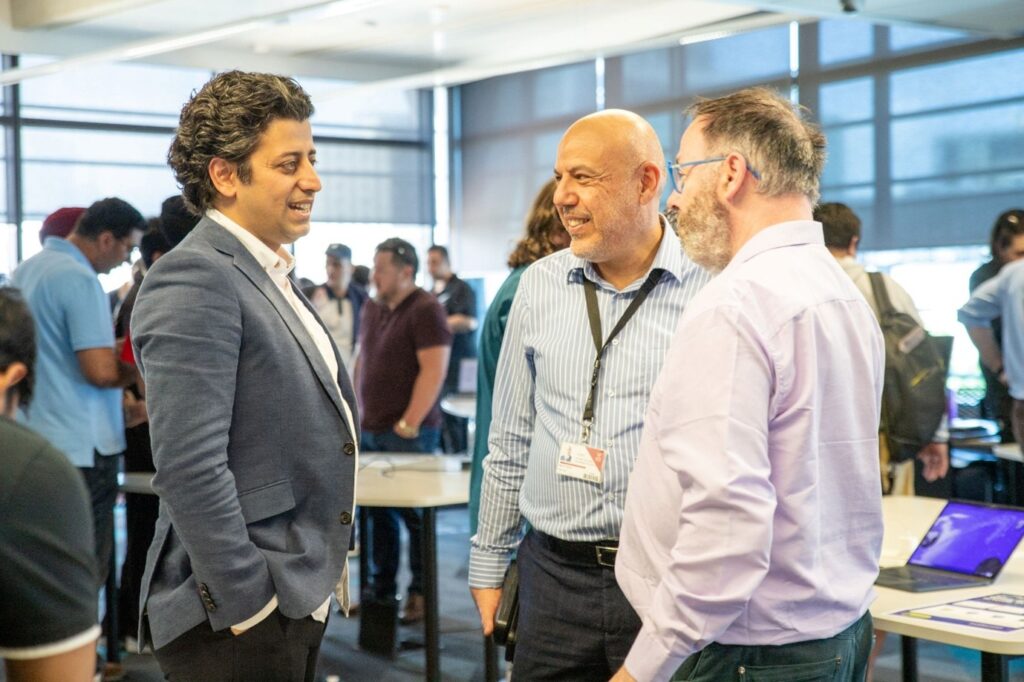 L-R: Senior Lecturer, Dr Masoud Shakiba, Head of School, Digital Technologies, Dr Alaa Al Janabi and Academic Leader David McCurdy Stuart-de-Bute
“This is more part of the soft skills that if you learn to master that, it’s going to put you leagues ahead of many other students that are trying to get out into the digital workforce.”
His advice reflects the changing expectations of the technology sector, where professionals increasingly need to work across teams, communicate with non-technical stakeholders and understand how technology can address real business needs.
Joseph also encouraged our students to consider the human dimension of technology, particularly as AI and digital systems become increasingly embedded in everyday life.
“For graduates entering a rapidly evolving industry, the ability to maintain meaningful human connections while using technology to solve problems will remain an important point of difference.”
Dr Al Janabi says employers increasingly recognise that technical expertise alone is not enough.
“Soft skills are very important because whatever job you go for and wherever you go, soft skills are key.
“Not only about presentation, it’s about reporting. It’s about how the human thinks, and how you communicate. Communication is the key in a working environment.”
When employers are choosing between candidates with comparable technical abilities, communication can be the deciding factor.
“You might get two candidates with good technical skills. But employers will go with the one who has good communication.”
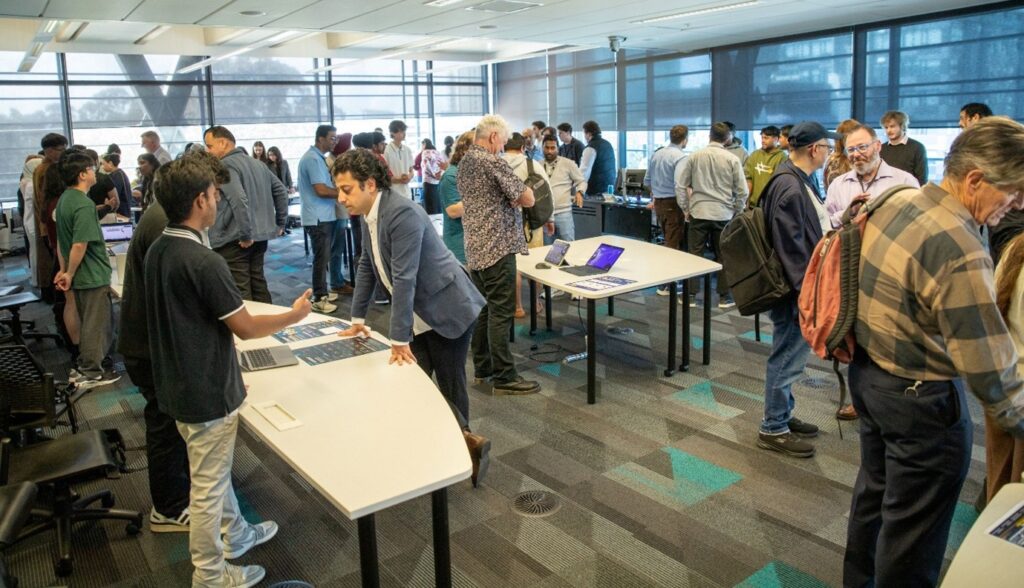
This combination of technical and professional capability was evident throughout the Expo, where students were required to explain their project objectives, demonstrate their solutions and respond to questions from industry representatives.
These capabilities are embedded across School of Digital Technologies programmes, ensuring students develop the confidence to communicate complex ideas and work effectively with clients and colleagues.
Opening the Expo, General Manager – Schools Pip Schollum-Manase highlighted the value of providing students with opportunities to demonstrate their capabilities directly to potential employers.
“These events are incredible for you as students. It gives you an opportunity to meet potential employers. But it also gives you an opportunity to showcase what you’ve been doing over the past six-to-twelve months,” Pip says.
The contribution industry partners make in providing authentic learning opportunities was also acknowledged, highlighting the School’s achievement in securing real-world workplace projects for every student required to undertake one.
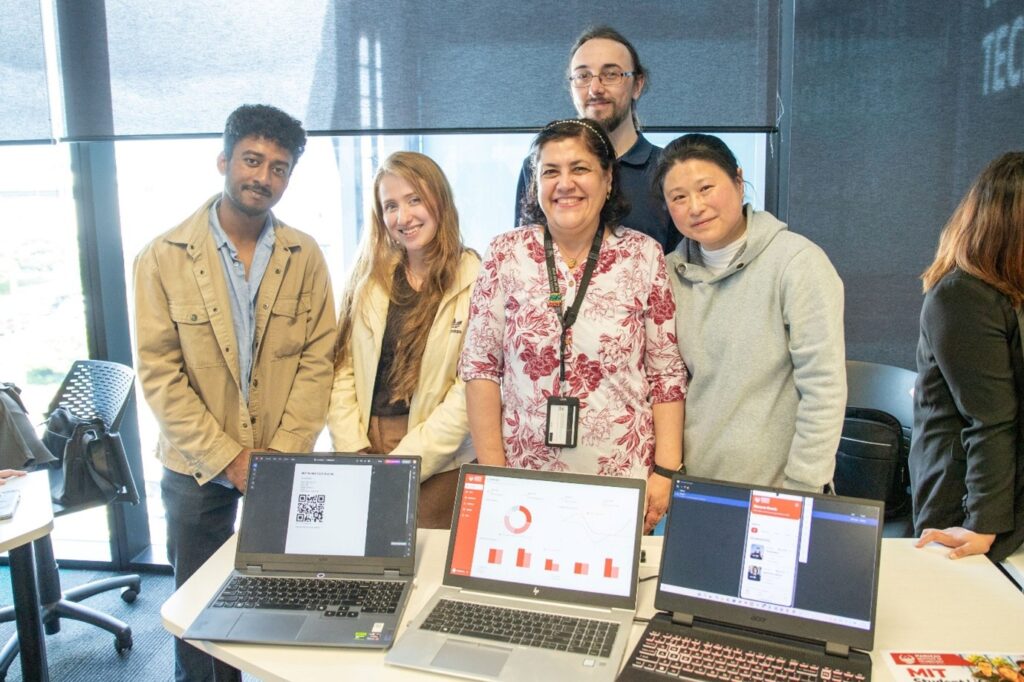 Team MIT Events with their supervising lecturer Samah Ridha (2nd from right in front)
“Every single student who has been required to go into an industry project, has gone onto a real-life working project within industry. Every single learner who has been moving into that space, has got that experience, and that is rare.”
The student exhibition demonstrating the breadth of this capability.
Bachelor of Digital Technologies Level 7 student Stephany Prado and her team showcased the MIT Student Life Event Management System, developed in response to a brief from the Events Team.
The proposed web dashboard and mobile application are designed to streamline event registration and attendance, replacing manual processes involving paper and spreadsheets with a barcode-based system.
Stephany says the project required the team to integrate several technical components while working collaboratively and maintaining communication with their client.
“Key learnings for us was working together as a team and working with people that you haven’t worked with before and communicating with a client, making sure that you get all of the requirements and making sure that everybody on the team is doing their tasks.”
Their supervising lecturer, Samah Ridha says: “Events such as Tech Expo are important because that makes our students proud. An industry person who worked with our students on this project emailed me to say he was amazed by the quality of the work the students produced for him. So that’s just an indication that our students can do the work.”
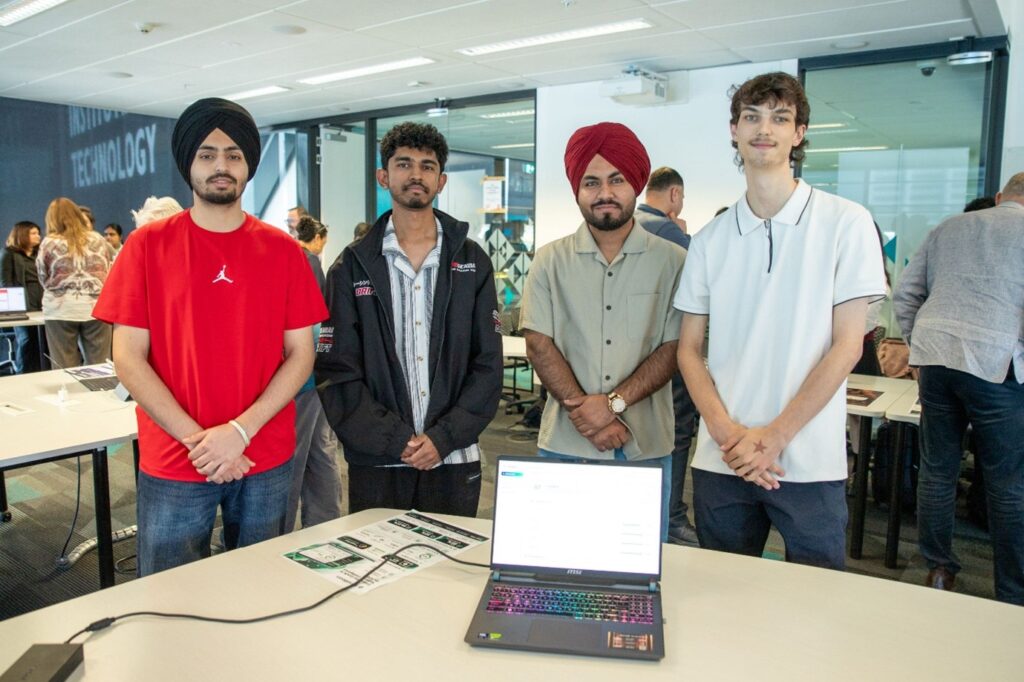 Team SignalBloom demonstrated their AI-driven network monitoring platform designed for small and medium-sized businesses
Artificial intelligence was another prominent feature, with Bachelor of Digital Technologies Level 6 student Matthew Tocker and his team demonstrating SignalBloom, an AI-driven network monitoring platform designed for small and medium-sized businesses.
The cloud-based solution uses a Python agent to collect network information, with Google’s Gemini AI translating complex technical data into plain-language explanations and actionable recommendations.
Importantly, the platform incorporates human approval rather than allowing automated recommendations to be implemented independently.
“Our biggest learning from this project was how AI can be incorporated into network intelligence and how that brings risks and vulnerabilities with them and how to face that directly,” Matthew says.
The project reflects a growing industry trend towards using AI to make technical information more accessible and support business decision-making, while recognising the importance of managing emerging security risks and maintaining human oversight.
Cybersecurity and business resilience were also highlighted through Bachelor of Digital Technologies Level 7 student Angelina Santhoshkumar’s project for Harbourstone Realty Network.
The organisation wanted greater visibility of its IT environment across two branches without employing an internal IT team. Students assessed its systems and produced six key deliverables, including a current-state assessment, gap analysis, risk register, recommendations and implementation roadmap.
The team will continue supporting the organisation through a three-month engagement alongside a managed service provider.
Angelina says one of the most valuable lessons was learning to translate technical findings into practical advice for a client.
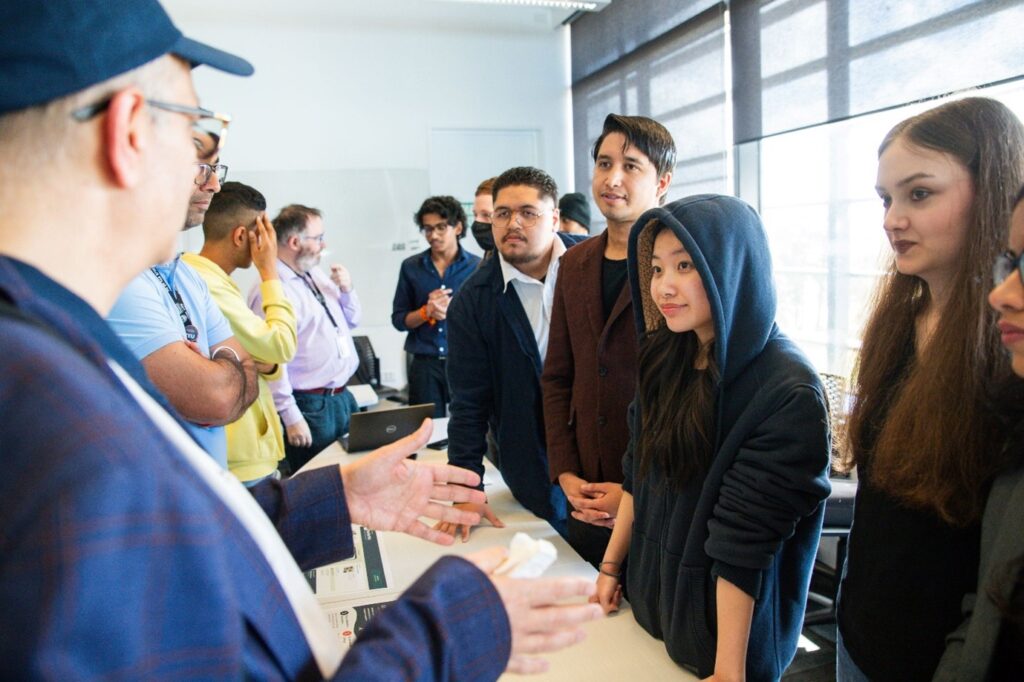 Industry says building confidence and matching technical expertise with communication skills is essential for graduates entering the tech workforce
For Academic Leader and event MC David McCurdy Stuart-de-Bute, building that confidence is an essential part of preparing students for employment.
“Building your confidence is just as important as your technical skills,” David says.
Now the School wants to build on its industry partnerships, create more opportunities for authentic project work and expand pathways into internships and employment.
The conversations at Tech Expo also helped educators understand emerging employer expectations and ensure programmes remain responsive to developments across the digital sector.
Event organiser and lecturer Zainal Shah says the Expo provided an important opportunity to celebrate student achievement while strengthening connections between education, industry and the wider community.
Ultimately, Tech Expo showed industry and potential employers that the quality of the projects and the professional potential of our students offered a compelling insight into the next generation of digital technologies talent.