


Programme highlights
Get training in key information technology (IT) skills and graduate with a degree in high demand by the industry worldwide.
This degree meets the high accreditation standards of the Institute of IT Professionals (IITP), who also endorse it as being of the calibre that provides “the best pathway to industry in New Zealand and abroad.”
You’ll be able to make a practical link between the latest digital technologies and today’s business environment ensuring that you’re well equipped to take your place in this exciting and constantly changing industry. This degree will provide you with the skills to analyse, design, develop, implement and maintain information systems across a variety of industries and business types.
As well as a strong grounding in analytical, technical and theoretical concepts this degree also uses hands-on practical methods and teaches important people skills like communication and management skills. At the culmination of this programme you’ll be able to do a real-world project where you can apply your skills in the workplace.
Choose from two majors
You can enhance your future career or personal goals by complementing the core ICT programme with elective courses from one of the following majors:
Networking
- use, install and administer at least two widely-used commercial operating systems
- use, install, troubleshoot and administer a server-based network
- analyse and implement information security requirements
- apply cloud computing concepts in the design and implementation of resilient computing systems.
Software and web development
- understand and apply software engineering best practices, development principles, tools and programming languages apply problem-solving skills and design software algorithms
- analyse business processes and design software solutions to solve and improve them
- implement software solutions for at least two software platforms (such as web, mobile, desktop, and/or cloud, etc.).
To find out more about what internships entail for both our learners and host organisations, click here.
Entry requirements
Applicants must meet the following criteria for admission into the programme:
- Successfully met the NZQA requirements for University Entrance as specified on the NZQA website.
OR
- If the applicant has at least 60 NZQA recognised credits at Level 5 or higher.
OR
- If the applicant can provide evidence of equivalence through practical, professional or educational experience, e.g. three-five years’ full time work experience (relevant to ICT), they can apply for entry. Evidence of literacy and numeracy will be required. MIT literacy and numeracy assessments are available.
AND
- Have English language competence to undertake this programme which is taught and assessed in English. For the minimum English language requirements, refer to the NZQA website.
Give yourself credit with Recognition of Prior Learning (RPL)
Did you know you can use the knowledge and experience you already have to your advantage?
Your previous work experience and on-the-job skills, volunteering, professional development, and other providers’ qualifications can be recognised as prior learning, matched against credits in our courses, and put towards your qualification – potentially saving you money and possibly helping you to complete your qualification faster Learn more.
Programme structure
You will need to complete seven compulsory courses, one business elective course, plus the courses from your chosen major (360 credits):
Compulsory courses
Level 5
Level 6
Level 7
Business elective course
Level 5
Courses related to your chosen major
Networking
Software and web development
Please note that not all digital technologies and business courses are offered every semester.
Do you want to study a single course, without enrolling into the full programme?
Courses within some of our programmes may be offered as an individual Certificate of Proficiency (COP). Programme entry requirements and course fees apply. For more information, please speak to our friendly Ask Me! team.
Career opportunities
The Bachelor of Digital Technologies prepares graduates for employment in the field of information and communication technologies.
Opportunities for employment depend on the major studied and include:
- IT manager, web developer
- Programmer
- Software developer
- Software architect
- Systems analyst
- Business analyst
- Network/software support specialist
- Multimedia developer
- User experience designer
- Network/database administrator
- IT project manager (incorporating business analytics and intelligence).
Visit Tahatu Career Navigator for further study information.
See why more people choose Digital Technologies at MIT

“MIT is one of the best and highly reputed institutes in New Zealand.”
“Since graduating, I have landed a job as an analyst at one of the largest companies in New Zealand where I can see a huge potential for my career growth in the next five years. All this has been possible due to meticulously drafted course material and highly skilled teaching staff at MIT.
The course I took at MIT was designed in such a way that it prepares students for real world jobs. More stress is given on learning by doing.”
Bhupinder (Bobby) Singh
MIT graduate

“I graduated from MIT as the highest paid software and web development graduate.”
“I graduated MIT as the highest paid software and web development graduate, all thanks to MIT for providing me with the soft and technical skills, practical experience and valuable knowledge that I wouldn’t get anywhere else.
MIT is by far the most unique educational facility I have experienced to date, that is because MIT has a different learning approach that is very engaging and practical. I fell in love with MIT because of how the courses were delivered. The lecturers were highly engaged with students one-on-one and there was so much practical hands-on experience that wasn’t available elsewhere.”
Sabrina Papps
MIT graduate
Get a real-life industry experience at MIT
“I gained the soft and technical skills that employers want. No other institution’s quite the same as MIT.”
When studying digital technologies at level 7 (or higher) with MIT you’ll learn to apply your academic skills and knowledge as you complete a real-life industry placement in the workplace. Find out how Sabrina’s industry experience and bachelor qualification helped her secure a job as a business analysist with Westpac.

“My qualification has unlocked a multitude of opportunities.”
“I specifically chose MIT due to its outstanding reputation, which had been consistently praised by many. Throughout my time at MIT, I developed a strong affinity for the knowledgeable professors and forged meaningful connections with fellow students. The hands-on approach to learning at MIT was particularly enjoyable, as it made each day exciting and engaging. I hold my professors in high regard, as they played a pivotal role in guiding me through my studies.
At MIT, I acquired a solid foundation in IT fundamentals, as well as the technical skills required to navigate diverse IT scenarios. The industry placement component provided invaluable practical experience, allowing me to put theoretical knowledge into real-world practice. This immersive experience not only motivated me but also fostered a genuine interest in the field, equipping me with troubleshooting abilities and a deeper understanding of workplace challenges.
Thanks to my degree from MIT, I was able to secure a position as a Graduate Consultant, where I am responsible for providing support to clients. The comprehensive education and practical training I received at MIT have proven instrumental in my current role, enabling me to effectively address and resolve issues within my work environment.”
Nehaal Prasad
MIT graduate

“MIT has a great reputation for being more than just a place of education.”
“MIT is known for helping to build, mould and prepare students with the experience, knowledge, skills, and confidence to make the world a better place. So, I knew this would be the right place to begin this part of my journey.”
No matter what stage in your life journey you are at, MIT is a great choice for you to begin or continue with your education. Whether you are straight out of high school or looking for a fresh new start, MIT will have many options to choose from. Courses are delivered in a way that keep you engaged, connected and involved with your learning and as a bonus, you get to meet great people along the way.
Education is key to success and MIT has played a pivotal part as the foundation of what I have accomplished so far. I have found myself no longer holding back but knowing I have the potential and mindset to achieve and follow my dreams.
MIT has a unique and diverse culture that makes you feel accepted and a sense of belonging.”
Jacinta Fue
MIT digital technologies graduate

“Everyone I graduated with got jobs quickly.”
“I chose to study at MIT after attending an open day and meeting the lecturers who I felt could help me get the right start in my career. It was a great choice. During my studies for a Bachelor of Information Systems, I gained expert knowledge, tools and valuable industry experience through an internship. I’m dyslexic but the open learning style at MIT allowed me to overcome any potential disadvantage from this.
Everyone I graduated with got jobs quickly, and there are so many opportunities with ICT in New Zealand and overseas. I’m working as a web developer, which I love. Thanks to what I learnt at MIT I can quickly pick up new technologies and techniques, and use them effectively in my job.
My employer has commented on the strong industry knowledge I gained at MIT and the new ideas I continue to bring to the company.”
Louis Rogers
MIT graduate
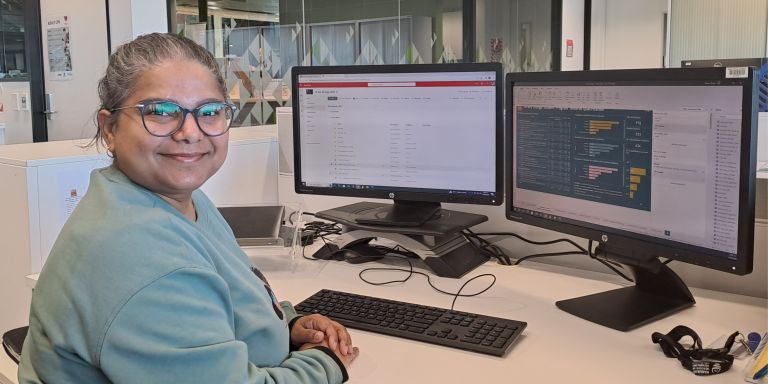
“If you love data or if you love visualising data in a way that people can understand, study data analytics.”
“Data cleansing is the first step in data analytics. Without correct data, we can get skewed information which will impact the decisions being made by the stakeholders. If you love data or if you love visualising data in a way that people can understand, study data analytics. Knowing basic syntax in coding is all you need. If you understand basic coding, you will be able to understand any language that the lecturer is trying to explain to you. If not, ask the lecturers what you need, and they will definitely guide you correctly.
I initially considered MIT because it was close to home, and because of their great Google reviews. I was going to apply for certificates but was guided towards the Graduate Diploma in Data Analytics (Level 7). It was an amazing first meeting and I couldn’t have been more grateful. I have not received such support from any other universities I had emailed, called or met face-to-face. This is very unique to MIT.
I lost my mother during my studies, but everyone here was extremely supportive. The support I received from all my lecturers, student support and counselling services, helped me complete my qualification. I wouldn’t have pushed through without their support. They are compassionate, understanding and extremely helpful. I am grateful for it.
The different papers in this qualification, the presentations and reports, has helped me a lot to be prepared for the workplace. The lecturers make sure we are professional and follow industry standards for our reports, and how we speak/present our reports.
Decide what you love, believe in yourself, be fearless – don’t be afraid. Everyone at MIT is here to help you succeed. Use it to achieve your goals.”
Meena Sharp
MIT graduate
See why more people choose Digital Technologies at MIT
“MIT is one of the best and highly reputed institutes in New Zealand.”
“Since graduating, I have landed a job as an analyst at one of the largest companies in New Zealand where I can see a huge potential for my career growth in the next five years. All this has been possible due to meticulously drafted course material and highly skilled teaching staff at MIT.
The course I took at MIT was designed in such a way that it prepares students for real world jobs. More stress is given on learning by doing.”
Bhupinder (Bobby) Singh
MIT graduate
“I graduated from MIT as the highest paid software and web development graduate.”
“I graduated MIT as the highest paid software and web development graduate, all thanks to MIT for providing me with the soft and technical skills, practical experience and valuable knowledge that I wouldn’t get anywhere else.
MIT is by far the most unique educational facility I have experienced to date, that is because MIT has a different learning approach that is very engaging and practical. I fell in love with MIT because of how the courses were delivered. The lecturers were highly engaged with students one-on-one and there was so much practical hands-on experience that wasn’t available elsewhere.”
Sabrina Papps
MIT graduate
Get a real-life industry experience at MIT
“I gained the soft and technical skills that employers want. No other institution’s quite the same as MIT.”
When studying digital technologies at level 7 (or higher) with MIT you’ll learn to apply your academic skills and knowledge as you complete a real-life industry placement in the workplace. Find out how Sabrina’s industry experience and bachelor qualification helped her secure a job as a business analysist with Westpac.
“My qualification has unlocked a multitude of opportunities.”
“I specifically chose MIT due to its outstanding reputation, which had been consistently praised by many. Throughout my time at MIT, I developed a strong affinity for the knowledgeable professors and forged meaningful connections with fellow students. The hands-on approach to learning at MIT was particularly enjoyable, as it made each day exciting and engaging. I hold my professors in high regard, as they played a pivotal role in guiding me through my studies.
At MIT, I acquired a solid foundation in IT fundamentals, as well as the technical skills required to navigate diverse IT scenarios. The industry placement component provided invaluable practical experience, allowing me to put theoretical knowledge into real-world practice. This immersive experience not only motivated me but also fostered a genuine interest in the field, equipping me with troubleshooting abilities and a deeper understanding of workplace challenges.
Thanks to my degree from MIT, I was able to secure a position as a Graduate Consultant, where I am responsible for providing support to clients. The comprehensive education and practical training I received at MIT have proven instrumental in my current role, enabling me to effectively address and resolve issues within my work environment.”
Nehaal Prasad
MIT graduate
“MIT has a great reputation for being more than just a place of education.”
“MIT is known for helping to build, mould and prepare students with the experience, knowledge, skills, and confidence to make the world a better place. So, I knew this would be the right place to begin this part of my journey.”
No matter what stage in your life journey you are at, MIT is a great choice for you to begin or continue with your education. Whether you are straight out of high school or looking for a fresh new start, MIT will have many options to choose from. Courses are delivered in a way that keep you engaged, connected and involved with your learning and as a bonus, you get to meet great people along the way.
Education is key to success and MIT has played a pivotal part as the foundation of what I have accomplished so far. I have found myself no longer holding back but knowing I have the potential and mindset to achieve and follow my dreams.
MIT has a unique and diverse culture that makes you feel accepted and a sense of belonging.”
Jacinta Fue
MIT digital technologies graduate
“Everyone I graduated with got jobs quickly.”
“I chose to study at MIT after attending an open day and meeting the lecturers who I felt could help me get the right start in my career. It was a great choice. During my studies for a Bachelor of Information Systems, I gained expert knowledge, tools and valuable industry experience through an internship. I’m dyslexic but the open learning style at MIT allowed me to overcome any potential disadvantage from this.
Everyone I graduated with got jobs quickly, and there are so many opportunities with ICT in New Zealand and overseas. I’m working as a web developer, which I love. Thanks to what I learnt at MIT I can quickly pick up new technologies and techniques, and use them effectively in my job.
My employer has commented on the strong industry knowledge I gained at MIT and the new ideas I continue to bring to the company.”
Louis Rogers
MIT graduate
“If you love data or if you love visualising data in a way that people can understand, study data analytics.”
“Data cleansing is the first step in data analytics. Without correct data, we can get skewed information which will impact the decisions being made by the stakeholders. If you love data or if you love visualising data in a way that people can understand, study data analytics. Knowing basic syntax in coding is all you need. If you understand basic coding, you will be able to understand any language that the lecturer is trying to explain to you. If not, ask the lecturers what you need, and they will definitely guide you correctly.
I initially considered MIT because it was close to home, and because of their great Google reviews. I was going to apply for certificates but was guided towards the Graduate Diploma in Data Analytics (Level 7). It was an amazing first meeting and I couldn’t have been more grateful. I have not received such support from any other universities I had emailed, called or met face-to-face. This is very unique to MIT.
I lost my mother during my studies, but everyone here was extremely supportive. The support I received from all my lecturers, student support and counselling services, helped me complete my qualification. I wouldn’t have pushed through without their support. They are compassionate, understanding and extremely helpful. I am grateful for it.
The different papers in this qualification, the presentations and reports, has helped me a lot to be prepared for the workplace. The lecturers make sure we are professional and follow industry standards for our reports, and how we speak/present our reports.
Decide what you love, believe in yourself, be fearless – don’t be afraid. Everyone at MIT is here to help you succeed. Use it to achieve your goals.”
Meena Sharp
MIT graduate