
Vaiaso o le Gagana Sāmoa (Samoa Language Week) was marked across our campuses this week.
The theme “E afua mai i mauga tetele manuia o le ‘nu’u” – “From the high mountains are the blessings of the village” interpreted in a number of ways.
These include as an acknowledgement of the natural environment as sustaining our lives, as well as the importance of leaders and parents in offering guidance.
Celebrations took place at Ōtara, Manukau, Mt Albert and Waitākere campuses.
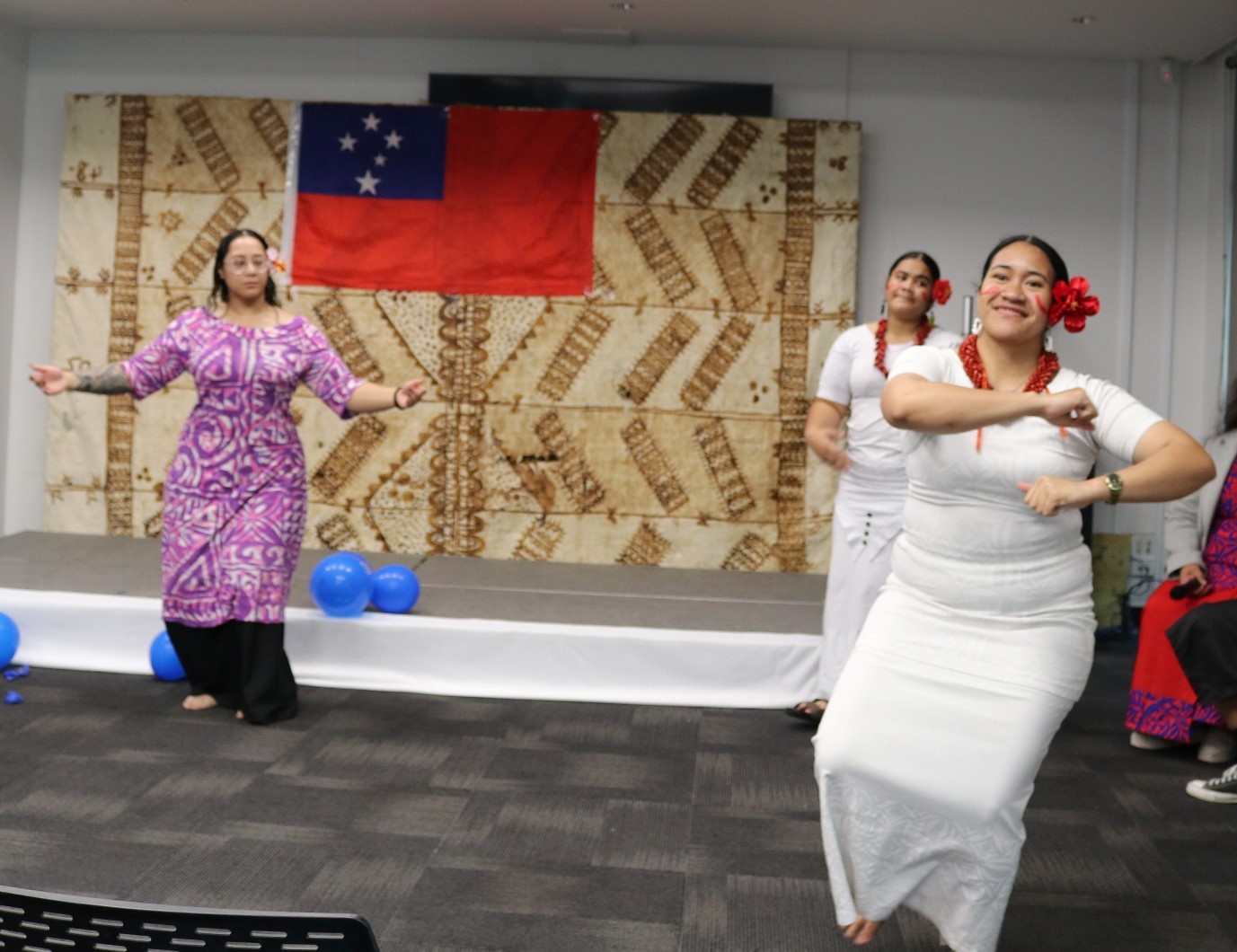
MIT Student Council Pasifika Rep Maimairasa Leituala (right) with dancers from the Student Pasifika Club
MIT Student Council Pasifika Club organised an event full of dance, song, food and a quiz at the Pasifika Community Centre, Ōtara Campus.
Student Council Pasifika Representative, Maimairasa Leituala says she wanted everyone to come together as a Pasifika community to celebrate Samoa Language Week.
“The purpose was for people to learn more about our culture and language. Everyone came together to help enjoy the food and dancers. That’s the spirit of today,” Maimairasa says.
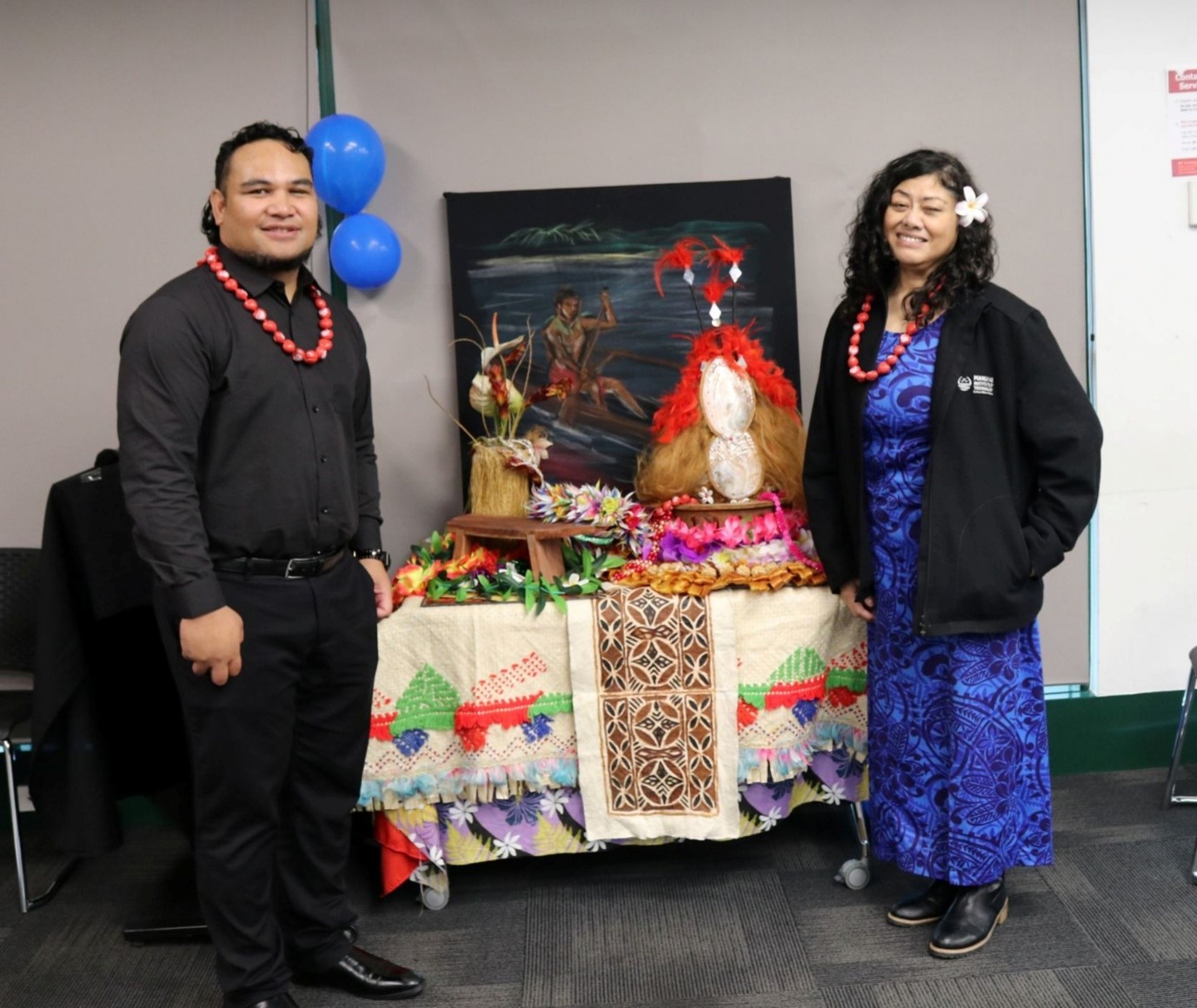 Faafatai (Tai) Iakapo (left) and Senior Pasifika Manager, Aiono Manu Fa’aea
The guest speaker at the event was Faafatai (Tai) Iakapo who has just graduated with a Bachelor of Social Work degree.
In keeping with the theme, Tai told the audience to be like a mountain.
“I know you’ve set your goal. To complete your qualification. Stay where you are until you complete your goal. I completed my goal last year and graduated last month.”
“If I could come up with one word it would be ‘resilience’. Tu mau until your reach your goal. Tu mau until you walk that stage.”
Tu mau was a non-violent movement for Samoan independence from colonial rule during the first half of the 20th century. Mau means ‘resolute’ or ‘firm strength.’
Mr Iakapo has now registered an organisation based in Ōtara which has employed three social workers, two of whom are MIT graduates.
“I was a welder for 10 years before I started studying Social Work. I always wanted to support my community.
“Someone told me that MIT had all the support you needed. And it’s true that there is great academic support. It was hard (the study) but the support was there.”
“English is our second language. A lot of people do things they shouldn’t do because of the language barriers. I can speak Samoan really well. If I equip myself and learn more, I can help my community.”
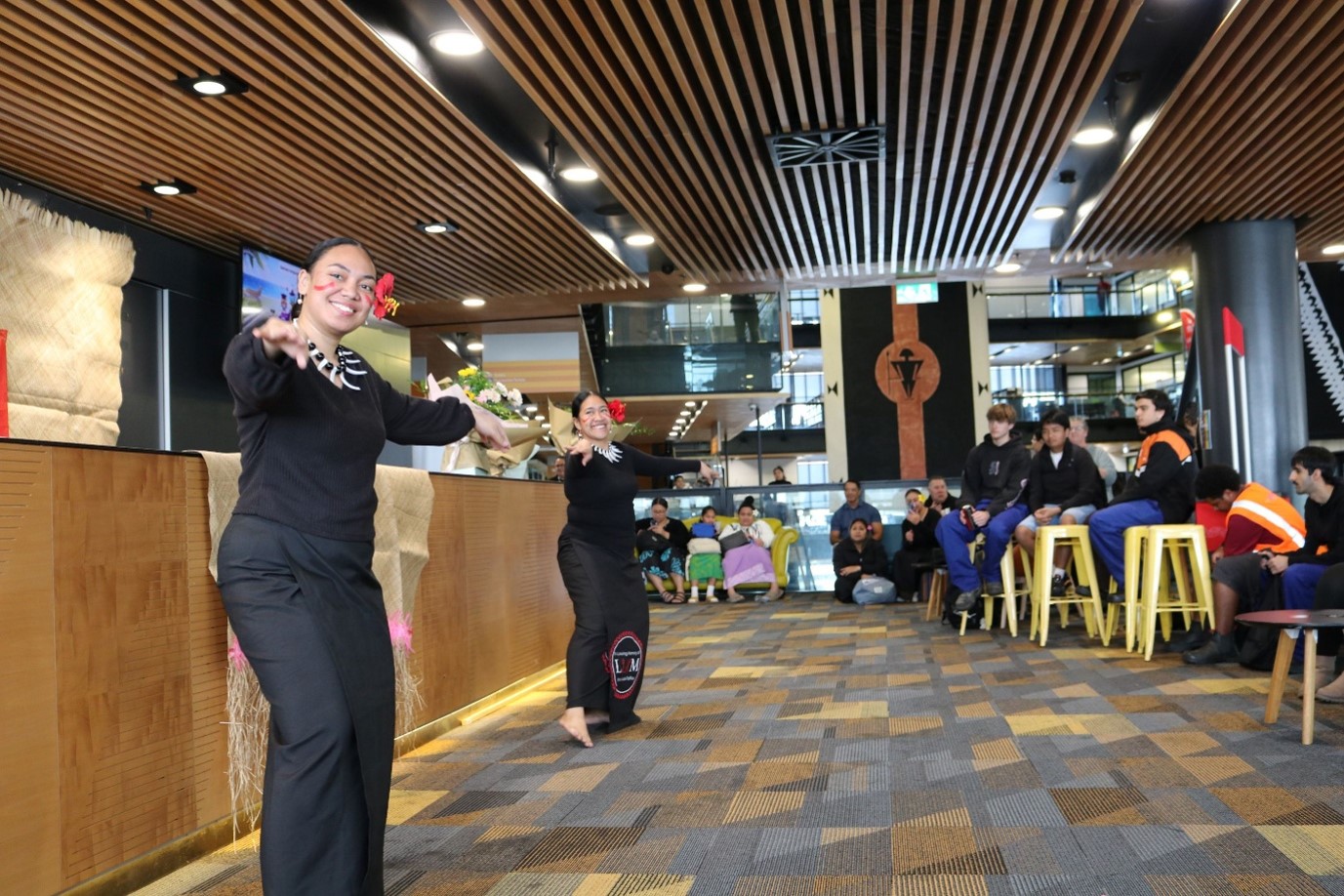 The Pasifika Student Club dancers at the Manukau Campus event
Te Ara Oranga (TAO) event at Manukau Campus on Thursday 4 June started with a quiz, followed by a dance performance from the Student Council Pasifika Club.
TAO is a partnership with Te Whatu Ora – Health New Zealand supporting Māori and Pacific healthcare ākonga through their journey from study to employment.
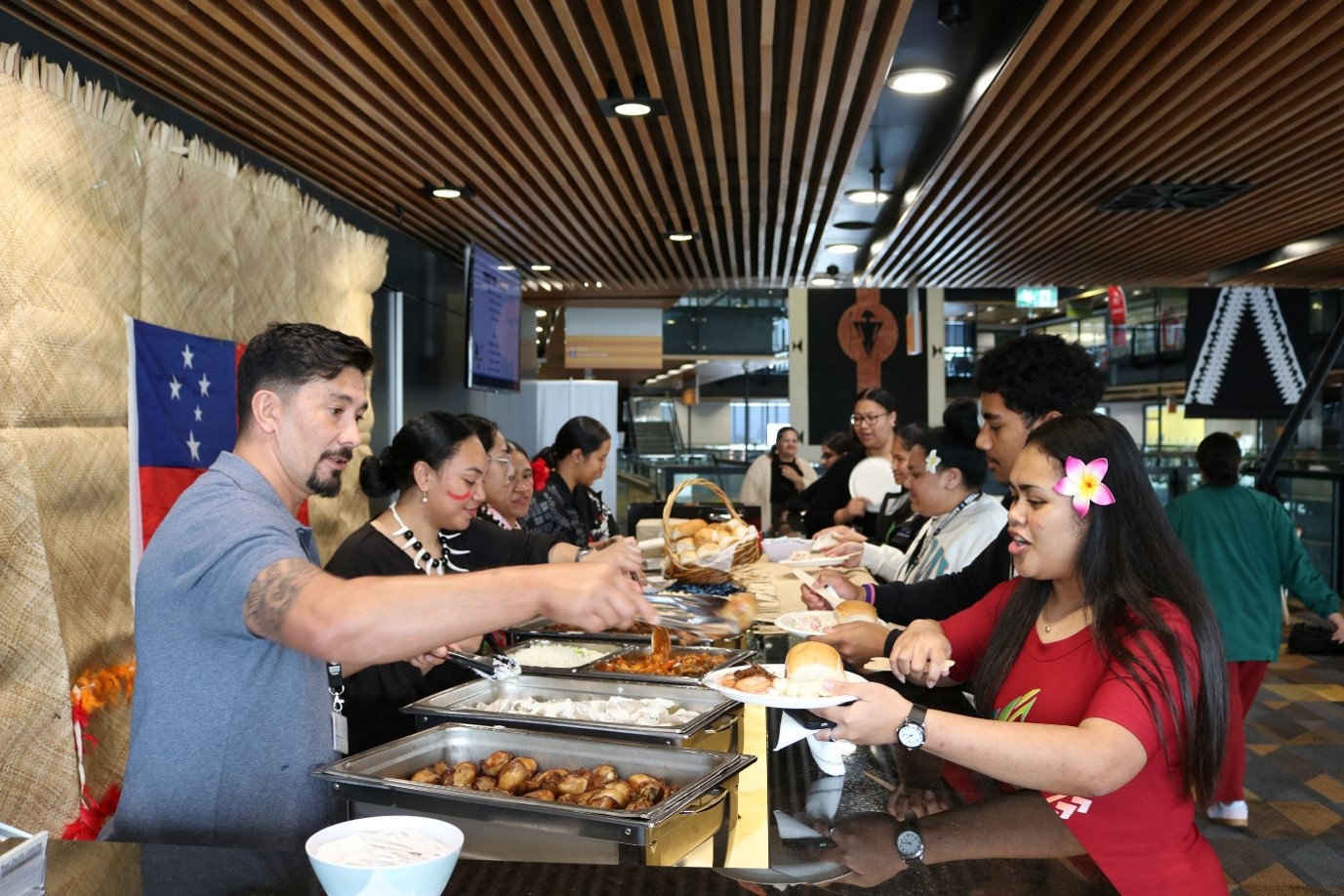 Lama Saga from TAO serves some kai at the Manukau Campus event
The Mt Albert programme was facilitated by the Pacific Centre with support from Pacific kaimahi and ākonga who ran cultural activations and demonstrations such as ulalole (lolly necklace) making, a proverbs and phrases workshops, and talanoaga forum (conversations) with kaimahi who hold chiefly matai titles in Samoa.
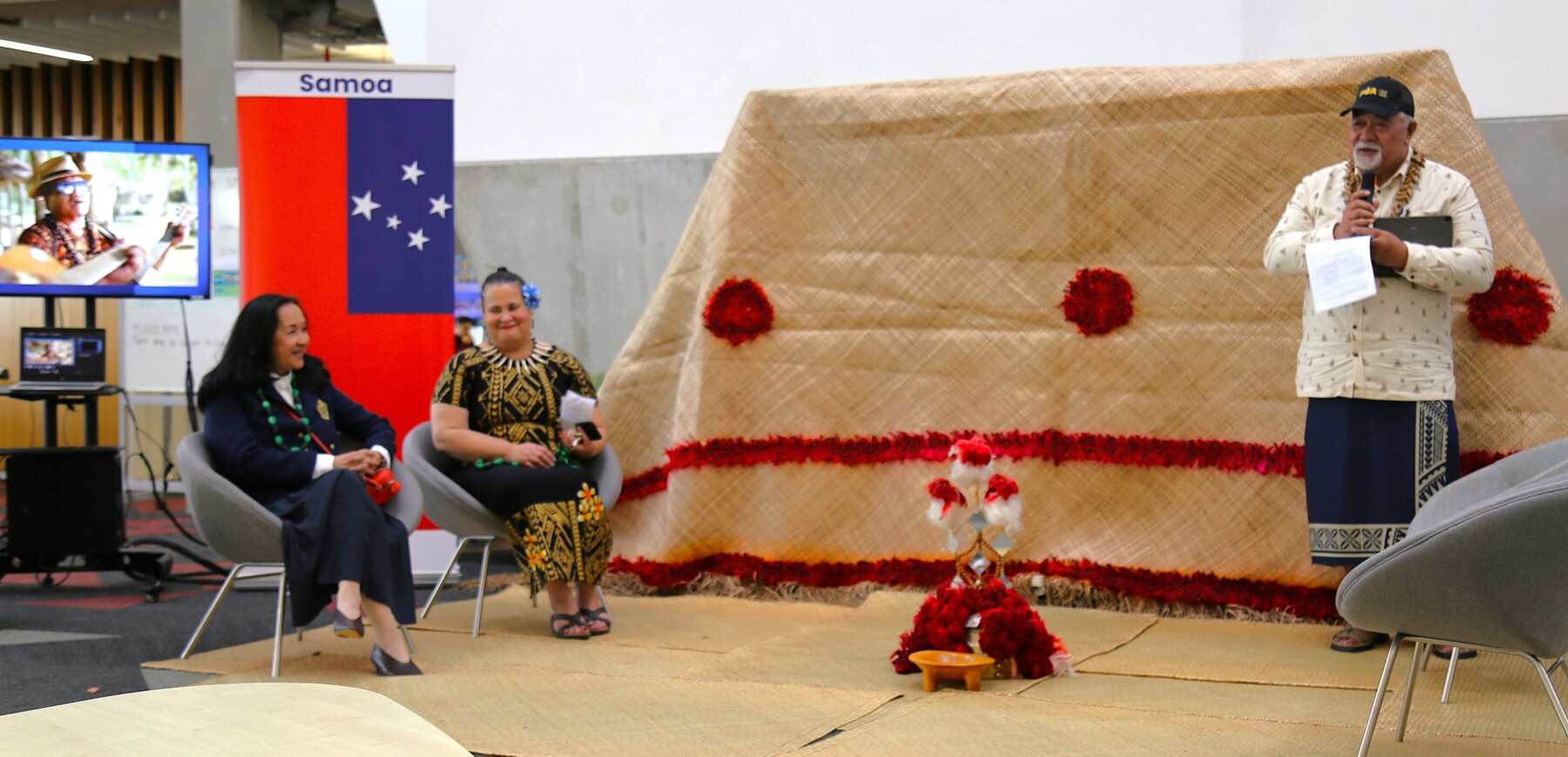 Pacific Success Navigator, Umusa Pava Saifoloi (right) with Professor Hong and Ms Bentley-Gray seated at the Mt Albert event
Interim Manager – Pacific Success, Sooalo Laupu’e Bentley-Gray says the week is an opportunity for Samoans in Aotearoa New Zealand to celebrate their heritage while increasing understanding with the wider community.
“Being able to celebrate Samoan Language Week this week at our Mt Albert and Waitākere campuses is a huge honour as Samoans living in Aotearoa New Zealand,” Daisy says.
“The opportunity to share parts of our culture with our community here is a blessing, especially as we commemorate 64 years of Samoa’s Independence. This week is special for all Samoans in Samoa and in the diaspora.”
The celebrations concluded with performances by our Trades students and a traditional Taualuga dance, followed by a shared Samoan lunch featuring favourites such as koko-alaisa (cocoa rice) and panikeke (pancakes).
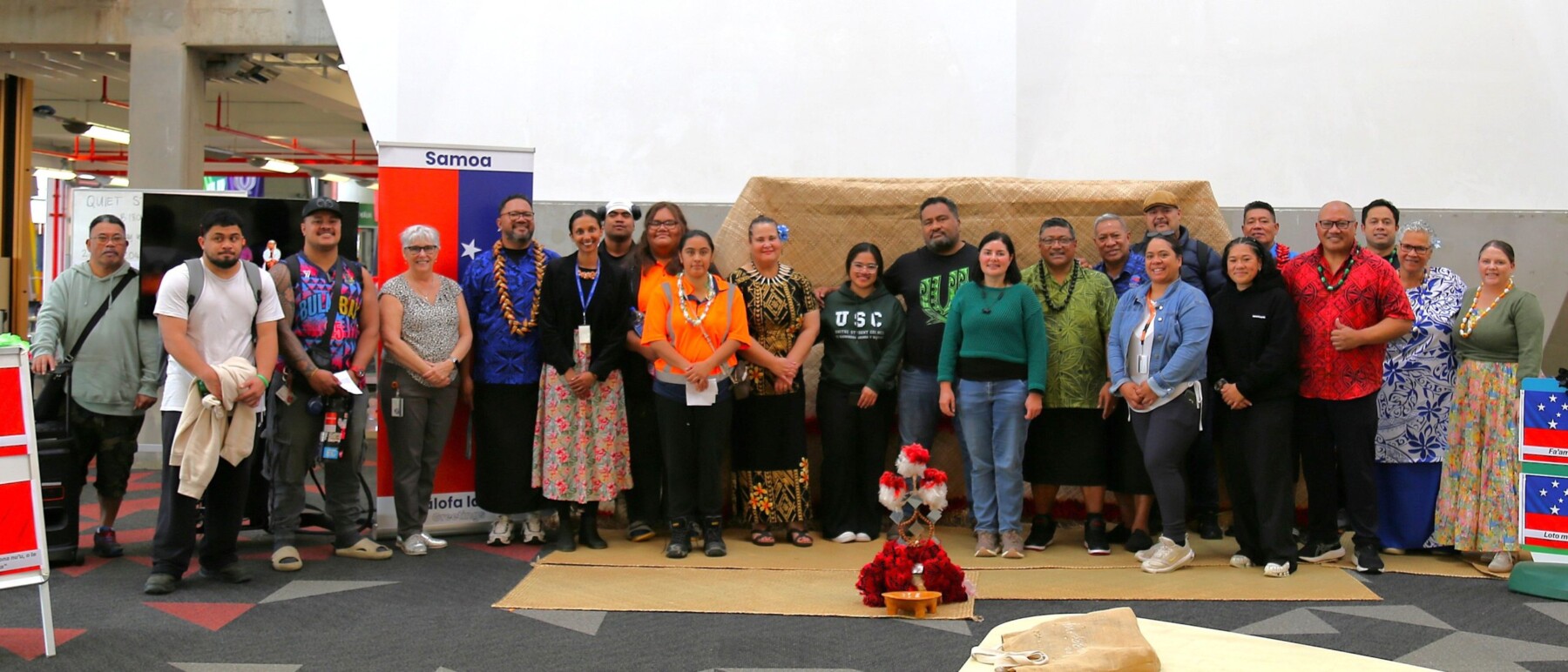 The Mt Albert event was run by the Pacific Centre
Samoa: Quick Facts
There are 474 students of Samoan heritage at our Mt Albert and Waitākere campuses and 1,023 Samoan students at our Manukau and Ōtara campuses.
The headcount of kaimahi ‘staff’ who identify as Samoan is 53 at our Mt Albert and Waitākere campuses and 55 at our Manukau and Ōtara campuses.
Samoans work across the organisation as professional and academic staff and bring their own culture, experiences and values to their respective roles.
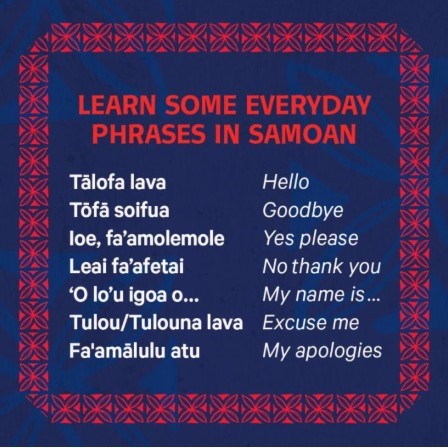
Samoans make up one of New Zealand’s largest ethnic communities, with Samoan recognised as the country’s third most-spoken language after English and te reo Māori.
According to the 2023 Census, 213,069 people identified as being of Samoan ethnicity, with almost 65 per cent living in Auckland. More than 55,000 Samoan New Zealanders were born in Samoa, highlighting the strong connections that continue to exist between Aotearoa and the Pacific nation. By comparison, Samoa’s population is estimated to be close to 220,000 people.
This year’s Samoa Language Week also coincides with the 64th anniversary of Samoa’s Independence. On 1 June 1962, Samoa became the first Pacific nation to regain independence in the 20th century, ending almost five decades of New Zealand administration.
This week is an opportunity to recognise the enduring contributions of Samoan communities to New Zealand’s cultural, social and economic fabric, while honouring the language, traditions and values that continue to connect generations of Samoans living here.