

Insect-based lures could be a step in the right direction for pest control in Aotearoa New Zealand according to Associate Professor Dr Kristie Cameron.
The study looks at whether insect scent, such as those of wētā, locust or cricket, could be used to lure possums to traps with partners Ngāti Kea Ngāti Tuara, Connovation Ltd and Environmental Solutions Ltd. Unitec’s Associate Professor Nigel Adams will provide mentorship.
Assoc Prof Cameron started this work as part of her PhD where she found that possums would work harder to obtain locusts compared to other foods such as berries, leaves and egg.
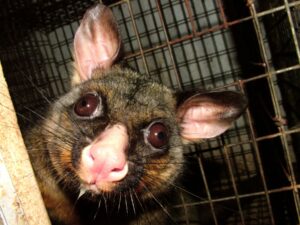
Many methods have been used to try and control possums.
Ministry of Business, Innovation and Employment (MBIE) announced the funding on 30 March as one of 17 (out of 103 submissions) to be awarded $350,000 as part of MBIE’s He Ara Whakahihiko Capability Fund.
The applied research could lead to economic, environmental, social and cultural benefits for Aotearoa says Assoc Prof Cameron.
“It’s very exciting. There has been a lot of blood, sweat and tears that went into this application,” she says.
“The first phase is to test actual insects and synthetic versions of insects – dead locusts smell like polysterene – to lure possums into traps. Unlike rats, possums are neophilic which means they are curious and like investigating new things. That’s why trying different types of lures can work.
“Then we will develop the delivery methodology with our industry partner Connovation Ltd, and Iwi partners Ngāti Kea Ngāti Tuara hapu. That includes the types of traps and considering effects on non-target species.
“After that is complete, we will test the lures in field trials. The most promising lure will be tested throughout Ngāti Kea Ngāti Tuara’s existing traplines in Horohoro, near Rotorua.
“The partnership with Iwi and industry are key to this important research. The research will strengthen kaitiakitanga (guardianship) by enabling pest control methods that protect mauri (life force) without relying on toxins.”
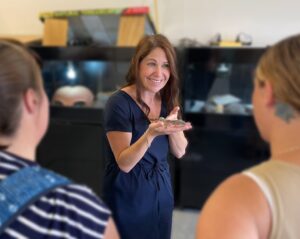
Associate Professor Dr Kristie Cameron, School of Environmental and Animal Sciences, Mt Albert Campus.
Dr Rosanne Ellis, Director Research and Enterprise – MIT and Unitec says funding collaborative applied projects like this is integral to the future of applied and translational research for Aotearoa.
“MIT and Unitec has high-calibre researchers in a wide range of vocational areas from science, architecture, digital technologies and nursing through to sport and early childhood education. Our experts are focused on research that is solving real-world problems.
“This collaboration is an example of our deep connections with industry and Iwi. We are focused on outcomes that will create sustainable benefits for Māori, the economy, the environment and the lives of everyone living in this country.”
Possums cause huge damage to our agriculture industry and local ecology. Controlling possums and other pests in New Zealand costs approximately $110 million annually in pest control and $35 million in lost agricultural revenue.
Assoc Prof Cameron says almost everything has been used to try and eradicate possums from New Zealand.
“That includes poison, drone strikes, all types of lures, and they’ve even tried putting them on the pill,” she says.
“Poisoning affects surrounding waterways and land and non-toxic options offer opportunities for economic growth, such as selling the possum meat for pet food, and fur.”
“Possums are really good at what they do. They’re very impressive, adaptable and flexible creatures so we have to be equally as impressive and innovative when we try and kill them.”
The first phase lab trials will take place at Mt Albert Campus this year. The purpose of He Ara Whakahihiko Capability Fund is to strengthen capability and networks by building new connections between Māori organisations and the science, innovation and technology system (SI&T).
Assoc Prof Cameron is the chair of the Royal Society Te Aparangi Early Career Researcher Forum and the chair of CRAFT (Community of researchers of applied and future-focused training). CRAFT is a collective of early career researchers from Institutes of Technology and Polytechnics.
Experts in research groups from School of Environmental and Animal Sciences, work to advance animal wellbeing, biodiversity, ecological sustainability, and the science that supports them.
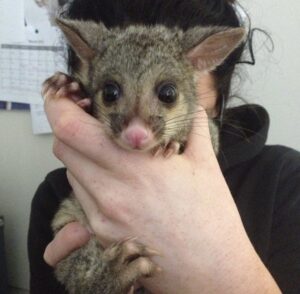
Lab trials will take place at Mt Albert Campus.