


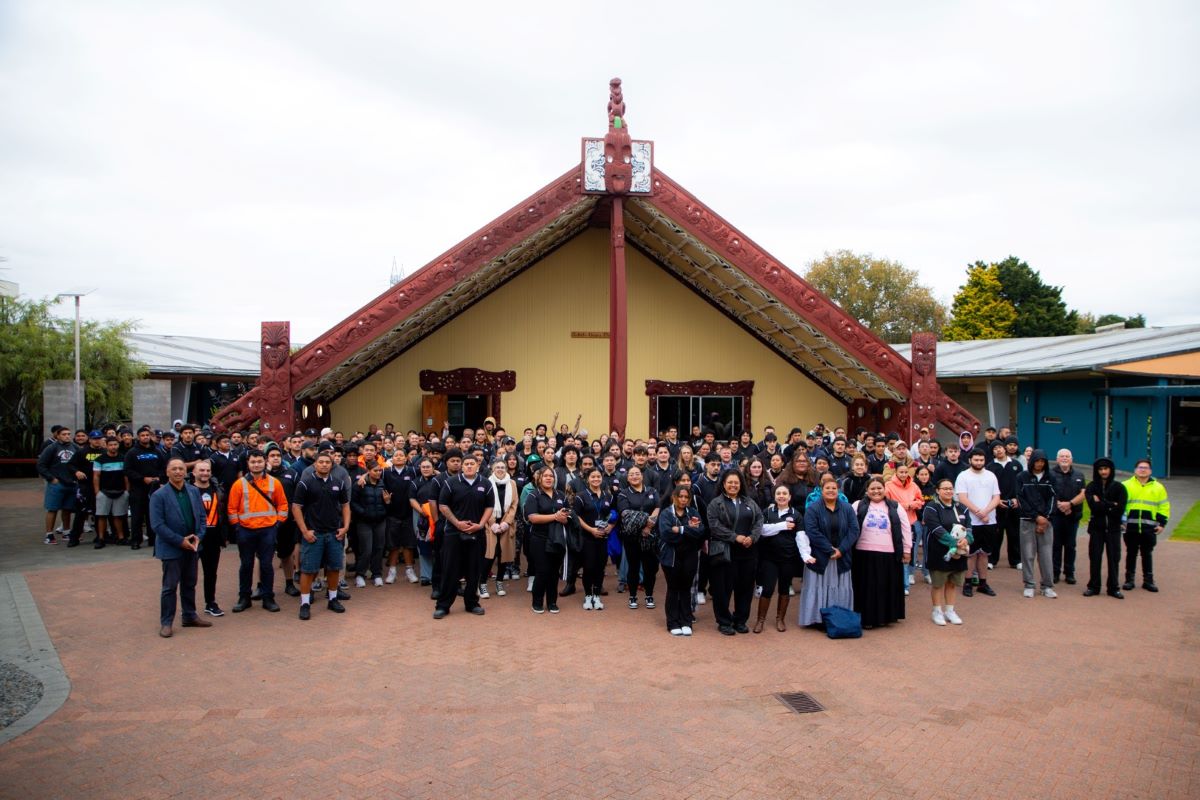
More than two hundred and forty ākonga ‘learners’ gathered at Ngā Kete Wānanga Marae on Ōtara campus this week for Māori and Pasifika Trades Training (MPTT) Whānaungatanga Day.
An event centred on the relationships and support systems surrounding learners as they begin their trades training journey.
MIT and Unitec students and partner training providers across Tāmaki Makaurau – Auckland came together for a day of connection, cultural activities and industry engagement, designed to help ākonga build relationships with each other, their educators, employers and the wider MPTT support network.
For many students entering pre-trades training, the day serves as an introduction not only to future career pathways, but also to the people, organisations and communities that will support and back them through study, apprenticeships and employment.
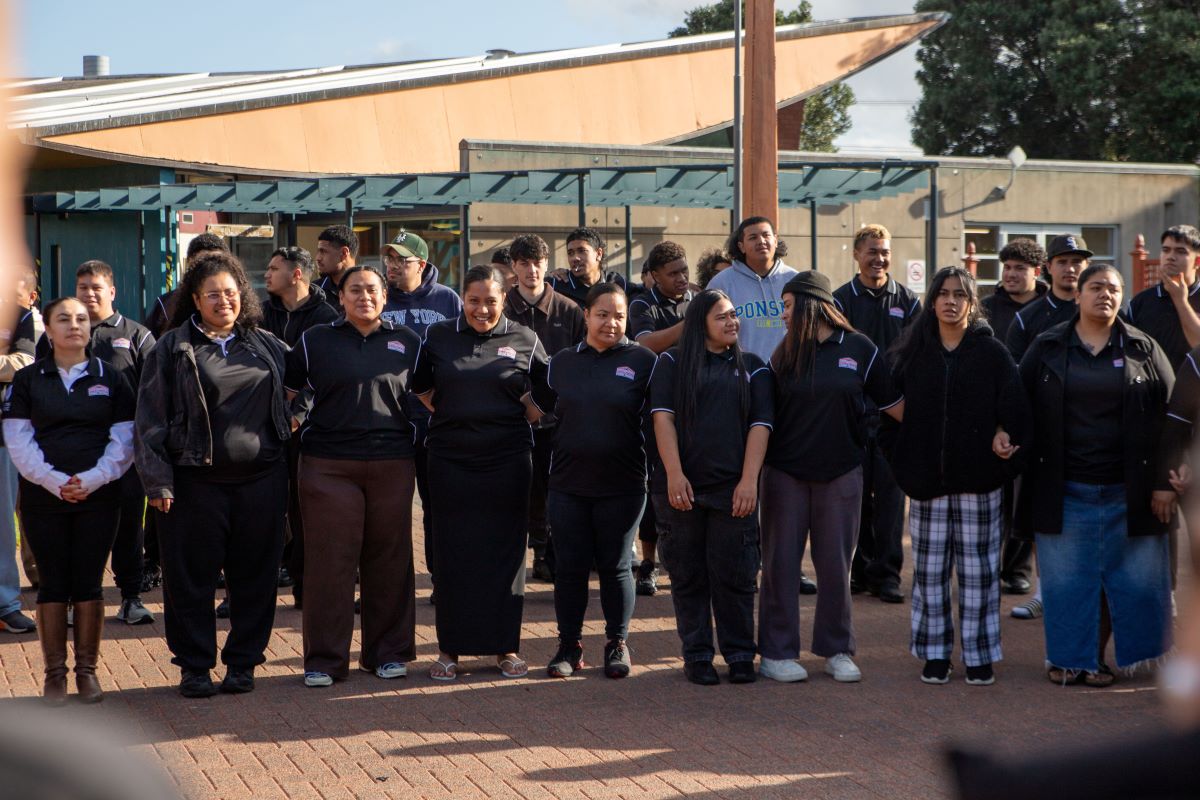
Two hundred and forty ākonga came together for a day of connection, cultural activities and industry engagement
MPTT Chair Fiugalu Tevita Funaki says the event brought ākonga together from across Auckland’s training providers to reinforce that support network early in their journey.
“At our flagship event, the Whānaungatanga Day, we have an opportunity to bring all our ākonga together from our different partner institutions,” Mr Funaki says.
“Firstly, confirming that we’re here to support them. Secondly, exposing them to who the industry partners are, looking at their full journey of onboarding, training, graduating, getting into apprenticeships and employment.”
The MPTT initiative sees a range of training providers and industry groups working together to support scholarship recipients from Māori and Pacific backgrounds in connecting with trades futures.
The government-funded scholarships cover tuition fees for various trades programmes helping progress towards apprenticeships and employment.
The Whānaungatanga Day included a pōwhiri, kapa haka practice, shared kai and trade-focused breakout sessions led by employers, industry representatives and training organisations. Students attended sessions across automotive engineering, construction and infrastructure, electrical engineering, plumbing, mechanical engineering and refrigeration and air conditioning.
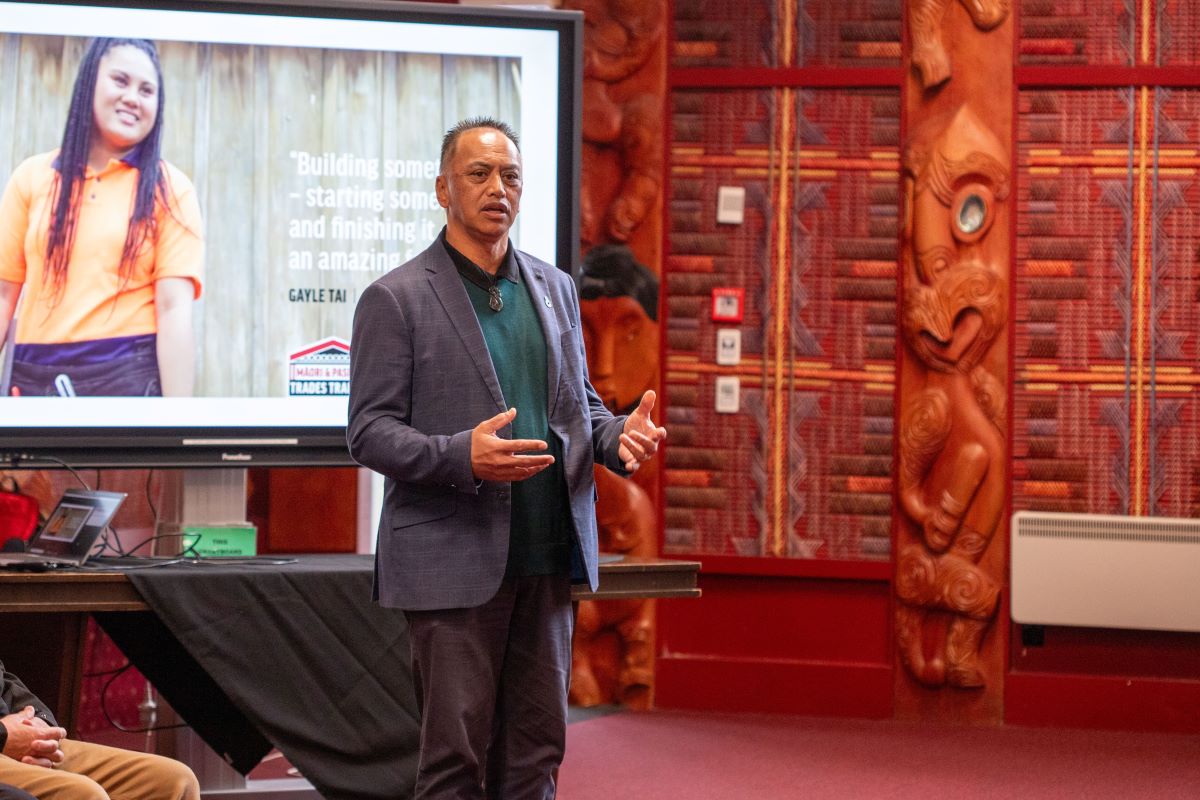
Dr Wiremu Manaia, Director of Māori Education at MIT and MPTT Board member
Naomi Tito, MIT Relationship Manager for MPTT, says whanaungatanga helps create a sense of shared responsibility and belonging between tauira (students), whānau, training providers and industry partners.
“The value of whānaungatanga for our Māori and Pasifika Trades Training tauira, their whānau, training partners and communities is to connect, build and share a respectful, caring and positive relationship with an emphasis to maintain a collective responsibility,” Naomi says.
“Whanaungatanga does not start and end at this event. It’s the beginning of a continuation with other values such as caring for each other.”
Ms Tito says that support continues well beyond the classroom, with MPTT Navigators working alongside tauira as they transition into employment and apprenticeships.
MIT has been part of the MPTT consortium since the programme was established in 2014.
Programmes supported through the scholarship at MIT and Unitec include automotive engineering, construction, electrical engineering, plumbing, gasfitting and drainlaying, mechanical engineering, refrigeration and air conditioning, and hairdressing. Unitec also offers Health and Wellbeing programmes through the scholarship.
“Through our partnership with MPTT, tauira are connected to a wider network of navigators, whānau, industry partners and educators who walk alongside them from training into employment,” says Dr Wiremu Manaia, Director of Māori Education at MIT and MPTT Board member.
“It’s not simply about getting students into a course. It’s about helping them build confidence, connection, work-readiness and a sense that they belong in these industries and spaces.”
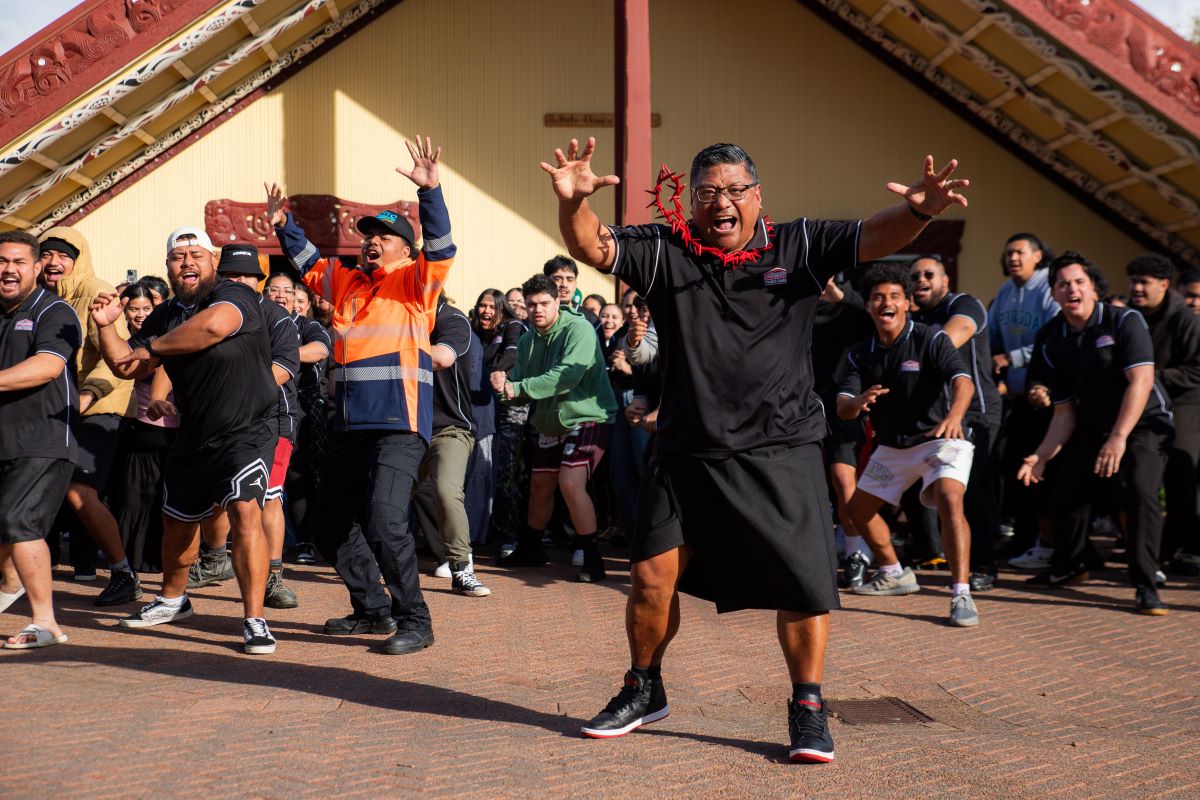
Tu Nuualiitia, Student Experience Partner, Unitec MPTT Relationship Manager
Mr Funaki says MIT and Unitec’s role within the consortium extended beyond academic delivery.
“What we’re looking at is actually the pathway from pre-trade into managed apprenticeship,” he says.
“We work closely with both MIT and Unitec not only on the academic programme, but to ensure the pastoral support for students is actually provided so they complete their pathway into apprenticeship.”
Sam Sefuiva, MPTT Project Manager, says the programme encourages tauira to see learning as a journey supported by a wider community.
“For many of the learners themselves, they have to understand that to make good decisions you need a village,” he says.
Since 2014, there have been 2,667 trainees through MIT on an MPTT scholarship.