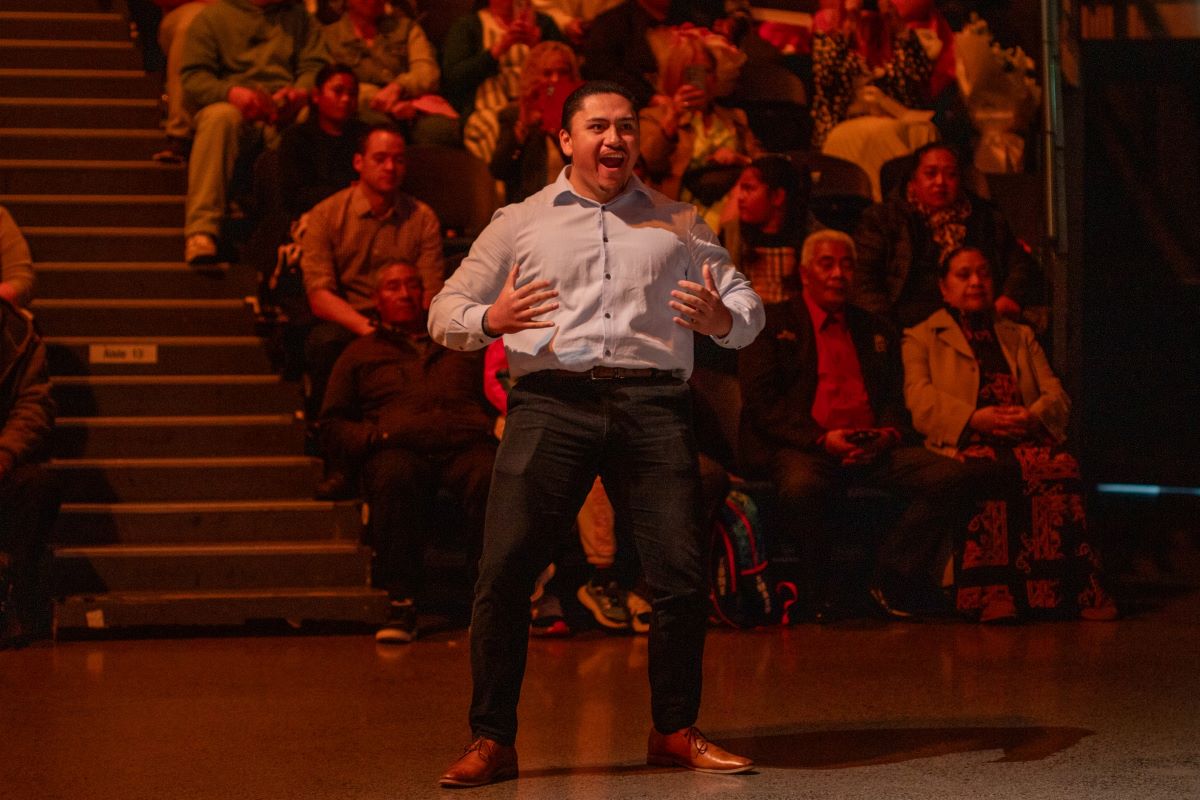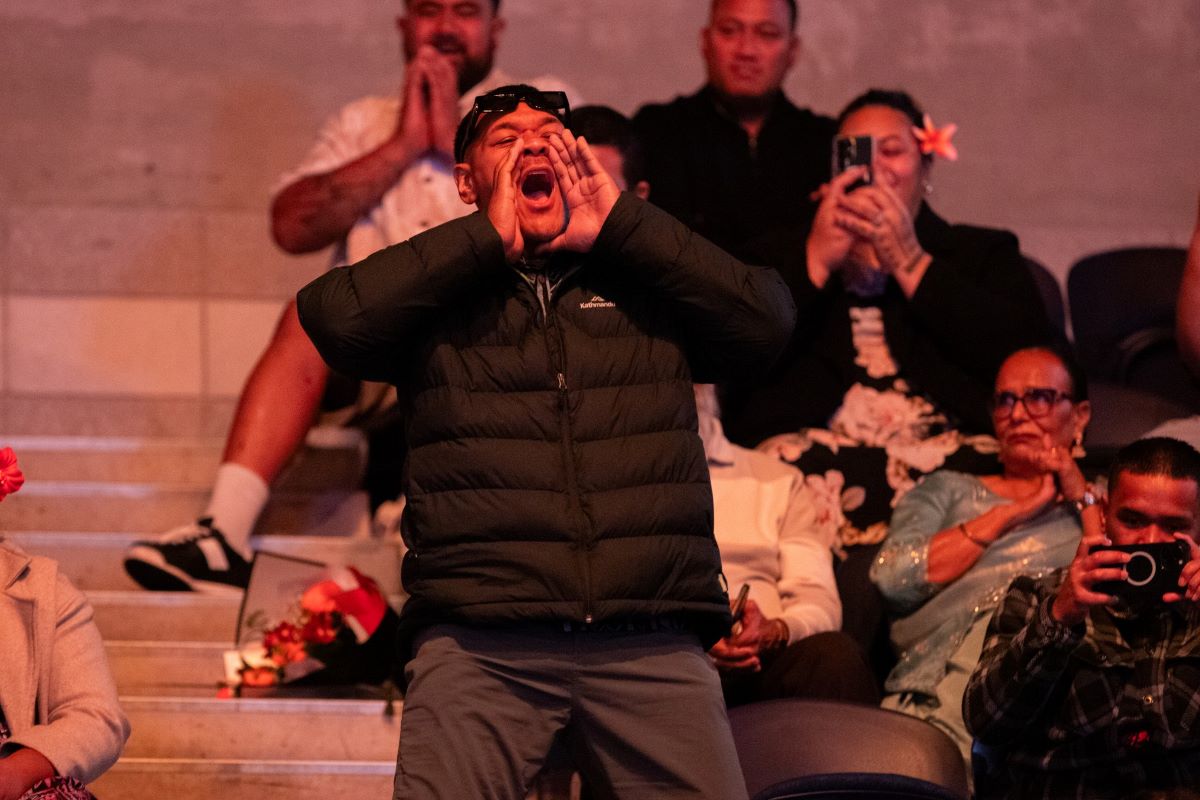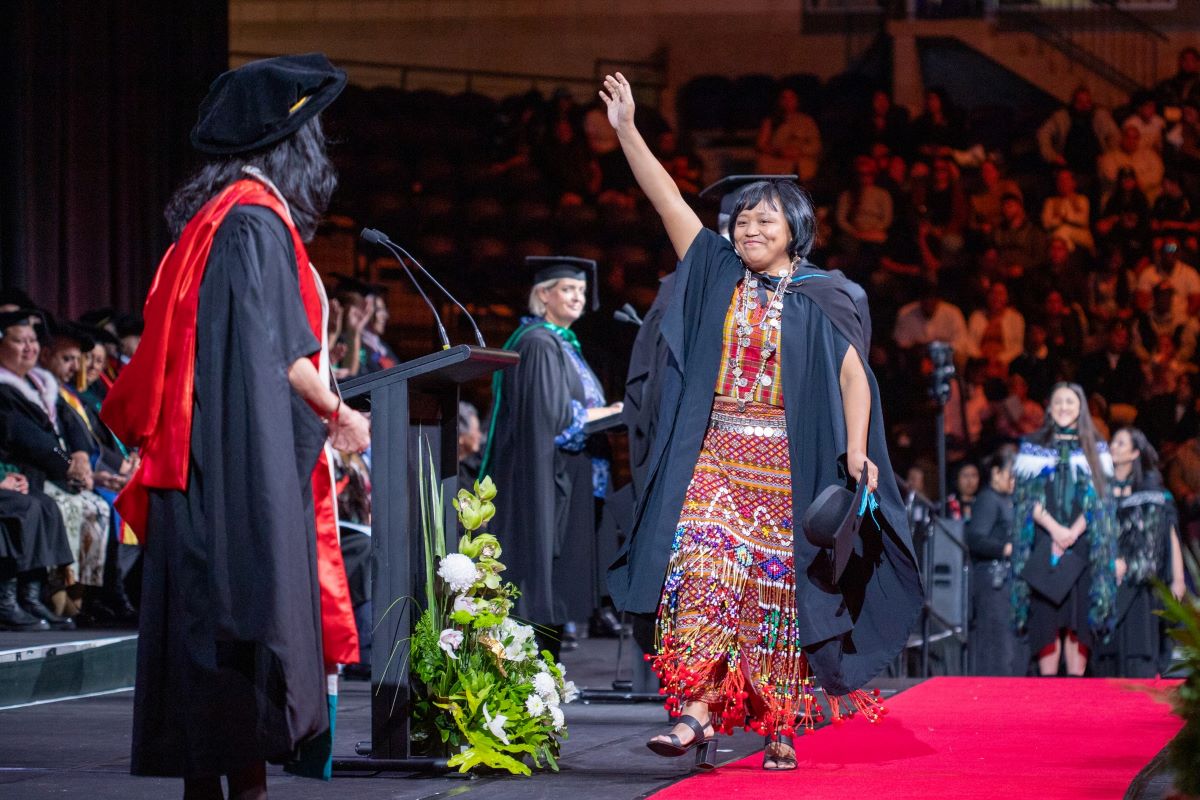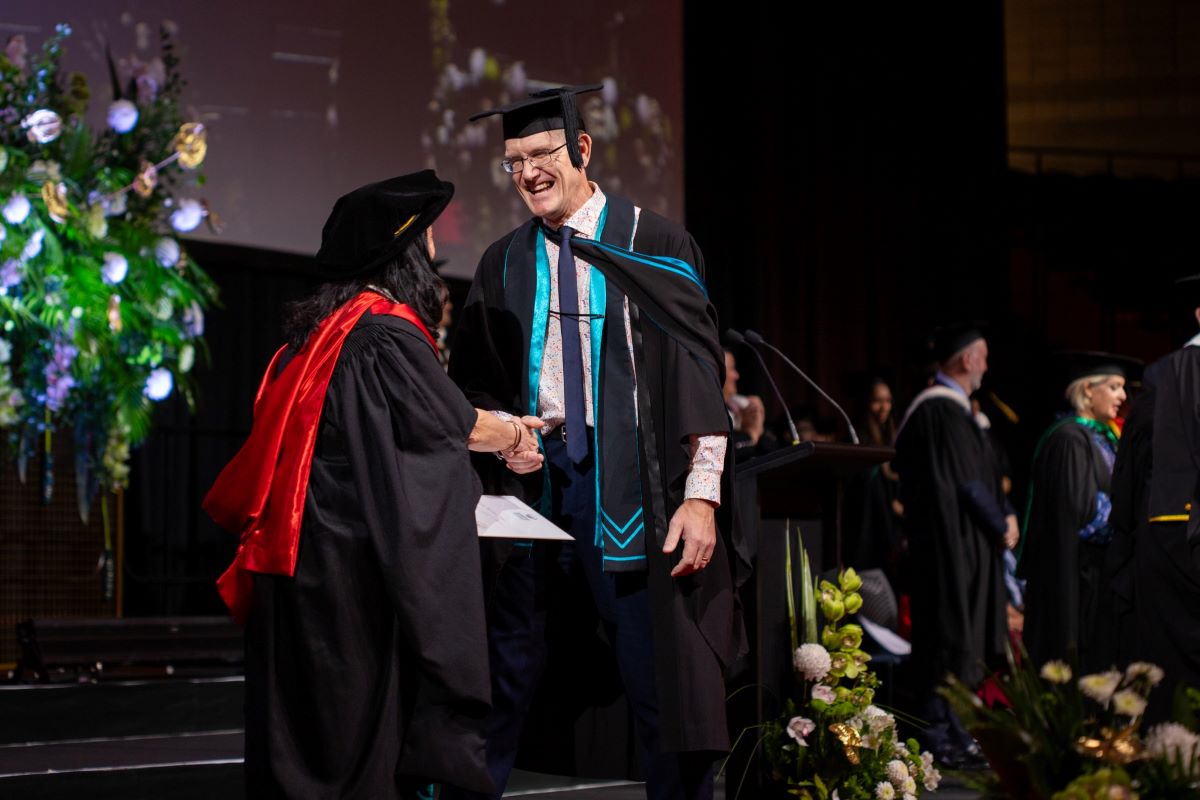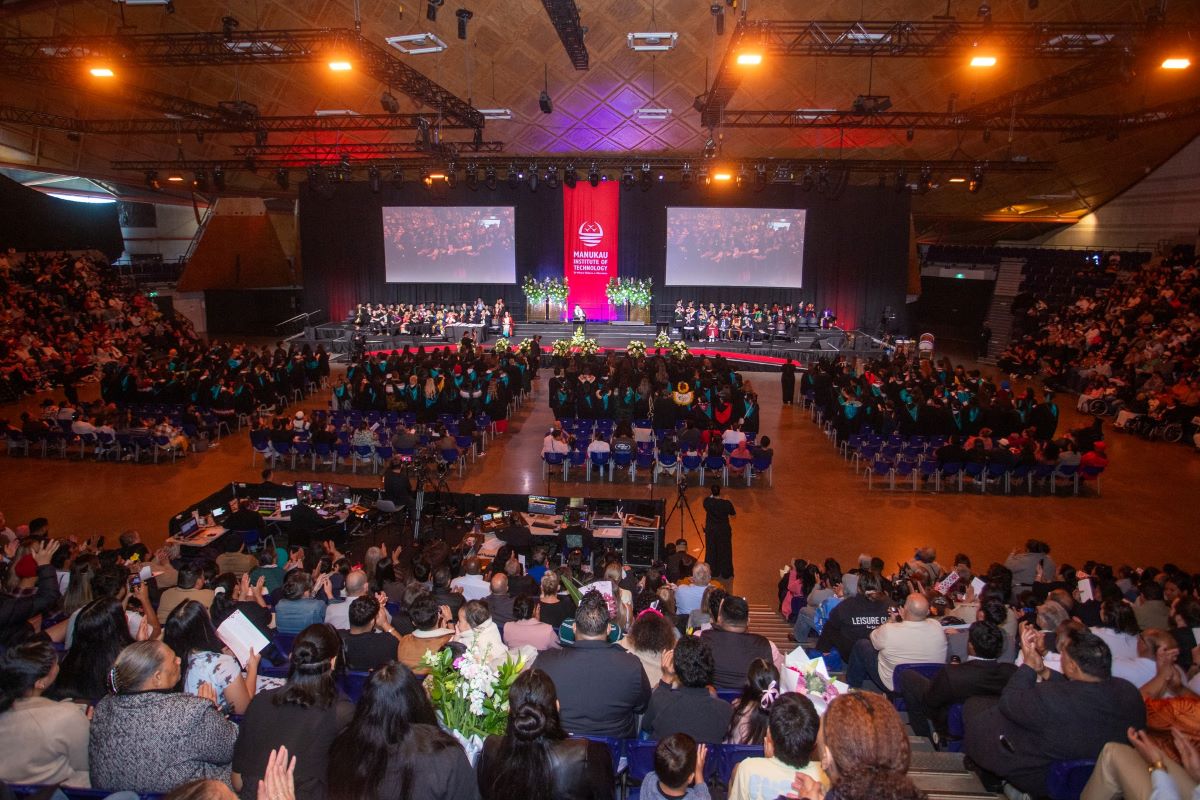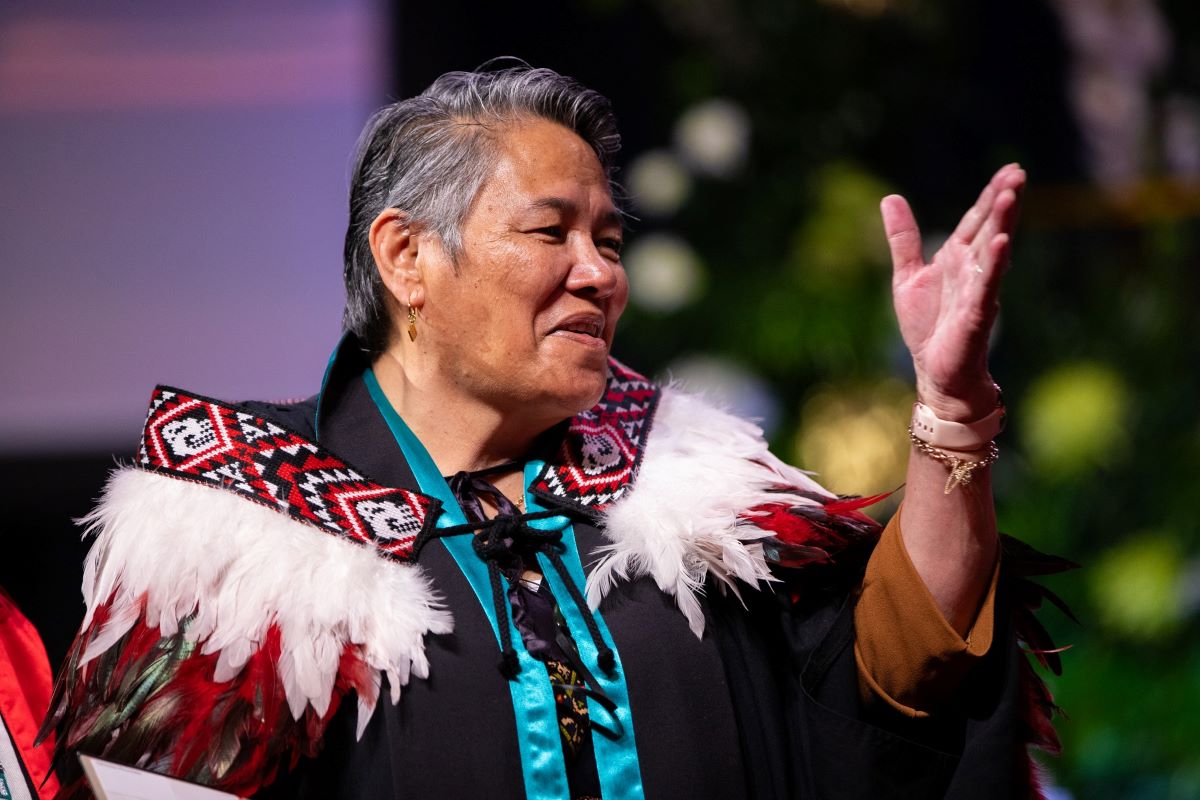


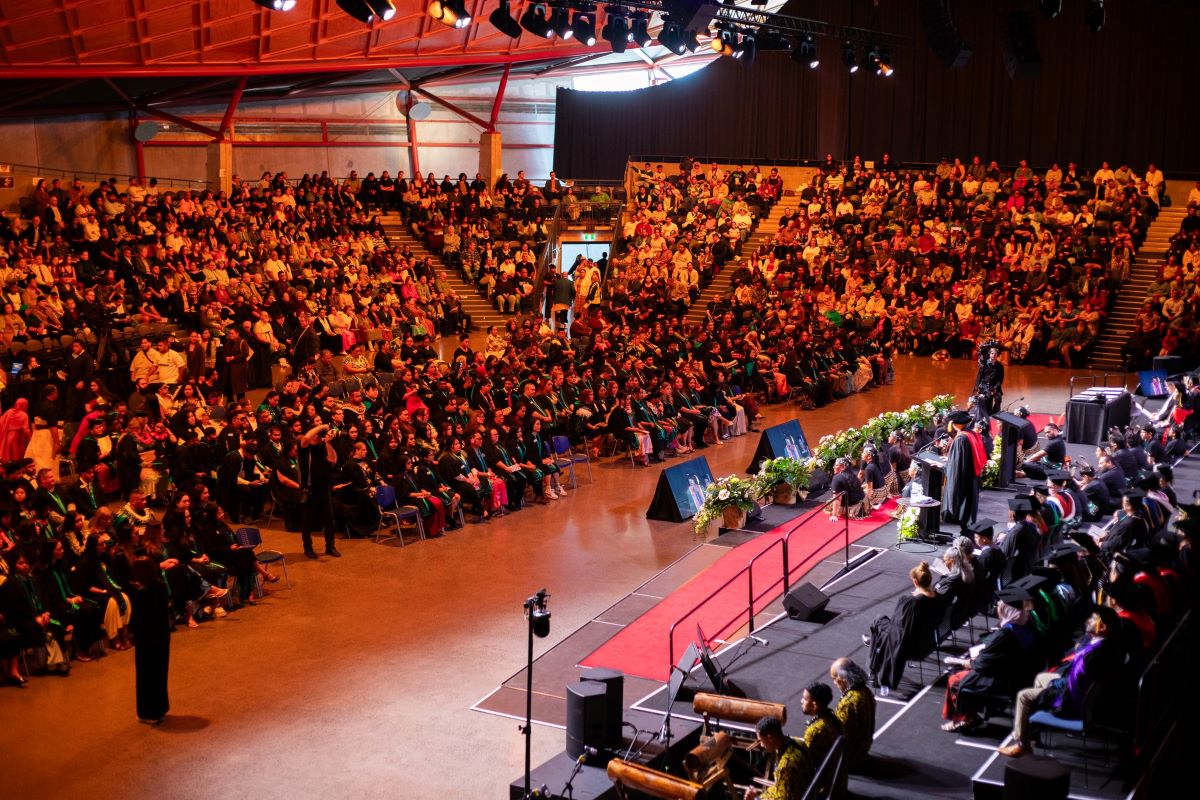
Hundreds of graduates crossed the stage at three events held over two days at Due Drop Events Centre in Manukau.
The celebrations began on 20 May with Tuku Taonga at Ngā Kete Wānanga Marae, where Māori graduates and their whānau gathered to celebrate the completion of their studies.
The following evening, the Pacific Development Office hosted Pasifika Thanksgiving, acknowledging graduates from across nine Pacific communities, families, church leaders and community members in a celebration shaped by language, culture, dance, music, faith and tradition.
Community leaders, alumni and church representatives joined the celebrations, with many students blessed by local pastors before taking the stage with whānau members.
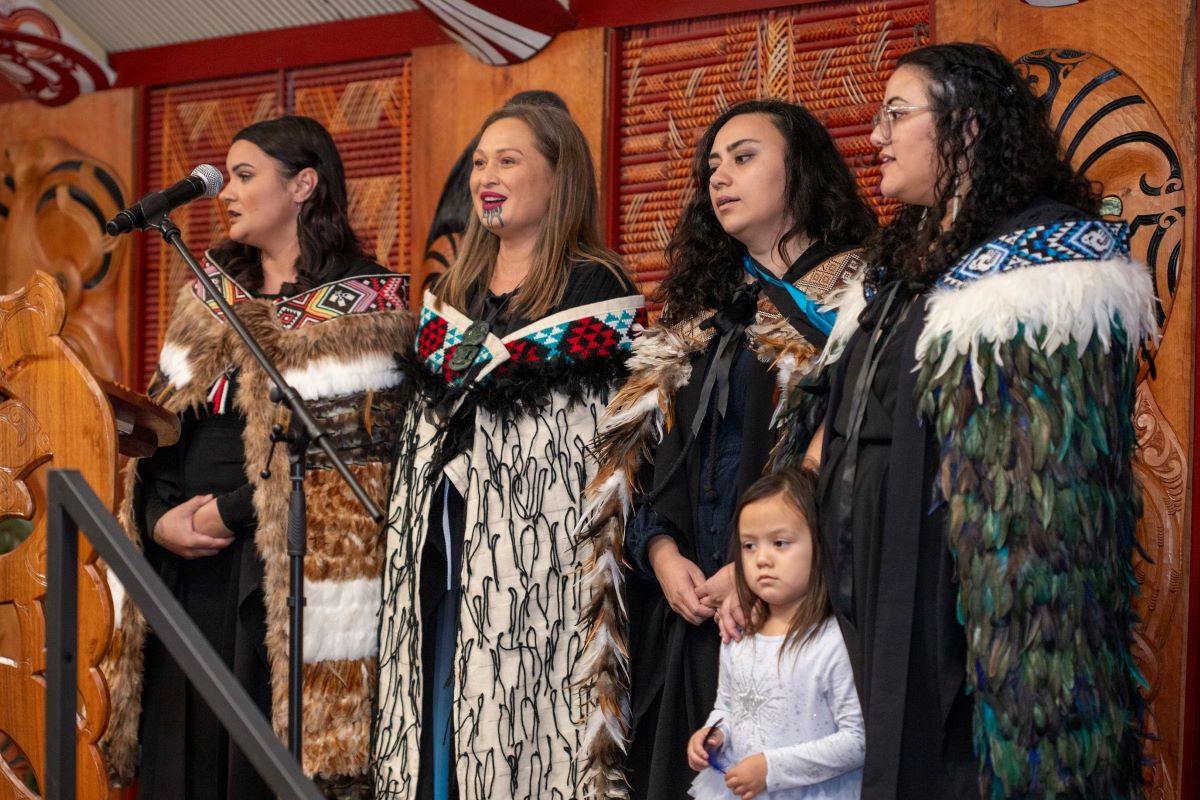
Bachelor of Applied Counselling, Romaiye Lowen (second from left)
At Tuku Taonga, student speaker Romaiye Lowen, who graduated Bachelor of Applied Counselling, reflected on the personal and cultural journey shared by Māori counselling graduates.
“We didn’t come simply to gain a tohu, a degree,” Ms Lowen says. “We came because something deeper called us — a desire to contribute to the healing and wellbeing of our whānau and communities.”
Close to 900 students were eligible to graduate this year across programmes including nursing, social work, counselling, engineering, maritime, business and digital technologies.
At each ceremony, one graduate was selected to represent their classmates and speak about their inspirations, the challenges they faced while studying and the motivations that carried them through.
A common theme emerged — many had returned to study later in life, balancing education alongside work, family and other responsibilities.
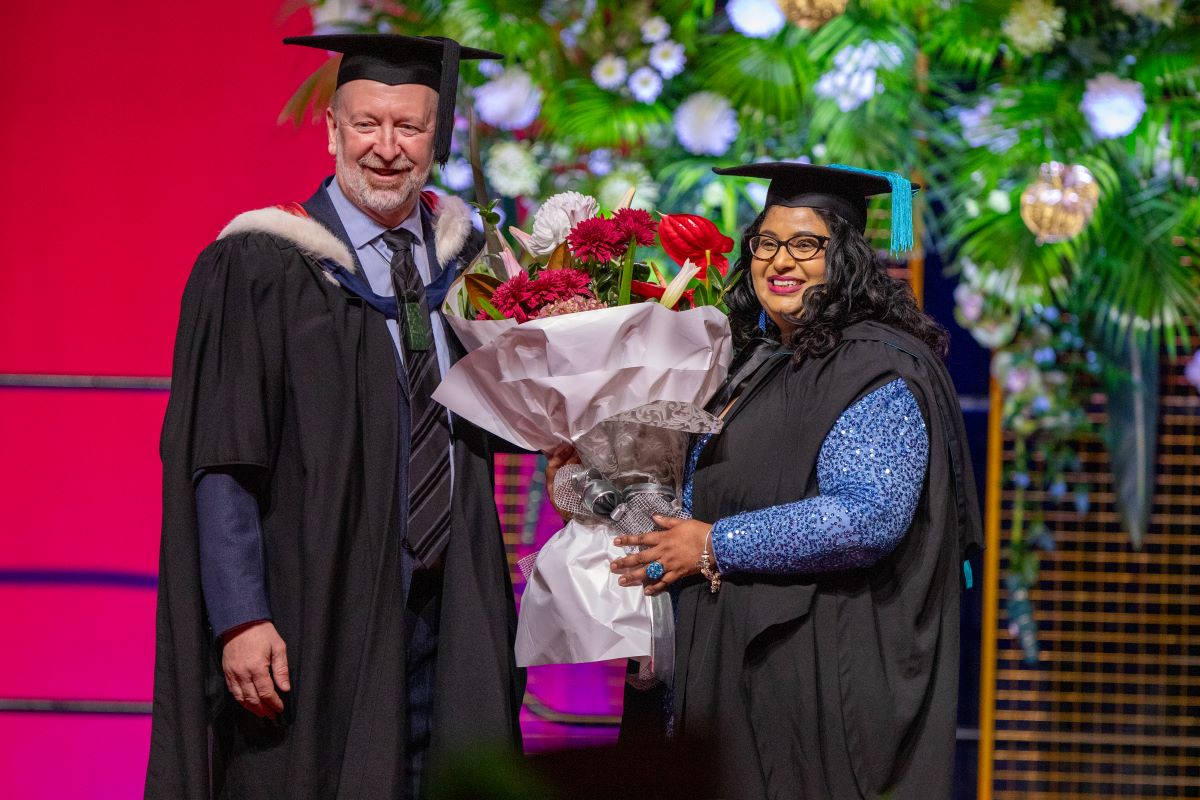
Bachelor of Social Work graduate Ashni Marsh, who spoke to her cohort along with students from the Schools of Education, Hospitality, Professional engineering, and Sport, told graduates that returning to study after years away from the classroom had initially felt overwhelming.
“I wondered if I was too old, if I was capable, and if I could balance study, family life, work, and business responsibilities,” Ashni says.
“But deep inside, I knew I wanted more. I wanted to prove to myself and my son that it is never too late to follow your dreams.”
Ms Marsh, now a registered social worker while also running a business alongside her husband, says MIT became “more than just a place of learning”.
“It became a safe space,” Ashni says.
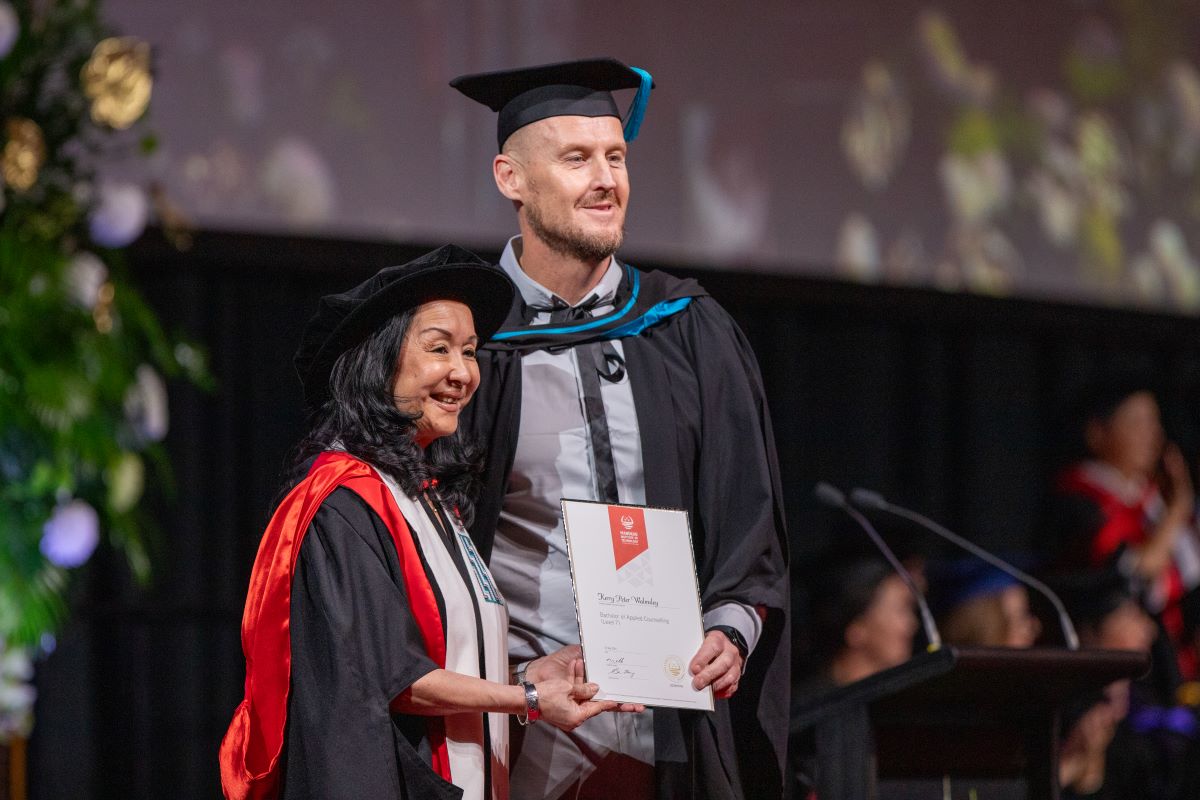
Former Black Cap and Bachelor of Applied Counselling graduate Kerry Walmsley reflected on the diversity of his cohort as he introspected on returning to study later in life, with graduates from the Schools of Business, Digital Technologies, Logistics and NZ Maritime School.
“This degree wasn’t just about theories, modalities, or trying to figure out what reflexivity actually meant,” Mr Walmsley says.
“It challenged the stories we tell ourselves about who we are, how we are, and whether those stories are even true.”
Mr Walmsley encouraged graduates to remain authentic in both their personal and professional lives.
“Whether it’s tikanga or your unique cultural values, religion or science, whatever framework helps guide your life… I encourage you to be real. Be authentic,” Kerry says.
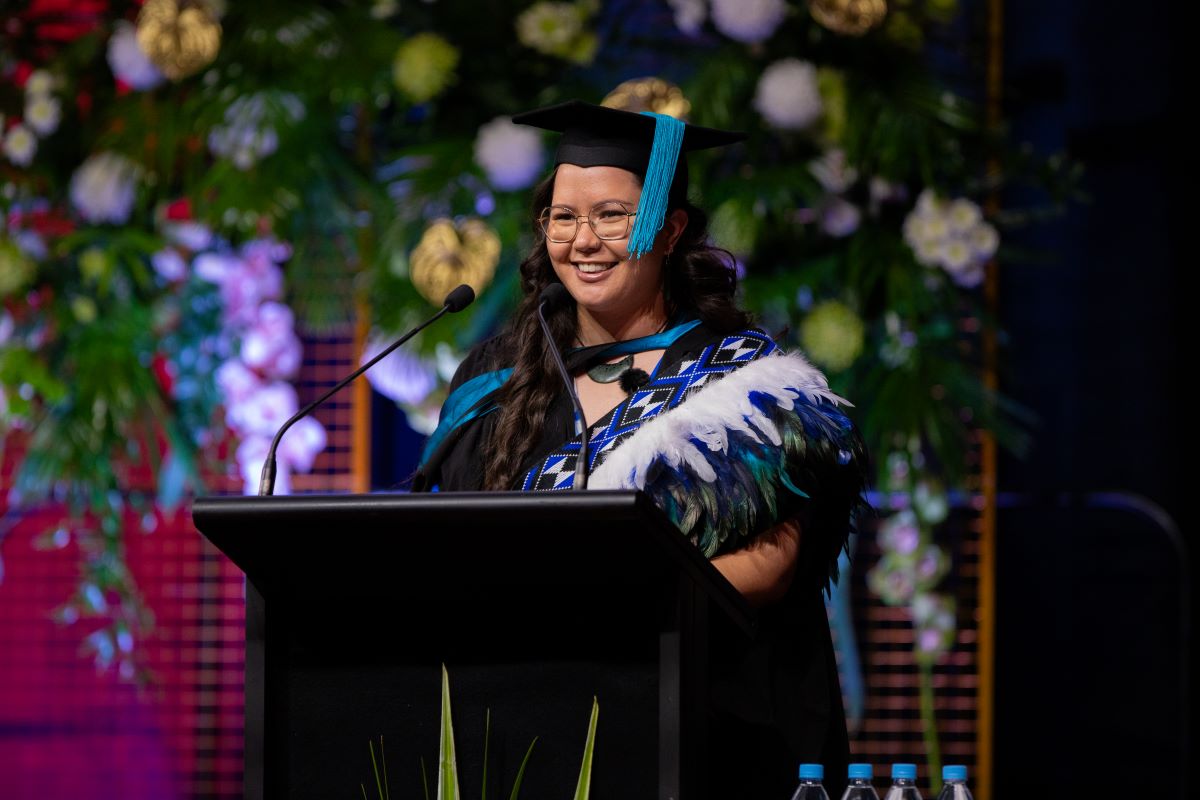
At the final ceremony, Bachelor of Nursing graduate Kali Tapara spoke about leaving a career in the Customs Service to pursue nursing after working alongside healthcare professionals during the COVID-19 pandemic.
“Returning to study after nearly 10 years out of the classroom was scary, and not a decision I made lightly,” Kali says.
Today, Ms Tapara works as a district nurse in Counties Manukau.
She told graduates that one of the defining moments of her journey came when a patient shared that hearing her story had inspired them to enrol in nursing studies themselves.
“Every journey into nursing looks different, and every journey brings value,” Kali says.
Speaking across the ceremonies, MIT and Unitec Chief Executive Professor Christina Hong reflected on the organisation’s own period of transformation following the unification of MIT and Unitec earlier this year.
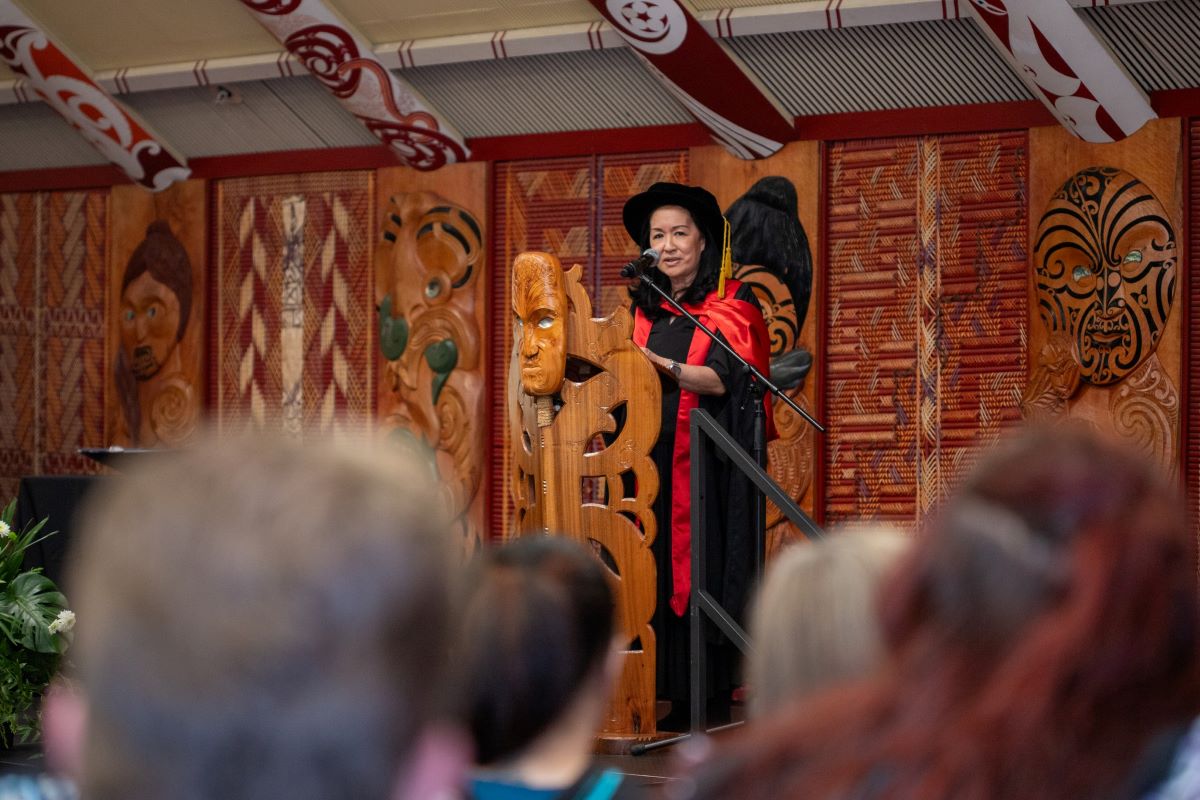
“Change presents both a challenge and an opportunity,” Prof Hong says.
“Your mindset and ability to shift your mindset will be important.”
Professor Hong told graduates they were entering a world shaped by constant change, but says the organisation’s commitment to people and communities would remain central.
“They are the most important thing in the world.
“He tangata, he tangata, he tangata – It is people. It is people. It is people.”
The Chief Executive encouraged graduates to move forward with curiosity, resilience and confidence in the communities that had supported them throughout their studies.
“Wherever you go, may the friendships, connections, understandings, knowledge and support you received from this community go with you.”
Manukau Institute of Technology would like to congratulate all graduates and wish them the very best for their future careers.
On January 1 this year, MIT and Unitec became a single organisation forming the largest on campus provider of dual sector applied education and vocational skills training in Aotearoa New Zealand.